

October 19, 2026
Integrated Washing Machine Dimensions Guide
Replacing an integrated washing machine should be fairly straightforward, shouldn't it? Find a new model, choose the features you want, arrange delivery and you're all set. Well, not always. If you've ever tried to squeeze a new appliance into an existing kitchen, you'll know that a few centimetres can make all the difference. Your new washing machine might look almost identical to the old one, but a slightly different depth, incompatible cupboard door fittings or a badly positioned waste pipe can turn what should be a simple replacement into a bit of a headache. The good news is that most of these problems are avoidable if you know what to look for before you buy. Whether you're replacing an older appliance or upgrading to a newer model it's worth taking a little time to measure your kitchen and check the installation requirements. That way, you can concentrate on finding a machine that suits your household, rather than worrying about whether it'll fit through the kitchen door. Let's look at the measurements that matter, the capacity you'll actually need and the little details that are easy to overlook when choosing a replacement.
13 min read
What size is an integrated washing machine?
Most full size integrated washing machines are designed to fit a kitchen appliance opening approximately 60 cm wide and around 82 cm high. Depth is a little less predictable, which is why it’s often the measurement that catches people out. As a general guide, many integrated washing machines fall within the dimensions below.
These figures are a useful starting point rather than a guarantee. Always check the exact model’s technical drawing before ordering, particularly if your kitchen has a shallow appliance space.
| Measurement | Typical size or guidance |
|---|---|
| Width | Approximately 59.5 – 60 cm |
| Height | Approximately 81.5 – 82.5 cm |
| Appliance depth | Varies by model; around 54 - 56 cm is common among many current models |
| Additional rear space | Allow for hoses, pipes and connections as specified by the manufacturer |
Width & Height
Most integrated washing machines are designed around a standard 60 cm appliance space, but that doesn't mean every opening of this size will work. If your kitchen has been in place for several years, the cabinet sides might not be perfectly straight, or there could be pipework tucked away where you least expect it. Measure the opening at the front and rear, and use the smallest measurement when comparing it with the manufacturer's requirements.
Height is just as important. Measure from the finished floor to the underside of the worktop, checking both sides of the opening. Floors and worktops aren't always completely level, particularly in older kitchens, so don't rely on a single measurement. It's worth checking the appliance's adjustable feet, too. A machine may have a published height that looks suitable, but you still need enough room to position and level it correctly.
Depth
Depth is often where things get a little more complicated. Your existing washing machine might be 54 cm deep, so choosing another model with the same measurement seems sensible. But what if the new machine has its inlet connection in a different position, or the waste pipe sits directly behind it?
Suddenly, that apparently perfect replacement doesn't slide back far enough. Before buying, measure from the front of the appliance opening to the nearest obstruction behind it. Then compare that measurement with the new machine's installation drawing, taking the pipework and required clearances into account. If you're working with a particularly shallow space, a slightly slimmer model could make installation much easier. Just make sure you're comparing like with like, as manufacturers may define appliance depth differently depending on the model.
The Golden Rule
Measure the space you have first then choose the machine that fits it, rather than trying to make the kitchen accommodate your chosen appliance.
Take these five measurements before replacing a washing machine
1. Opening width
Measure between the cabinet sides at the front and rear. Record the smallest usable width at any point.
2. Available height
Measure from the finished floor to the underside of the worktop on both sides and the back. Note the smallest measurement.
3. Available depth
Measure from the front edge of the appliance recess to the nearest rear obstruction. Identify where the water supply, waste connection and electrical socket sit.
4. Plinth dimensions
Measure the plinth's height, thickness and projection into the opening. Check whether the replacement appliance needs a particular clearance.
5. Cupboard door dimensions
Make note of the door's height, width and thickness. Photograph its hinges, fixing points and opening direction.
Does washing machine capacity affect its dimensions?
It can, yes. Capacity is worth considering when choosing a replacement, although it doesn’t directly determine the machine’s external dimensions. Washing machine capacity is measured in kilograms and refers to the maximum weight of dry laundry that can be washed in a programme under the stated conditions. It isn’t a measurement of the appliance’s physical size.
Two integrated washing machines can have the same external dimensions but different drum capacities. Equally, two machines with the same capacity may have different external dimensions and installation requirements. The trick is to choose a capacity that suits your household without compromising on fit.
Can you get a large capacity integrated washing machine?
Yes, although the choice can be more limited than it is with freestanding machines. Most integrated models offer an 8 kg drum, which is a practical option for plenty of households. If you’re looking for a larger capacity, compare the available models carefully rather than assuming that a bigger drum will come with a bigger exterior.
The trick is to find the best balance between capacity, features and fit. A machine that handles your usual laundry comfortably and fits your kitchen properly will generally be a better choice than one with an impressive drum size that creates problems during installation.
Plinth clearance
The plinth is the panel running along the bottom of your kitchen units. It hides the gap beneath the cupboards and helps everything look neat and finished. It’s also something that’s easy to forget when shopping for a replacement washing machine. Depending on the appliance design, the plinth can interfere with the lower front of the machine, its feet or the space needed for the door to open. If your new washing machine has a different lower front profile from the old one, the existing plinth might need adjusting.
Before ordering, take a look at how high the plinth sits above the floor, how thick it is and how far it projects into the appliance opening. Then check the manufacturer’s installation drawing to see whether the new machine allows for that arrangement. You might be able to reuse the existing plinth without any changes, but it’s best not to assume that will be the case. If adjustments are needed, make sure they’re permitted by the appliance’s installation instructions, particularly where ventilation or clearance is involved.
A quick check now is much easier than discovering the problem when your new washing machine is already sitting in the kitchen.
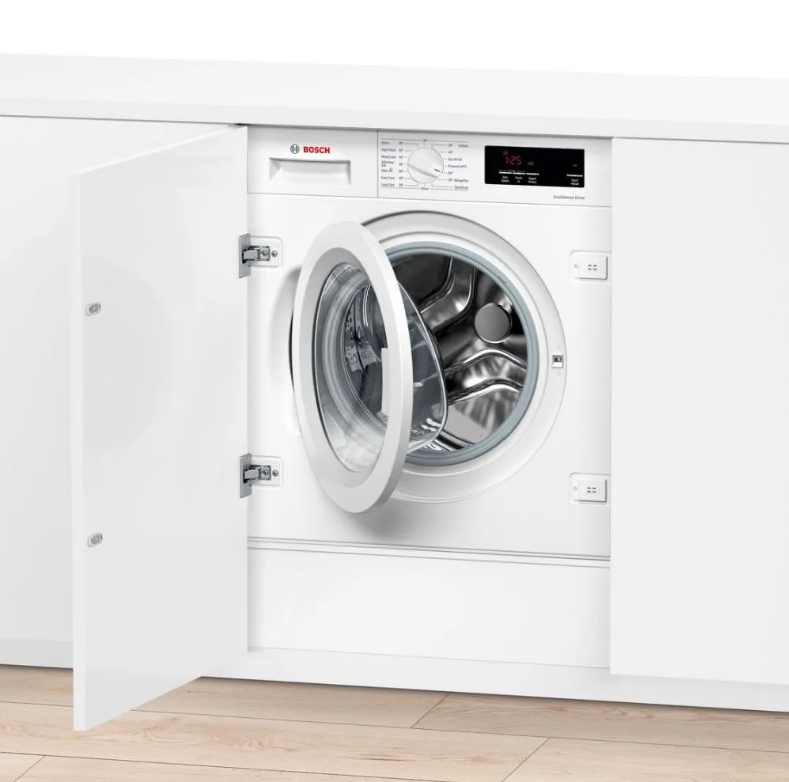
Cupboard door hinges
One of the main reasons people choose an integrated washing machine is that it keeps the kitchen looking consistent. The appliance sits behind a cupboard door, so it blends in with the surrounding units rather than standing out. The catch is that the cupboard door needs to attach to the washing machine correctly.
Different models can use different door fixing arrangements. Some attach the kitchen door directly to the appliance door, while others use a sliding mechanism. Even if you’re replacing an older machine with another model from the same brand, the fittings might not be identical.
If you’d like to keep your existing kitchen door, check its dimensions, thickness and fixing points against the new appliance’s requirements. You should also check any specified limits on door weight and make sure it can open fully without catching on a neighbouring cupboard or handle. In many cases, reusing the door is perfectly possible. You might simply need different brackets or new fixing points. But if the kitchen finish is important to you, it’s worth confirming this before placing your order.
And don’t forget to consider the opening angle. A door that works perfectly with your current machine might not swing quite as freely with a replacement, particularly if the appliance sits close to a corner unit or another cupboard.
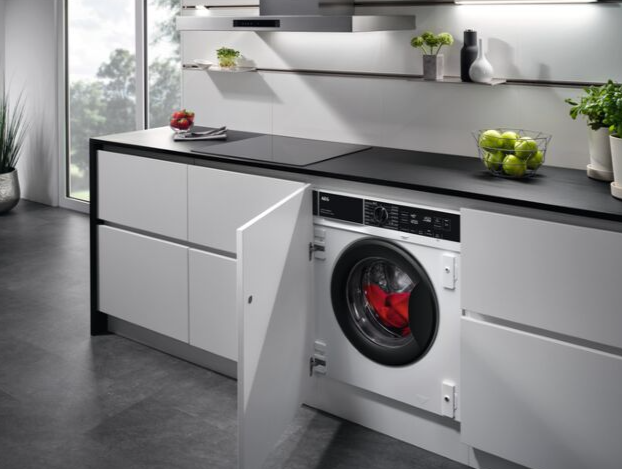
Plumbing and rear clearance
Here’s another common source of frustration: the new washing machine fits the opening, but the hoses and connections leave you with nowhere to put it. The water inlet, waste hose and other connections all need enough room to be routed properly. If a valve or pipe sticks out behind the machine, it can reduce the usable depth considerably.
Before you buy, take a look at where the cold water supply and waste connection sit. Compare their positions with the installation drawing for your chosen model, and make sure the hoses can reach without being stretched, crushed or sharply bent. The waste hose needs particular attention because it must be installed at the correct height and routed according to the manufacturer’s instructions. If your existing plumbing is awkwardly positioned, it’s better to identify that before delivery rather than discovering it halfway through installation.
You’ll also need to consider the electrical connection. The plug and cable must be positioned safely, without being trapped behind the appliance, and the socket must comply with the relevant installation requirements.
In other words, don’t just ask yourself whether the machine will fit into the gap. Think about whether all the connections will fit comfortably behind it, too.
Vibration and noise
Even a good washing machine can be noisy if it hasn’t been installed properly. Integrated appliances sit close to kitchen panels and worktops, so vibration can sometimes travel through the surrounding cabinetry. If the machine isn’t level, you might notice rattling during the spin cycle or movement that seems excessive.
The good news is that these problems aren’t always down to the appliance itself.
An uneven floor, incorrectly adjusted feet or a hose knocking against the wall can all create unwanted noise. A machine that’s pushed too tightly against neighbouring units might rattle against them as it spins.
Before installing your replacement, check the floor and make sure the appliance can be levelled according to the manufacturer’s instructions. The machine should sit securely, with the correct clearances around it. One particularly important detail is the transit bolts supplied with a new washing machine. These protect the drum during transport and must be removed as directed before the appliance is used. Leaving them in place can cause severe vibration and damage.
So, while it’s worth comparing noise ratings when choosing your new machine, don’t overlook the installation itself. A correctly fitted appliance is much more likely to run smoothly and quietly.
Examples Of Integrated Washing Machine Dimensions
If you’re replacing an existing appliance, comparing the exact dimensions of current models can help you shortlist suitable options.
Specifications checked against manufacturer product pages in October 2026.
| Brand and model | Dimensions (H × W × D) | Capacity |
|---|---|---|
| AEG LF8E8436BI Integrated Washing Machine | 819mm x 596mm x 540mm | 8KG |
| Bosch WIW28502GB Integrated Washing Machine | 818mm x 596mm x 544mm | 8KG |
| NEFF W544BX2GB Integrated Washing Machine | 818mm x 596mm x 544mm | 8KG |
| Haier HWB100B14858U1UK Integrated Washing Machine | 820mm x 595mm x 550mm | 10KG |
| Beko WTIK741511 Integrated Washing Machine | 820mm x 595mm x 550mm | 7KG |
Shop Integrated Washing Machines
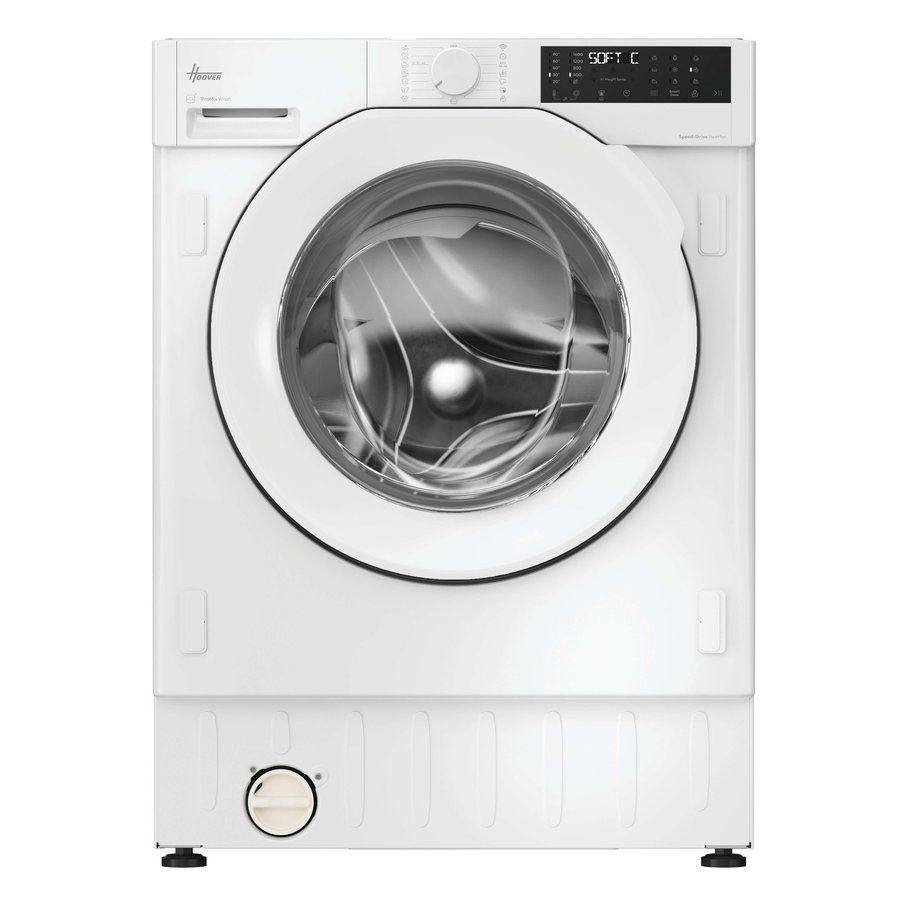




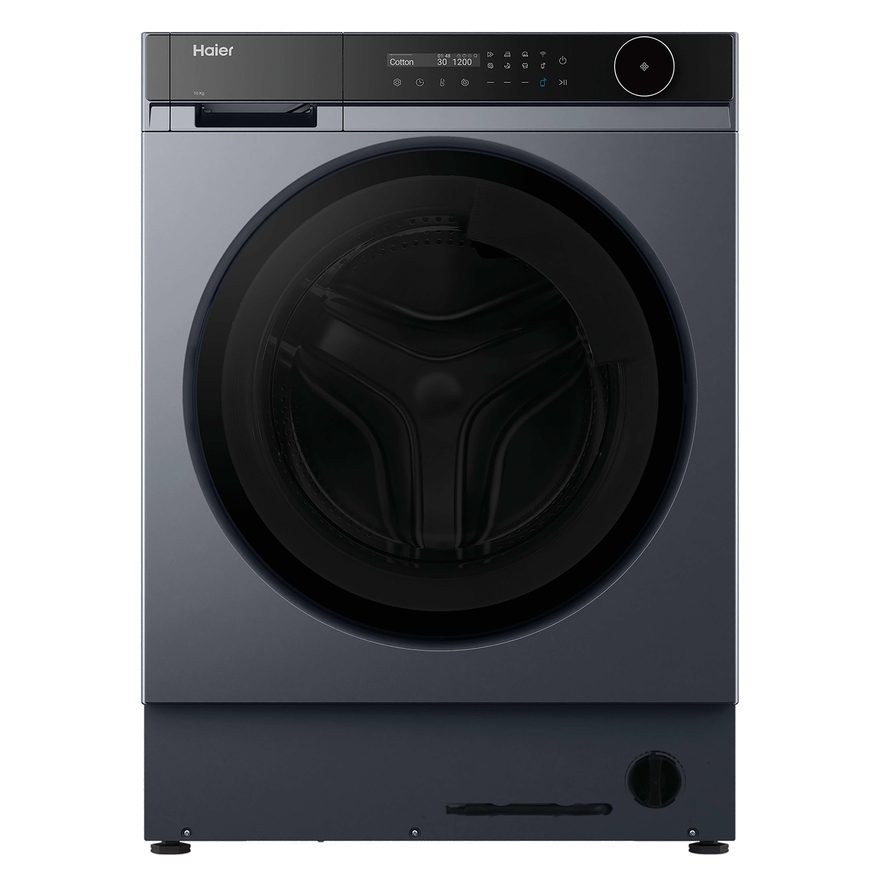







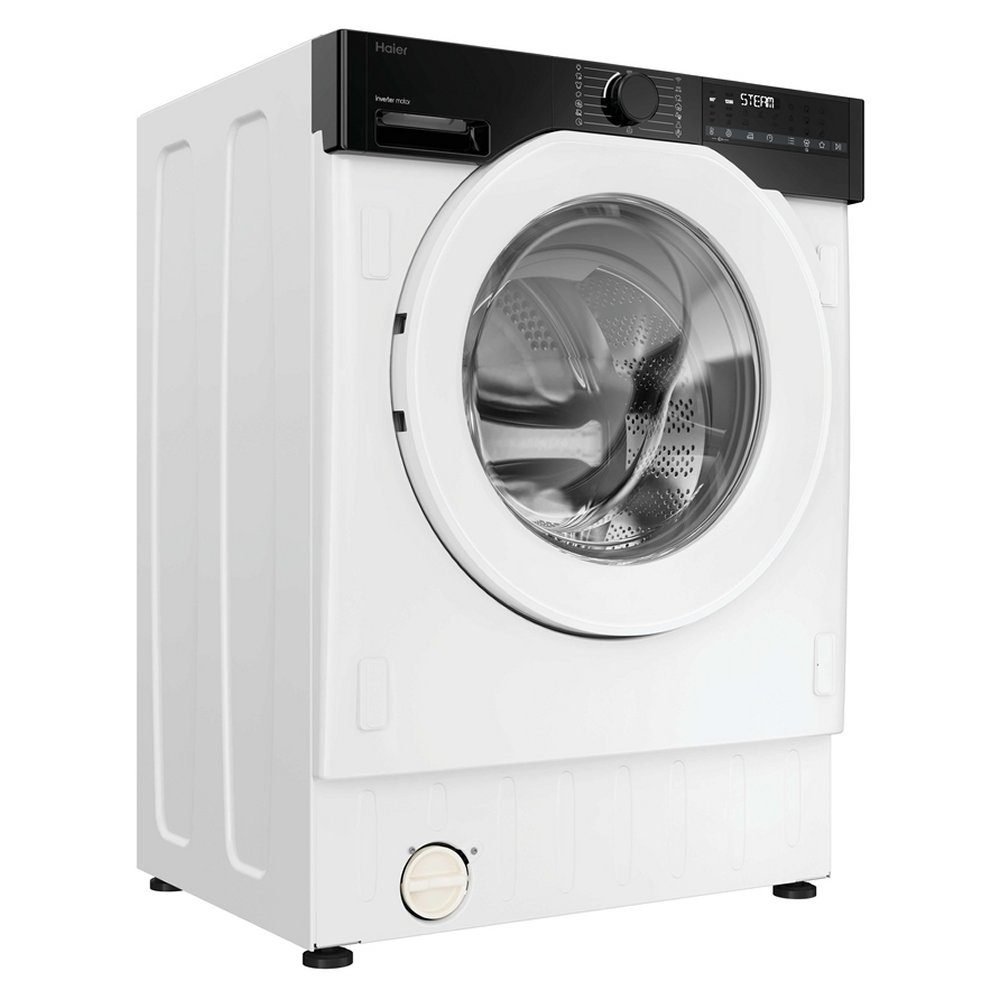
Haier 9kg Integrated Washing Machine 1600rpm BHA6S69M6D9J-80


AEG 7kg Series 6000 Fully Integrated Washing Machine LFX6G7434BI

AEG 8kg Series 8000 Fully Integrated OkoMix Washing Machine LF8E8436BI

AEG 8kg Series 7000 Fully Integrated ProSteam Washing Machine LF7C8636BI


FAQs: Integrated Washing Machine Dimensions
No. Most are designed around similar kitchen openings, but their height, depth, cupboard door fittings and installation requirements can differ. Always check the exact model before buying.
In many cases, yes. The new machine needs to fit your available space and work with your existing cupboard door, plinth and plumbing. You may need different fittings or minor adjustments, so check the installation instructions first.
That depends on the model and the position of your connections. Allow enough room for the inlet hose, waste hose and other fittings, following the manufacturer’s instructions. A general allowance isn’t a substitute for checking the actual installation requirements.
For many households, 7–8 kg is a good starting point. Families or people who regularly wash bulky items might prefer a larger capacity, provided a suitable model fits their kitchen.
Often, yes. The important thing is to check that the door’s dimensions, weight and fixing arrangement are compatible with the replacement appliance.
Some are, but not all. Compare the exact appliance dimensions and allow for the space needed behind the machine for hoses and connections.