

September 02, 2026
Recirculation or Ducted Extraction? Understanding How Cooker Hoods Work
Choosing a cooker hood is about more than finding one that looks good above your hob. You also need to think about what happens to the cooking air once your hood has captured it. Does it get filtered and returned to the kitchen, or does it travel through ducting and leave the house? These are the two main options you'll come across: recirculation and ducted extraction. The right choice can depend on everything from your kitchen layout and cooking habits to the type of hood you choose. An integrated hood and canopy hood, for example, can approach extraction differently, so understanding how each works can make choosing the right appliance much easier.
9 min read
What is the difference between recirculation and ducted extraction?
A recirculating cooker hood draws cooking air into the appliance and passes it through filters. The grease filter captures grease and cooking particles, while a carbon or charcoal filter can help reduce cooking odours. The filtered air is then returned to the kitchen.
The main attraction is flexibility. You don’t need a duct running to an outside wall, which can make recirculation useful when external extraction isn’t practical. However, because the air is returned to the room, heat and moisture aren’t removed from the kitchen in the same way they are with external extraction. The filters also need regular attention to maintain performance.
Ducted cooker hoods
Ducted extraction, sometimes called vented extraction, takes the cooking air outside through a duct. The hood still uses a grease filter to capture airborne grease and particles, but instead of returning the air to the kitchen, the system carries it outdoors. This can be particularly useful for removing cooking smells, heat and moisture from the room.
The main consideration is installation. You’ll need a suitable route from the hood to an external outlet, and the ducting needs to be planned carefully.
Integrated cooker hoods
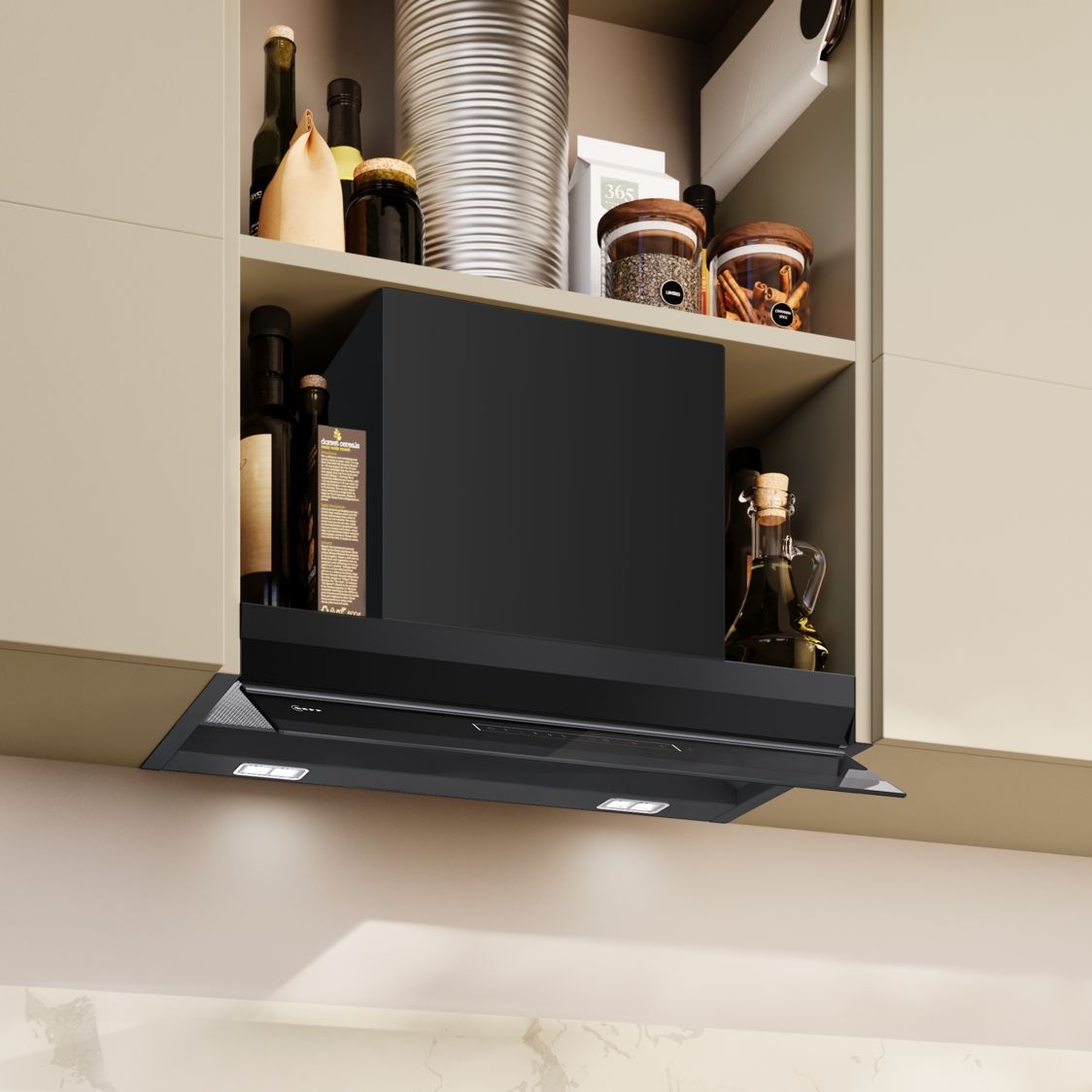
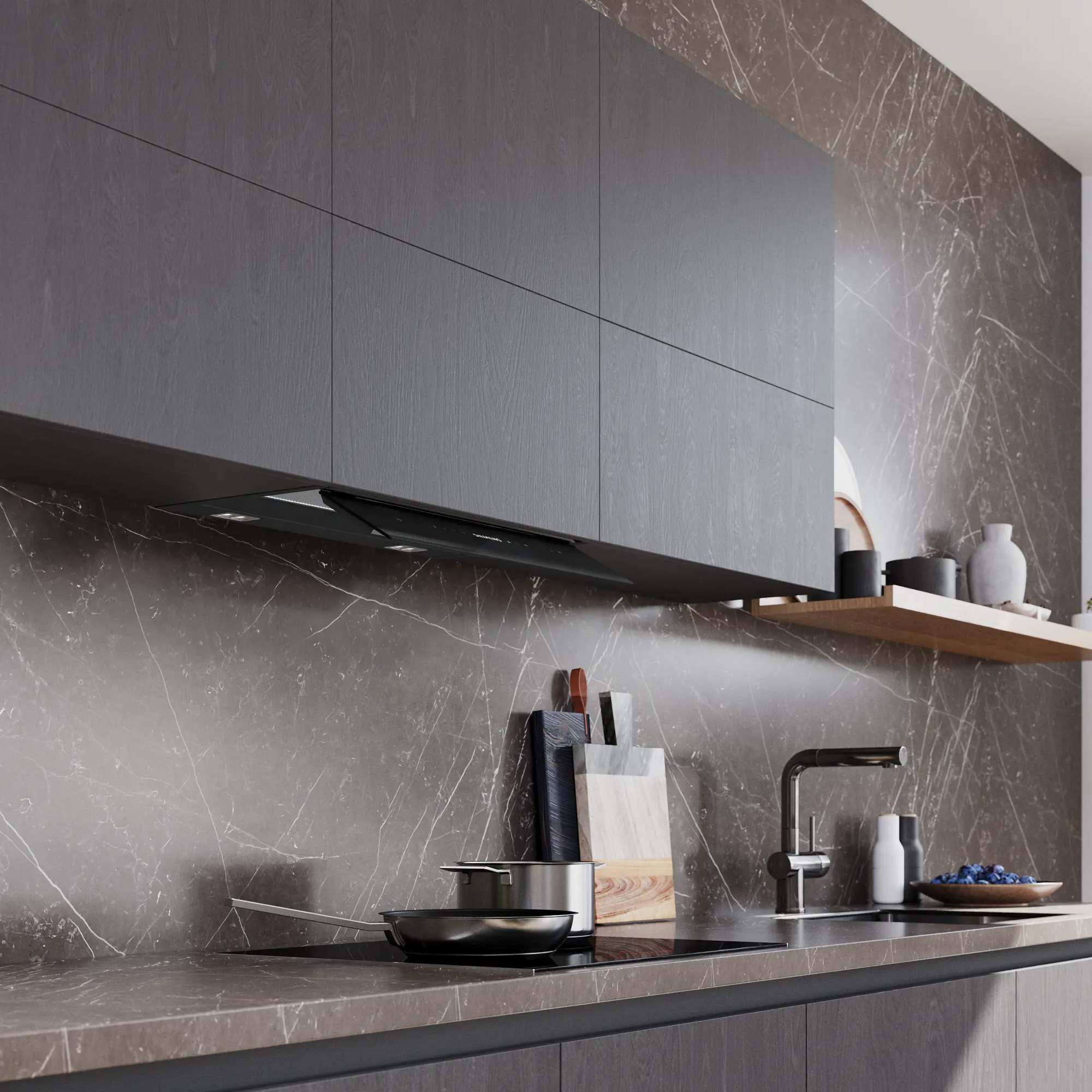
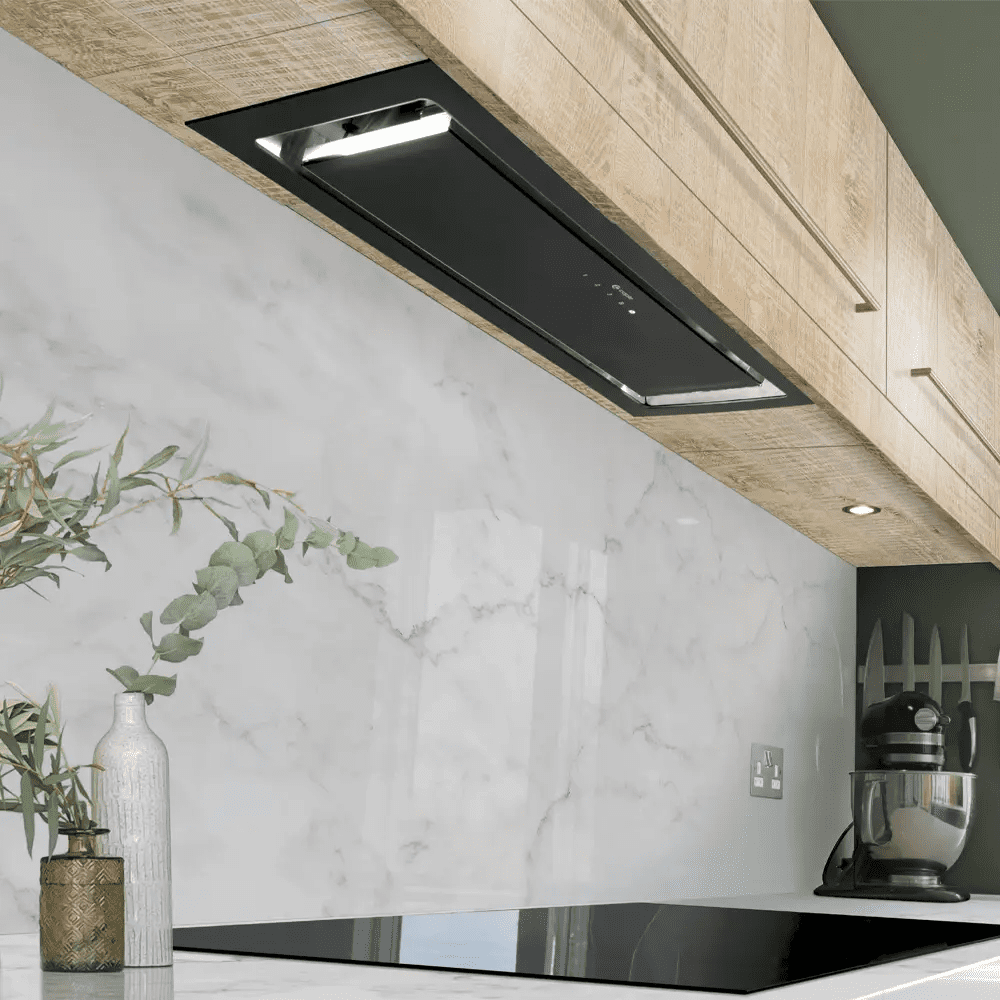
If you want your cooker hood to blend into your kitchen rather than become a feature, an integrated cooker hood could be the answer. These hoods are designed to sit inside a kitchen cabinet or unit, keeping the appliance largely hidden from view. But just because the hood is hidden doesn’t mean its extraction method should be an afterthought. Your choice between recirculation and ducted extraction will largely depend on the available installation space and whether an external route is practical.
Integrated hoods with recirculation
Recirculation can be a convenient option for an integrated hood because there’s no need to create an external duct route. The hood draws in cooking air, filters it and returns it to the kitchen, allowing the cabinetry to retain its clean, streamlined appearance. This can be particularly useful where the hob isn’t positioned close to an external wall or where installing ductwork would be difficult.
Just remember that the filters are an important part of the system. Grease filters should be cleaned as recommended, while carbon filters need to be replaced according to the manufacturer’s instructions.
Integrated hoods with ducted extraction
If you have a suitable route outside, an integrated hood can also be ducted. This allows the hood to remove cooking air from the kitchen while keeping the appliance discreetly concealed within the cabinetry.
Planning is particularly important here. Cabinet space can be limited, so the duct route should be considered before the kitchen is installed rather than squeezed in afterwards.
Canopy cooker hoods
A recirculating canopy hood can be a practical solution where external ducting isn’t possible. It draws air through its filters and returns the filtered air to the kitchen.
This avoids the need for ductwork and can simplify installation. However, if you’re regularly boiling large pans, frying or cooking dishes that generate plenty of steam, remember that recirculation doesn’t remove that warm, moist air from the room.
Canopy hoods with recirculation
A recirculating canopy hood can be a practical solution where external ducting isn’t possible. It draws air through its filters and returns the filtered air to the kitchen.
This avoids the need for ductwork and can simplify installation. However, if you’re regularly boiling large pans, frying or cooking dishes that generate plenty of steam, remember that recirculation doesn’t remove that warm, moist air from the room.
Canopy hoods with ducted extraction
Where an external duct route is available, a canopy hood can send captured cooking air outside. This can be particularly useful in a busy kitchen where several cooking zones may be used at once. The ducting itself deserves attention. A route with unnecessary bends, restrictions or excessive length can affect airflow, so the duct should be planned as part of the overall installation.
Chimney hoods
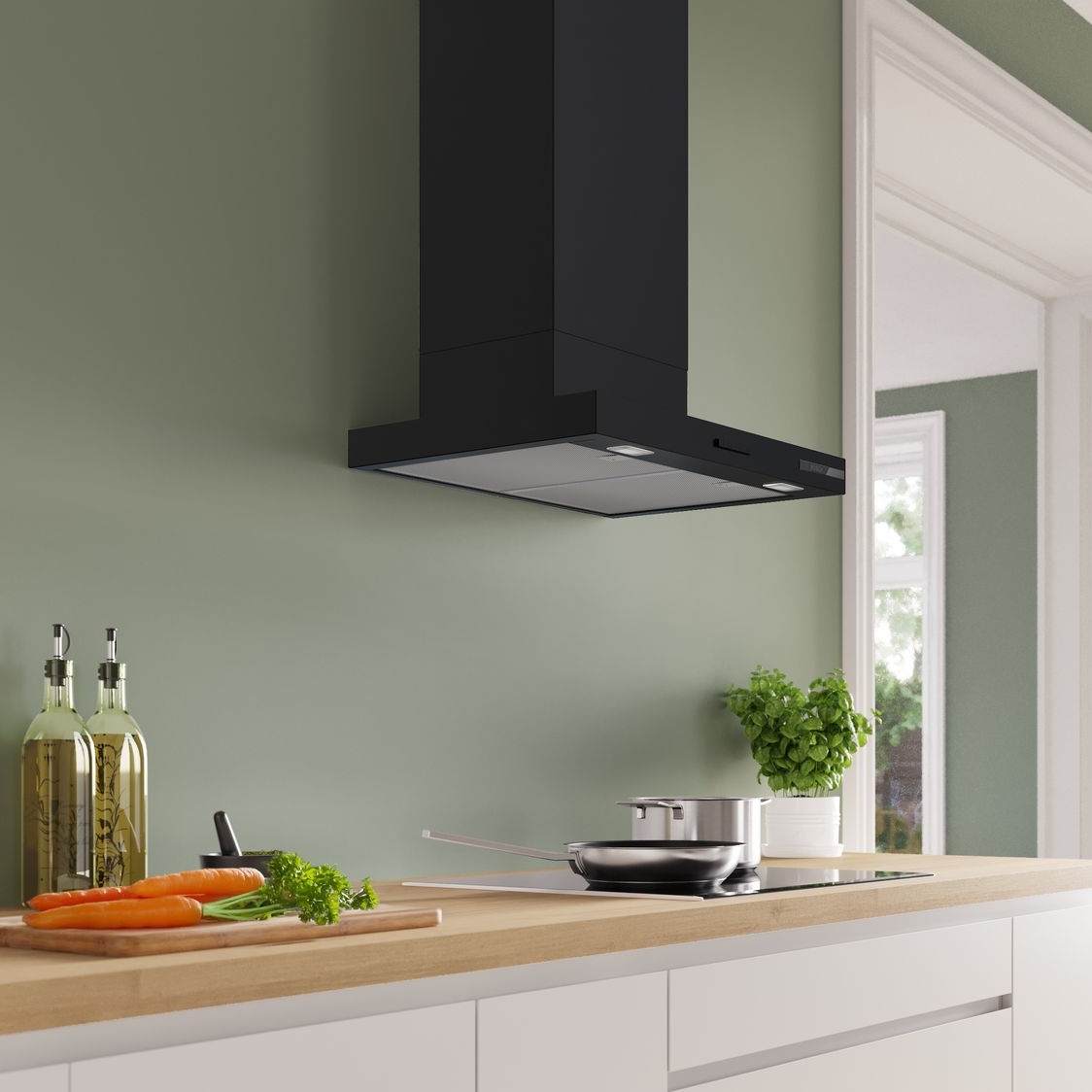
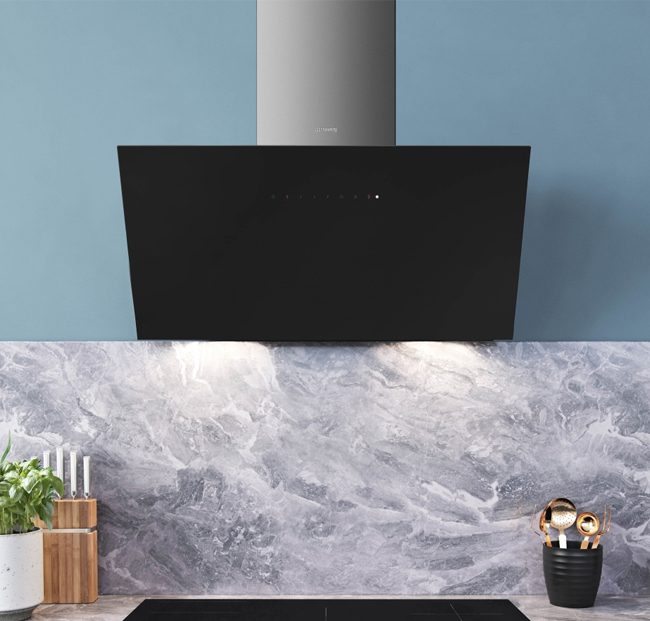
A chimney hood is one of the most familiar cooker hood designs. Mounted against the wall above the hob, it combines a canopy section with a chimney extending upwards. It can become a feature in the kitchen or blend into the surrounding design, depending on the model and finish.
But the chimney doesn’t necessarily mean the air is being sent outside. It can offer both style and flexibility, with recirculation or ducted extraction depending on what your kitchen can accommodate.
Chimney hoods with recirculation
A recirculating chimney hood filters the cooking air and returns it to the room. The chimney section can still form part of the appliance’s overall design, but it isn’t being used as a route for air to leave the building.
This can be a useful option if you want the look and coverage of a chimney hood without having a suitable external duct route. Filter maintenance remains important, particularly when the hood is being used regularly.
Chimney hoods with ducted extraction
With ducted extraction, the chimney section can accommodate the duct route carrying air towards an external outlet. The hood captures cooking air above the hob, filters out airborne grease and sends the air outside. For households that cook frequently, this can be an attractive way of dealing with heat, moisture and cooking aromas.
As with any ducted system, the route should be considered during installation rather than simply assumed to be taken care of by the chimney.
Downdraft hoods
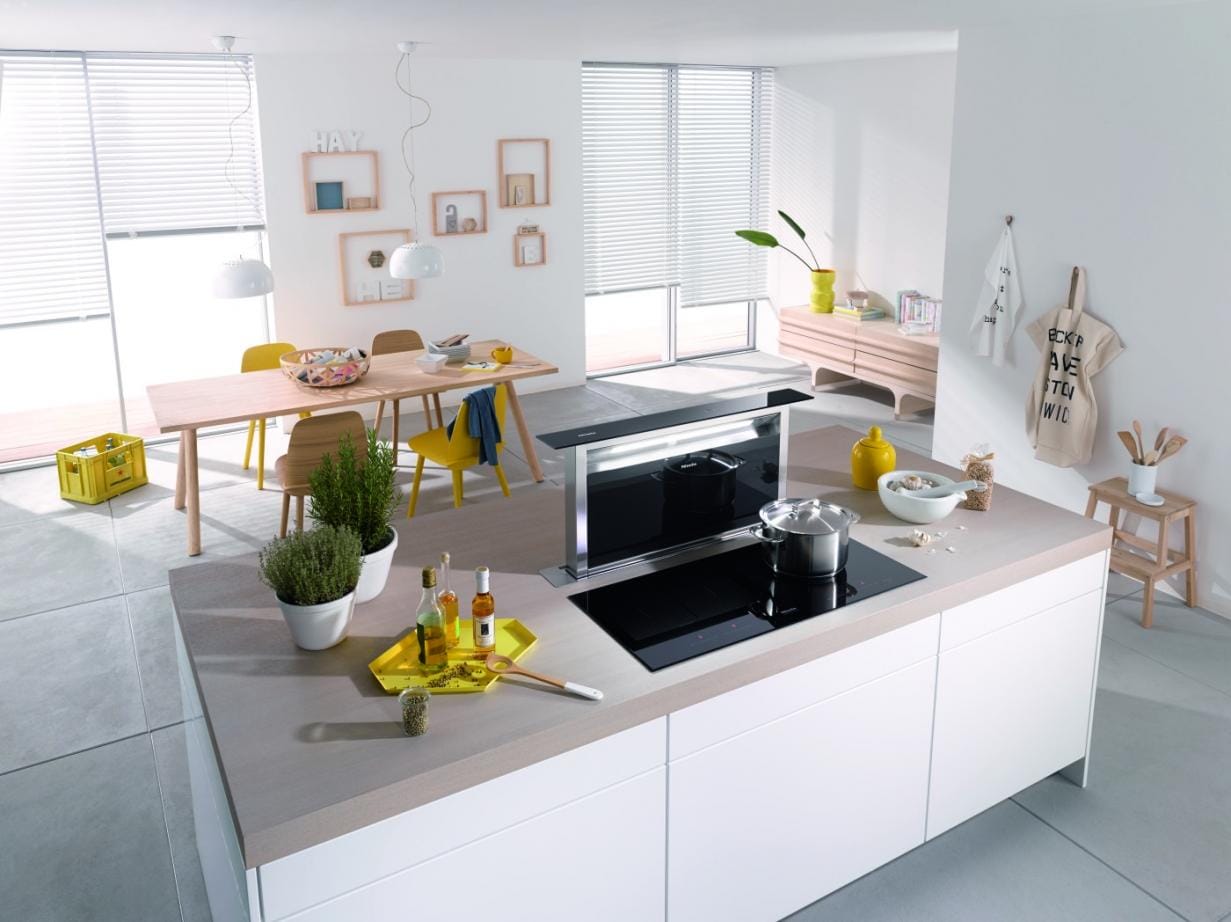
Downdraft extractors take a different approach altogether. Instead of being positioned above the hob, they’re installed beside or behind the cooking area and draw cooking vapours downwards or towards the rear of the hob. Some models retract into the worktop when they’re not being used, making them a popular choice for kitchen islands and open plan spaces where maintaining clear sightlines is important.
They’re a great option when you want extraction to stay out of sight, but the ducting and available space underneath the hob need to be considered carefully.
Downdraft hoods with recirculation
A recirculating downdraft can be useful where there’s no straightforward route for ducting to the outside. The system draws cooking air down from the cooking area, filters it and returns it to the kitchen.
Because downdraft extraction operates differently from a conventional overhead hood, it’s especially important to follow the manufacturer’s installation requirements and make sure the extractor is suitable for your particular hob.
Downdraft hoods with ducted extraction
A ducted downdraft sends captured air outside, but its installation can require more planning than a conventional wall mounted hood. This is particularly true when the hob is located on an island. The duct may need to travel through cabinetry or below the floor before reaching an external outlet.
That’s why downdraft extraction is best considered early in a kitchen project.
What extraction rate do I need?
The extraction rate is one of the most useful specifications to understand when you’re choosing a cooker hood. It tells you how much air the hood can move, helping you compare the performance of different models. But a higher number isn’t automatically better. The right extraction rate depends on your kitchen, your cooking habits, the type of hood you’re installing and, if you’re using ducted extraction, how the system is installed. Here’s how to work it out…
Common Extraction Installation Questions & Answers
Yes. As a general rule, the hood should be at least as wide as the hob or cooker beneath it. This helps give the appliance a suitable area over which to capture cooking vapours.
The position of the hood matters too. Different types of cooker hood have different installation requirements, including minimum distances between the hob and hood. Always follow the manufacturer’s instructions for your particular appliance and hob combination. This is particularly important with downdraft extractors, where the relationship between the extractor, hob and surrounding worktop is quite different from a conventional overhead hood.
It can affect performance, yes. Choosing a cooker hood with a high extraction rate is only part of the equation. If you’re using ducted extraction, the duct route also needs to be considered. Long or complicated routes, unnecessary bends and restrictions can affect airflow.
That’s why it’s worth thinking about ducting at the same time as the cooker hood and kitchen layout.
If you’re planning a new kitchen, this can be much easier than trying to find a duct route once the cabinets, worktops and appliances are already in place.
Both extraction methods can involve grease filtration, but recirculating hoods have an additional consideration.
Grease filters
Grease filters help capture grease and cooking particles before they travel further into the extraction system. They need to be cleaned regularly according to the manufacturer’s guidance.
Carbon filters
Recirculating cooker hoods commonly use carbon or charcoal filters to help reduce cooking odours. Because the air is returned to the kitchen, these filters are an important part of the recirculation system.
Neither last forever, so check the manufacturer’s instructions for replacement intervals and the correct filter for your model.
Yes, absolutely. Recirculating cooker hoods can be a practical choice where external ducting isn’t possible. They filter cooking air before returning it to the kitchen, helping to reduce grease and cooking odours. Their main limitation is that they don’t remove heat and moisture from the room in the same way as ducted extraction.
Not necessarily for every kitchen. Ducted extraction can be particularly effective when you want cooking air, heat and moisture removed from the room, but it requires a suitable route outside. Recirculation offers greater installation flexibility because it doesn’t need external ducting.
No. A cooker hood can be installed for recirculation if the model supports it. In this setup, air is filtered and returned to the kitchen rather than being vented outside.
Yes, as long as the particular model is designed for recirculation. Integrated hoods are often well suited to recirculation because the installation doesn’t require an external duct route.
Yes. Many chimney-style cooker hoods can operate using either recirculation or external extraction, depending on the model and installation. It’s important to check the manufacturer’s specifications before buying.
Yes, some downdraft extractors can be ducted outside. However, the duct route can be more complicated than with an overhead hood, particularly when the hob is installed on an island. Check the manufacturer’s installation requirements before planning the kitchen.
It can filter airborne particles, but it doesn’t remove moisture from the kitchen in the same way as an externally ducted system. If reducing steam and humidity is a major priority, ducted extraction may be worth considering where a suitable external route is available.
The answer depends on the model and how often you cook. Grease filters should be cleaned according to the manufacturer’s instructions. If your hood uses carbon filters for recirculation, these will also need to be replaced periodically. Always check the guidance supplied with your particular cooker hood.
As a starting point, the hood should generally be at least as wide as the hob or cooker beneath it. For example, a 60cm hob would normally be paired with a hood that is at least 60cm wide, although your kitchen layout and chosen appliance may make a wider hood appropriate.
So, which cooker hood should you choose?
The best cooker hood is the one that works with both your kitchen and the way you cook. An integrated hood can keep extraction discreet inside your cabinetry. A canopy hood can provide generous coverage over a larger cooking area. A chimney hood can make extraction part of the kitchen’s design, while a downdraft extractor can keep the view across an island clear.
Then there’s the question of where the air goes:
- Recirculation filters cooking air and returns it to the room, offering flexibility when external ducting isn’t practical.
- Ducted extraction carries cooking air outside, making it an appealing option where you have a suitable external route and want to remove heat and moisture as well as cooking aromas.
There’s no need to choose based on the hood’s appearance alone. Consider your hob size, kitchen layout, cooking habits, extraction rate, filters and, perhaps most importantly, how the appliance can actually be installed. Get those decisions right, and your cooker hood won’t just complement your kitchen. It’ll work properly as part of it.