


September 11, 2026
Cooker Hood Buying Guide: How to Choose the Right Extractor for Your Kitchen
A cooker hood has an important job to do. It needs to capture steam, grease and cooking odours before they spread around your kitchen, but that doesn’t mean choosing one has to be complicated. The right cooker hood depends on your kitchen layout, the size of your hob, how you cook and whether you can vent air outside. Then there are the things you’ll notice every day, such as how noisy it is, how easy it is to clean and whether it fits the look of your kitchen.

In a hurry? Here’s what to check first
Before you start comparing cooker hoods, make a note of these six things:
- How wide is your hob or cooker?
- Where will the hood be installed?
- Can you vent the air outside, or will you need recirculation?
- How much extraction power does your kitchen need?
- How important is noise to you?
- What installation, ducting and clearance requirements need to be considered?
Get these decisions right and choosing the style, finish and features becomes much easier.
Which cooker hood is right for me?
There isn’t one cooker hood that’s best for every kitchen. The right choice starts with where your hob is and what you need the extractor to do. Don’t worry if you’re not sure which category your kitchen falls into. We’ll take you through each of the important choices in this guide.
| Your kitchen | Cooker hoods worth considering |
|---|---|
| Hob against a wall | Chimney, angled, canopy, integrated or telescopic hood |
| Hob in an island | Island hood, ceiling extractor or downdraft extractor |
| Hob beneath a kitchen cabinet | Integrated or telescopic hood |
| Small kitchen | Integrated, telescopic or compact wall-mounted hood |
| No practical route outside | Recirculating cooker hood |
| Large or open plan kitchen | A high-performance hood with good noise control |
| New kitchen or major renovation | Consider ducted extraction, or a venting hob where appropriate |
What type of cooker hood should I choose?
Once you’ve worked out where the hood needs to go, you can start thinking about the style. The appearance matters, of course, but it’s worth choosing the type of hood based on your kitchen first and its looks second. A beautiful extractor that doesn’t suit the space won’t be much use.
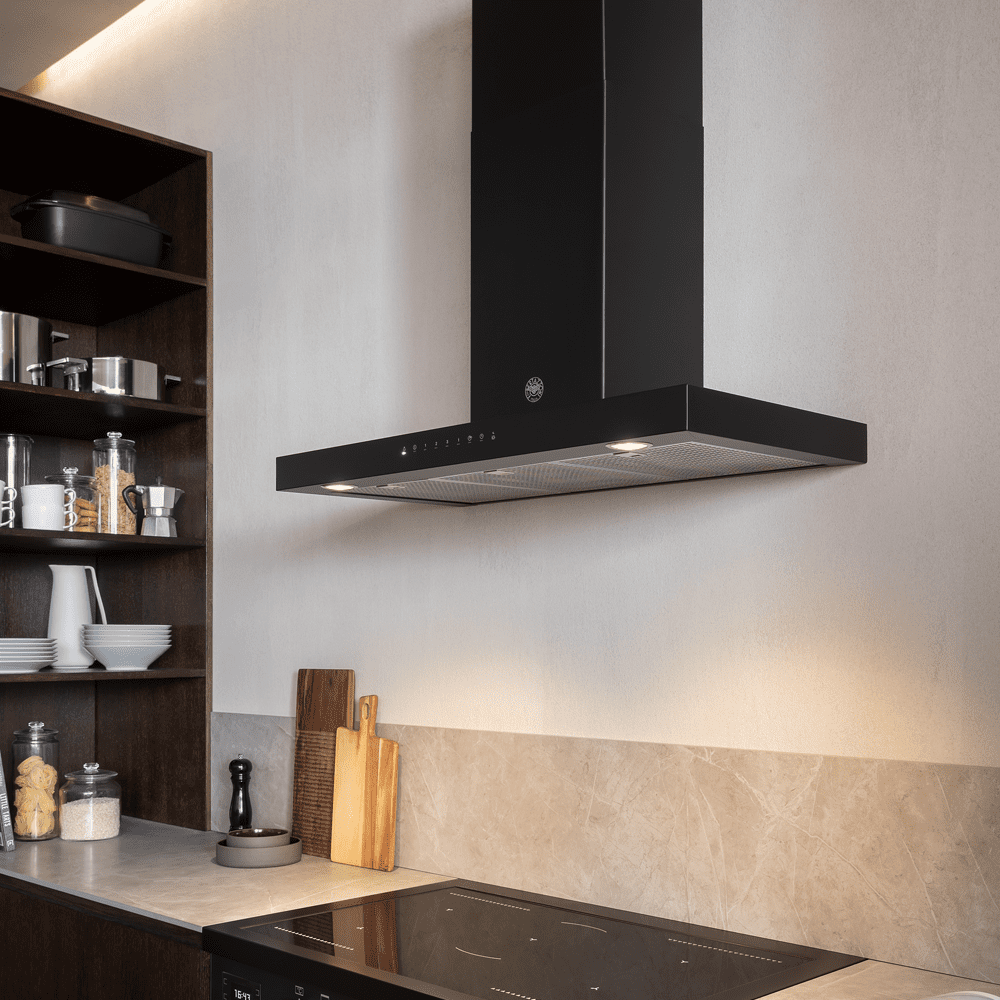
Wall mounted hoods are designed to sit above a hob positioned against a wall. They come in several styles, from traditional chimney hoods to modern angled and box designs. They’re a popular choice because they’re relatively straightforward to position and can make a feature of the area above your hob.
Good for: Most wall mounted hobs and cookers, particularly where the extractor can be ducted through an external wall.
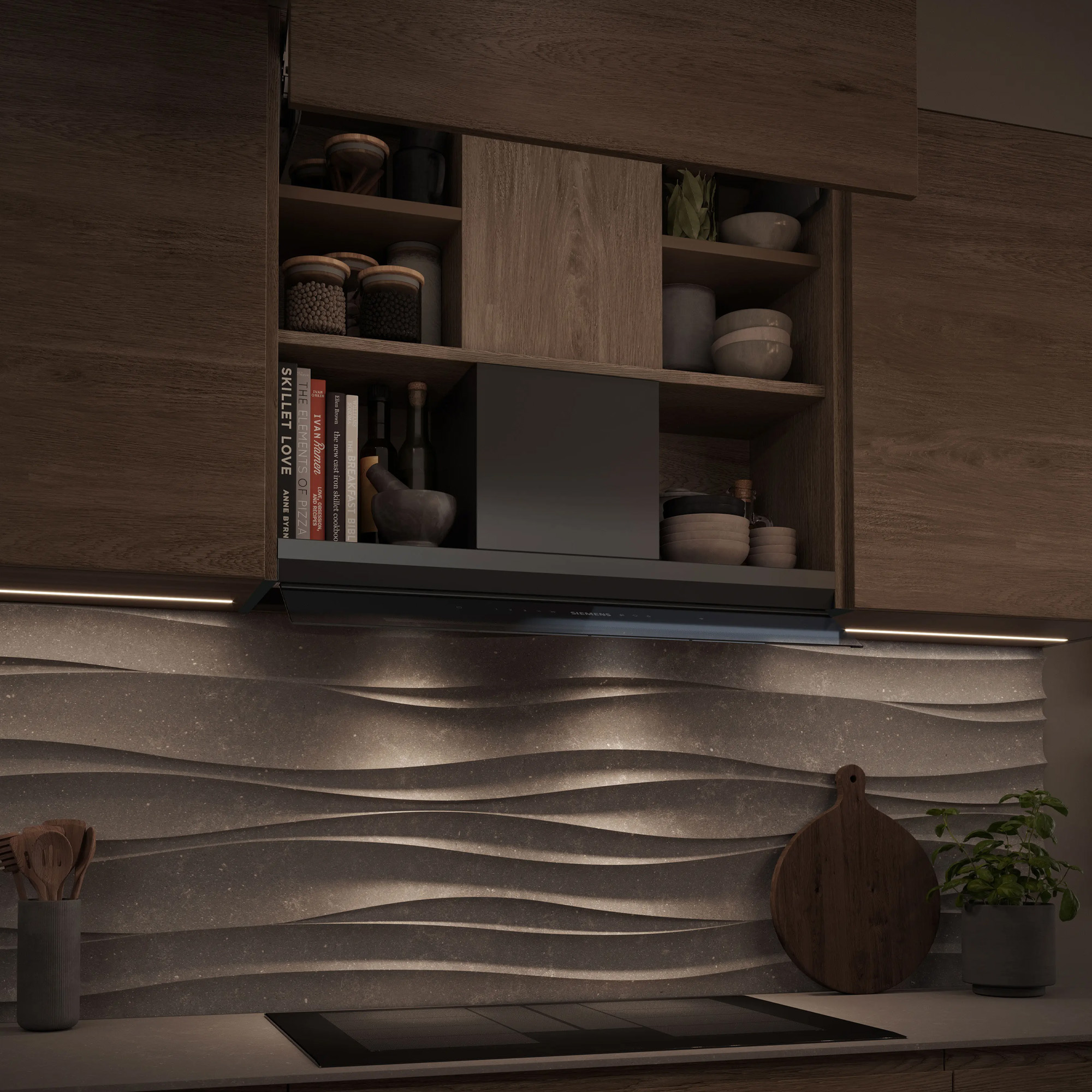
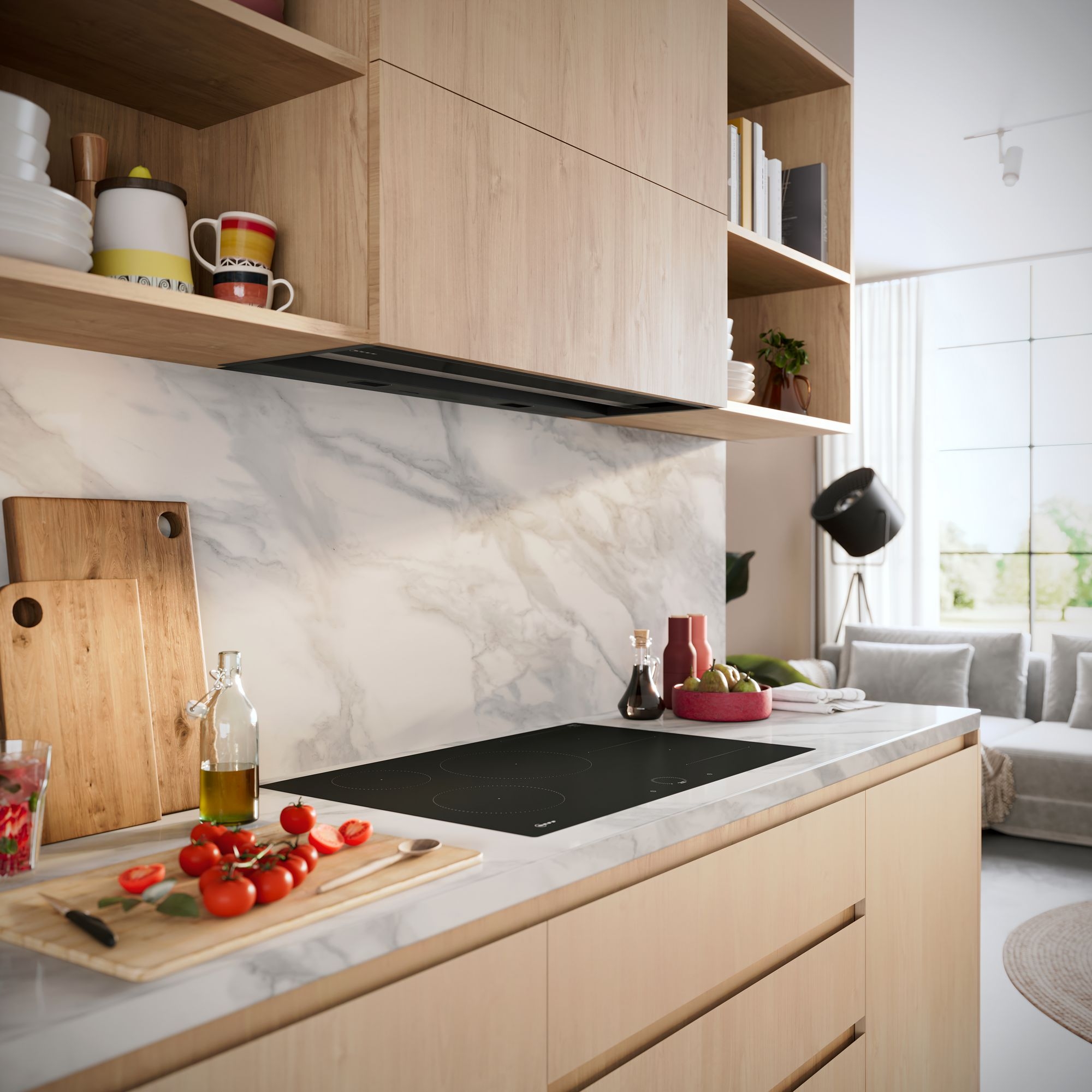
An integrated cooker hood is designed to sit inside a kitchen cabinet, keeping the extractor largely out of sight. This makes it a good option if you want a clean, streamlined kitchen or don’t want your extractor to become a focal point. Before buying, check the dimensions carefully. You’ll need to make sure the hood fits the cabinet and that there’s sufficient space for any ducting or other installation requirements.
Good for: Fitted kitchens where you want the hood concealed within cabinetry.
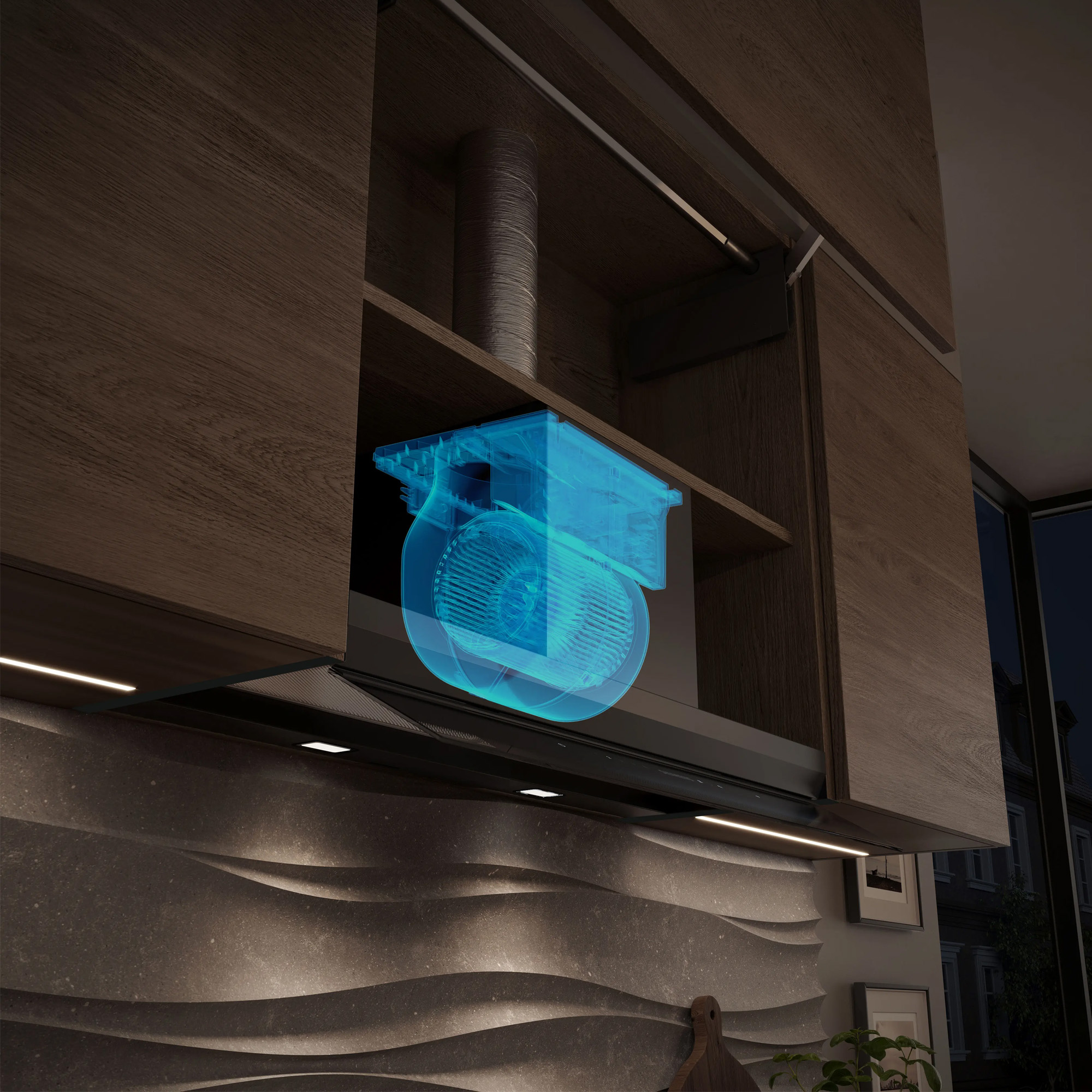
Telescopic hoods have a sliding section that extends when you’re cooking and can be pushed back when you’re finished. They’re particularly useful where space is limited, although you’ll need to consider how much cupboard space the appliance and ducting will take up.
Good for: Smaller kitchens and installations where a discreet extractor is important.
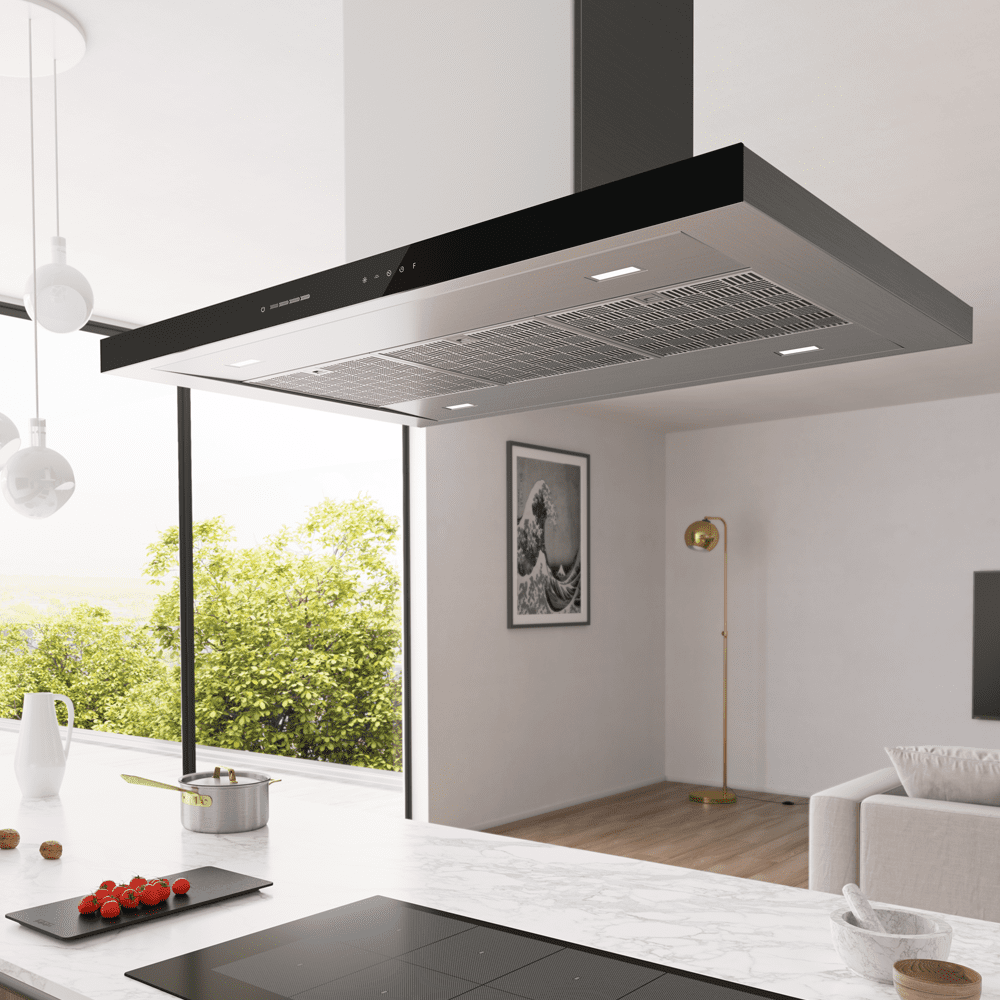
If your hob is positioned on a kitchen island, a conventional wall mounted hood isn’t an option. Island cooker hoods are designed to be suspended above the island and are available in a wide range of styles. Because they’re often a prominent feature in the middle of an open plan kitchen, appearance can be particularly important. But don’t let the design distract you from checking extraction performance and noise levels.
Good for: Island hobs and large open plan kitchens.
Ceiling extractors are fitted into the ceiling above the cooking area, creating a minimalist look with less visual impact than a conventional hood. They’re particularly popular in modern kitchens, but installation needs to be planned carefully because the position of the extractor, ceiling depth and ducting route all need to work together.
Good for: Minimalist kitchens and island cooking areas where you want the extractor to be less prominent.
Rather than pulling cooking fumes upwards, downdraft extractors draw air downwards or through the cooking area. They’re often integrated into a worktop or installed behind a hob and can be an attractive option where an overhead hood isn’t wanted.
Good for: Island layouts and kitchens where an overhead extractor would interrupt the design.
An air venting or extraction hob combines the hob and extractor in one appliance. Instead of installing a separate hood above the hob, extraction takes place at the cooking surface. This can be particularly appealing for kitchen islands where you want an uninterrupted view across the room.
It’s worth planning this option early, though, as the appliance, ducting and cabinetry all need to be designed around one another.
How should your cooker hood extract air?
This is one of the most important decisions you’ll make. A cooker hood can generally work by extracting air outside or by recirculating filtered air back into the kitchen.
What size cooker hood do I need?
Getting the size right isn’t simply a case of buying the same width as your kitchen cabinet. Start with your hob or cooker.
How wide should a cooker hood be?
As a general starting point, your cooker hood should be at least as wide as the cooking surface beneath it. A wider hood can provide greater coverage, provided you have enough space for it.
The exact choice will depend on the hood design, your kitchen layout and the manufacturer’s specifications. Current UK guidance states that where a cooker hood is used to extract outside, it should span at least the full width of the cooker.
How high should a cooker hood be above a hob?
The correct clearance depends on the hood, hob and manufacturer’s installation instructions. As a general rule, don’t assume that one measurement works for every appliance. Gas, electric and induction cooking appliances can have different requirements, and the manufacturer’s instructions should always take priority.
The same UK guidance as the above states that where a cooker hood extracts to outside, its height above the hob should follow the manufacturer’s instructions or, if no specification is available, be between 650mm and 750mm.
Always check both the hood and hob installation instructions before fitting.
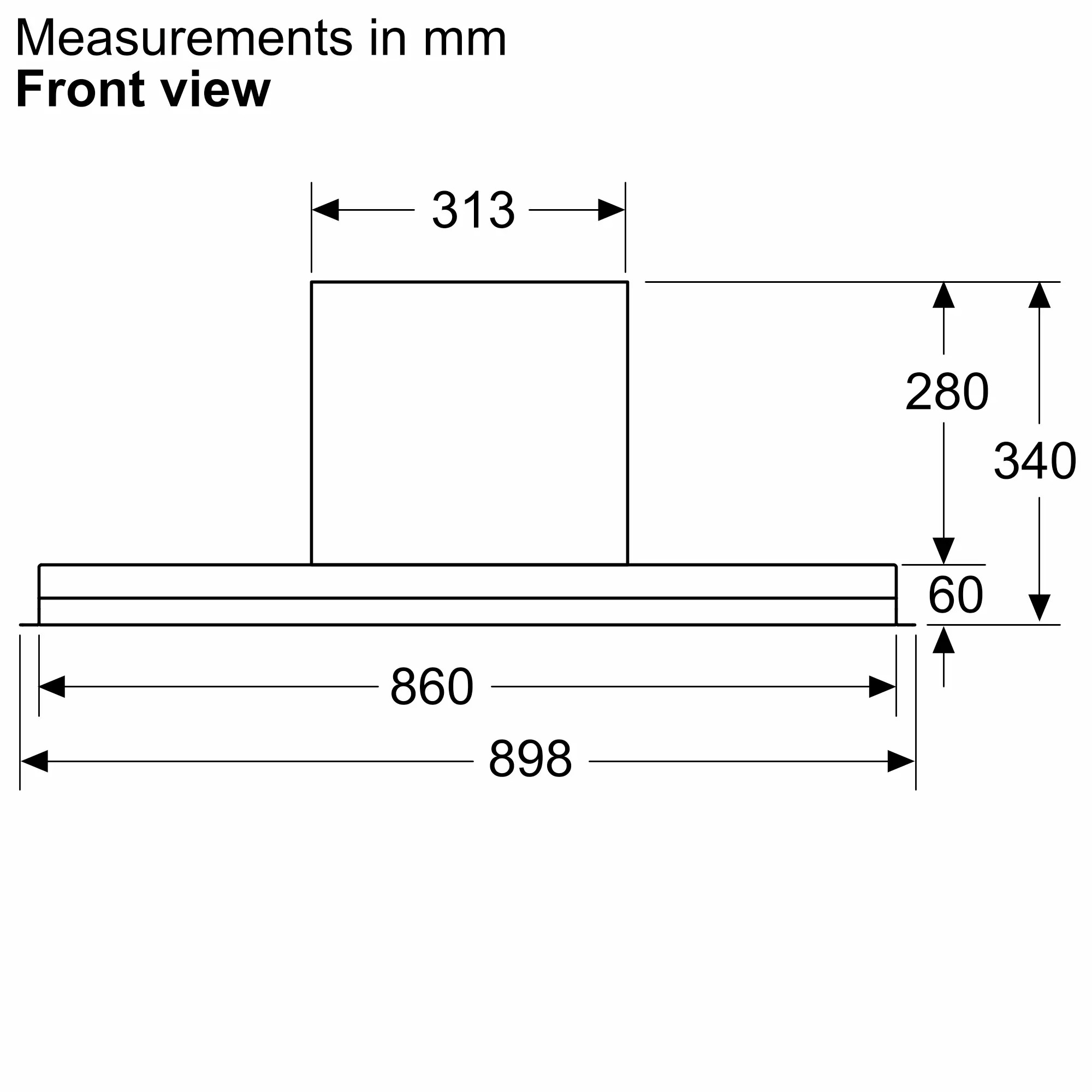
How do I measure for a cooker hood?
Before ordering, measure:
- The width of your hob or cooker
- The depth of the cooking area
- The available width for the hood
- The distance between the hob and the planned hood position
- The height and depth of any cupboards
- Your ceiling height
- The potential ducting route, if you’re extracting outside
A few minutes with a tape measure can save a lot of frustration later.
What extraction rate do I need?
You’ll often see cooker hood performance listed in m³/h, or cubic metres per hour. This tells you how much air the hood is capable of moving. A commonly used starting point is to calculate the volume of your kitchen and then look for a hood capable of changing that volume of air around 10 times per hour. Some guidance uses 10 – 12 air changes as a useful target, particularly for more demanding cooking.
How to calculate the extraction rate
First calculate the volume of your kitchen: Length × width × height = kitchen volume
Then: Kitchen volume × 10 = indicative extraction rate
For example, if your kitchen measures: 5m × 4m × 2.4m
The volume is: 48m³
Multiply that by 10: 48 × 10 = 480m³/h
So you’d have a useful starting point of around 480m³/h.
For an open plan kitchen or if you regularly fry, grill or cook foods that produce lots of steam and odours, you may want to look at a higher performing extractor or one with a useful boost setting. But remember that this is a starting point, not a guarantee of performance. Ducting, bends, installation and the hood’s actual operating conditions can all affect performance.
How noisy should a cooker hood be?
Noise is easy to overlook when you’re standing in a showroom or browsing online.It’s much harder to ignore when you’re trying to have a conversation across an open plan kitchen.
Cooker hood noise is measured in decibels (dB). The lower the number, the quieter the appliance is at the stated setting. When comparing models, don’t just look for the lowest headline figure. Check which fan speed the figure relates to. A hood might be impressively quiet on its lowest setting but considerably louder when running at maximum power.
What can make a cooker hood noisy?
The fan itself is only part of the story. Noise can also be affected by:
- Ducting size
- The length of the duct run
- Sharp bends
- Installation
- Vibration
- The extraction speed you’re using
- The kitchen’s acoustics
If your kitchen is open plan, or you regularly cook while other people are watching television, working or talking nearby, noise should be one of your key buying considerations.
Cooker hood filters explained
Grease filters
Grease filters capture particles from cooking before they enter the extractor. Depending on the appliance, they may be made from metal or another filter material and may be washable. Cleaning them regularly helps maintain airflow and prevents grease from building up.
Carbon filters
Carbon or charcoal filters are commonly used with recirculating cooker hoods. They help absorb cooking odours before the filtered air is returned to the kitchen. They don’t last forever, so check the manufacturer’s instructions for replacement intervals.
How often should cooker hood filters be cleaned or replaced?
There’s no single answer that applies to every household. How often you’ll need to clean or replace a filter depends on:
- How often you cook
- How much frying you do
- The type of filter
- Whether the hood is ducted or recirculating
- The manufacturer’s recommendations
If you cook regularly, it’s worth putting filter maintenance into your normal kitchen cleaning routine.
What should I consider before installing a cooker hood?
This is the point where your shortlist needs to meet your actual kitchen.
Do I have somewhere to vent the extractor?
If you’re choosing ducted extraction, work out where the duct will go before buying the appliance. A short, straightforward duct route is generally preferable to a long route with multiple bends. If you’re renovating a kitchen, planning the ducting at the same time as the cabinetry can make the installation much easier.
What ducting does a cooker hood need?
Check the manufacturer’s requirements for duct diameter, maximum duct length, permitted bends, external outlet and required accessories. Don’t assume that you can simply reduce the duct size to make it fit a cabinet. Restricting the airflow can affect performance and increase noise.
Will the hood fit my kitchen units?
Check the full dimensions rather than just the advertised width. You may also need to account for motor position, ducting, chimney sections, cabinet depth, electrical connections and access for filter removal
Do I need a professional to install my cooker hood?
That depends on the appliance and your installation. If you’re creating new ducting, modifying cabinetry, making an electrical connection or carrying out other building work, we would always recommend professional installation as the sensible choice. Always follow the manufacturer’s installation instructions and use appropriately qualified tradespeople where required.
Which cooker hood is best for different kitchens?
Look at integrated, telescopic or compact wall mounted models. A discreet design can help preserve cupboard and visual space, but don’t sacrifice extraction performance simply because the kitchen is small.
Prioritise extraction performance and noise. In an open plan space, cooking smells can travel much further, while a noisy hood can affect the rest of the room. A model with good everyday extraction and a powerful boost setting can be particularly useful.
Consider an island hood, ceiling extractor, downdraft extractor or venting hob. Your decision will depend on whether you want the extractor to be a feature or as discreet as possible.
Choose the hood based on the size of the cooking appliance, the kitchen volume and how you cook. Range cookers can generate substantial amounts of heat, steam and cooking odours, so extraction performance becomes particularly important.
Gas cooking has particular installation and clearance considerations, so always check the requirements of both the hob and cooker hood. A good extractor should also be capable of dealing effectively with the heat, steam and cooking by products generated during use.
Induction hobs don’t produce combustion gases in the same way as gas, but cooking still creates steam, grease and odours. A correctly sized hood remains important.
A recirculating cooker hood may be the most practical option where external ducting isn’t possible. Choose a model with effective filtration and make sure you understand the ongoing carbon filter maintenance. Remember that recirculation isn’t the same as ventilating the kitchen, so make sure the overall kitchen ventilation arrangement is suitable.
Integrated, ceiling and downdraft options can all provide a more discreet appearance. A venting hob is another option if you want to avoid an overhead extractor altogether.
The bottom line
Choosing a cooker hood doesn’t have to be about finding the biggest, most powerful or most expensive model.
Start with your kitchen. Measure your hob. Work out how much extraction you need. Decide whether you can vent outside. Think about how you cook. Then consider noise, filters, features and design. Get those fundamentals right and choosing the right cooker hood becomes much simpler.
And if you’re still deciding between a few models, don’t be afraid to prioritise performance and practicality over appearance. You’ll notice how well your extractor works every time you cook, long after the excitement of choosing the finish has worn off.
Cooker hood FAQs
The best type depends on your kitchen layout. Wall mounted hoods are versatile for hobs against a wall, island hoods suit island cooking areas, while integrated, ceiling and downdraft extractors can provide a more discreet finish.
As a starting point, choose a hood at least as wide as your hob or cooker. A wider hood can provide greater coverage if your kitchen has enough space for it.
It can be beneficial, as a wider hood can capture more of the steam and cooking by products rising from the hob. However, the most practical size depends on your kitchen layout and the hood’s design.
Calculate your kitchen volume by multiplying its length, width and height, then use around 10 air changes per hour as a starting point for the required extraction rate. Open plan kitchens and kitchens where a lot of frying or grilling takes place may benefit from greater extraction capacity.
Multiply the length, width and height of your kitchen to calculate its volume in cubic metres. Multiply that figure by 10 to get an indicative extraction rate in m³/h.
External extraction is generally more effective at removing moisture and cooking air from the kitchen. Recirculation can be a practical alternative when external ducting isn’t possible, but it doesn’t remove moisture from the room in the same way.
Not every cooker hood needs an external duct. Recirculating models filter the air and return it to the kitchen. However, a recirculating cooker hood should not be treated as a replacement for the kitchen’s required ventilation. Check the applicable building regulations and your installation requirements.
They can filter grease and reduce cooking odours, but they don’t remove moisture from the kitchen in the same way as a hood that extracts air outside.
Follow the manufacturer’s instructions for the specific hood and hob. If a cooker hood extracts to outside and no manufacturer’s specification is available, current Approved Document F guidance gives a height of 650 – 750mm above the hob surface.
Many cooker hoods use washable grease filters, but this varies by model. Always check the manufacturer’s instructions before cleaning a filter.
It depends on the filter and how frequently you cook. Check the manufacturer’s instructions and replace the filter when recommended to maintain effective odour filtration.
Look at the hood’s decibel rating and, importantly, check which extraction setting that rating applies to. If your kitchen is open plan, noise should be one of your main considerations.
Some straightforward installations may be suitable for competent DIYers, but ducting, electrical work, cabinetry modifications and other building work may require professional installation. Always follow the manufacturer’s instructions and use appropriately qualified professionals where necessary.
A cooker hood is specifically designed to capture cooking fumes, steam and grease above a hob or cooker. An extractor fan is a more general ventilation appliance. In some kitchens, a cooker hood may form part of the overall ventilation strategy, but the two shouldn’t automatically be considered interchangeable.