

November 18, 2026
Undercounter Fridge Buying Guide
An undercounter fridge is a great way to make the most of your available space without compromising on convenient food storage. Whether you're looking for a compact fridge for a smaller kitchen, extra chilled storage for a busy household or a practical addition to your utility room, there are plenty of options to choose from. However, before buying, it's worth considering more than just the fridge's capacity and appearance. Height, ventilation, door clearance and installation requirements can all affect whether a model is suitable for your home. Our guide explains what to look for when choosing an undercounter fridge, including the differences between freestanding and integrated models.
7 min read
Check the Height and Dimensions
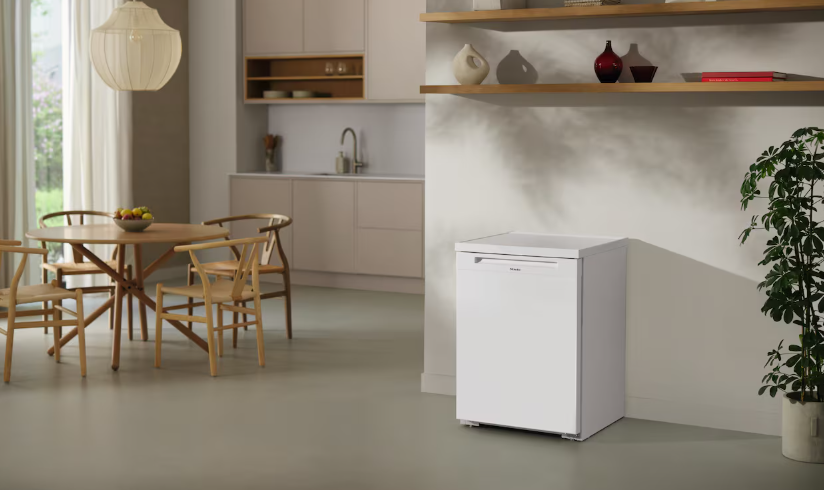
One of the first things to consider is whether your new fridge will fit comfortably underneath your worktop. Most undercounter fridges are approximately 82 – 85cm tall, making them suitable for standard UK kitchen worktops. However, dimensions can vary between manufacturers and models, so it’s important to check the product specifications before purchasing.
Remember to measure:
- Height: Measure from the floor to the underside of your worktop, allowing for any required ventilation clearance.
- Width: Check the available space between neighbouring cabinets or walls.
- Depth: Measure from the back wall to the front of the surrounding units, accounting for plugs, sockets and pipework.
Don’t assume every undercounter fridge is the same size. Some freestanding models can be taller or wider than expected, while integrated models are designed to fit specific cabinet dimensions.
Top tip: Measure your available space in several places, particularly if your floor or worktop isn’t completely level. Leave enough room for installation and follow the manufacturer’s recommended clearances.
Understand Ventilation Requirements
Ventilation is particularly important when installing an undercounter fridge.
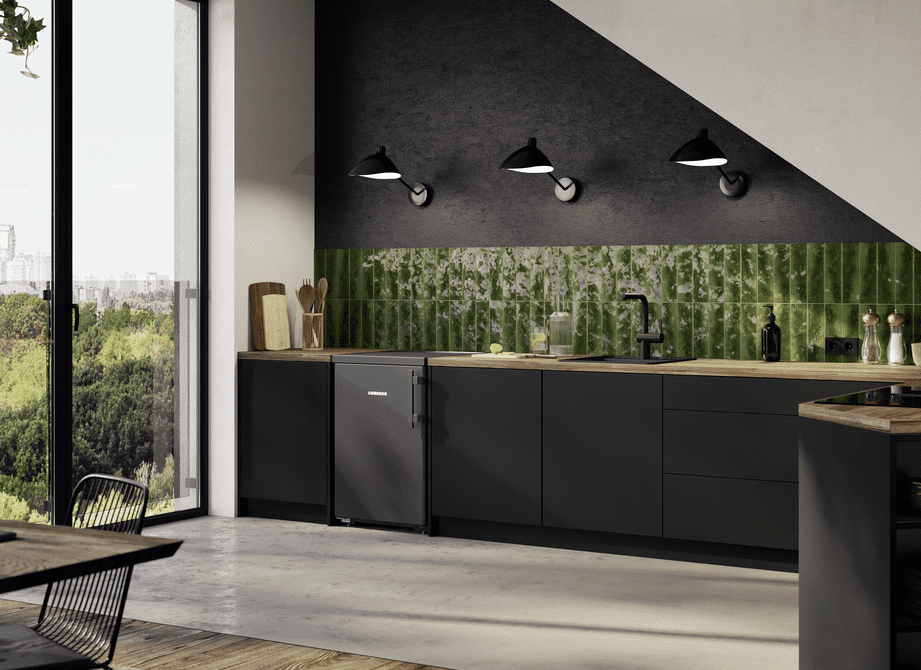
All fridges generate heat as they cool their interiors. This heat needs somewhere to escape, so adequate airflow is essential for the appliance to operate efficiently. The amount of ventilation required depends on the design of the fridge.
Freestanding models
Freestanding fridges generally need clearance around the appliance to allow heat to escape. This may include space at the back, sides and top. Avoid pushing a freestanding fridge tightly against surrounding cabinets or enclosing it in a space without checking its ventilation requirements.
Integrated models
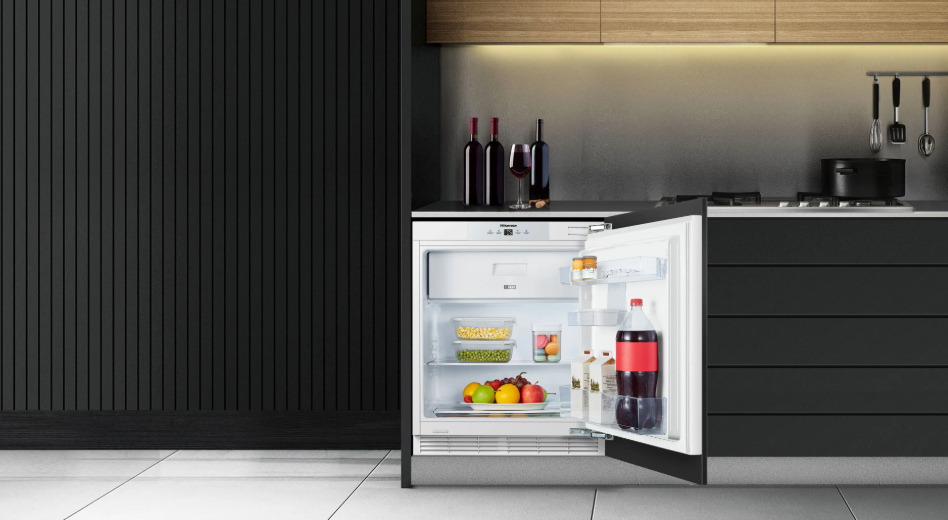
Integrated undercounter fridges are specifically designed to fit inside kitchen cabinetry. Many use a front ventilation system, allowing them to operate within a fitted kitchen when installed correctly. However, this doesn’t mean ventilation can be ignored. Cabinet ventilation channels, plinth grilles and any specified air gaps must remain unobstructed.
Always check the manufacturer’s installation instructions rather than relying on a general clearance measurement.
Think About Door Swing and Opening Direction
It’s easy to overlook the direction a fridge door opens, but it can make a significant difference to everyday convenience.
Before choosing a model, consider the position of nearby walls, kitchen cabinets, drawers and other appliances. Ask yourself:
- Will the door open fully without hitting an adjacent cabinet?
- Is there enough room to remove shelves and salad drawers?
- Will the door obstruct a walkway when open?
- Is the handle positioned conveniently for the layout?
Many undercounter fridges feature reversible doors, allowing you to change the hinge position from left to right or vice versa. This is particularly useful when replacing an existing appliance or fitting a fridge into a specific kitchen layout. However, not every model offers reversible doors, so check before buying.
For integrated fridges, also consider the cabinet door arrangement and hinge system. These need to work with your existing kitchen units.
Do You Need a Freezer Box?
Some undercounter fridges include a small freezer box, sometimes referred to as an ice box. This provides a convenient space for storing a limited amount of frozen food without needing a separate freezer. It’s a useful feature if you occasionally need to store ice cubes, frozen vegetables or a few smaller frozen items.
However, there are a few things to consider:
Undercounter fridges with freezer boxes
- Provide a small amount of additional frozen storage.
- Are useful for smaller households or occasional freezer use.
- Usually offer less fridge storage than an equivalent model without a freezer compartment.
- May require manual defrosting.
Undercounter fridges without freezer boxes
- Offer more space for fresh food and drinks.
- Provide greater flexibility for storing larger items.
- Are ideal if you already have a separate freezer.
It’s also important to check the freezer box’s star rating. A small ice box isn’t necessarily suitable for freezing fresh food. A four star compartment, for example, is designed for freezing fresh food as well as storing frozen items. If you regularly buy frozen food or need to store larger quantities, a separate freezer is likely to be a better option.
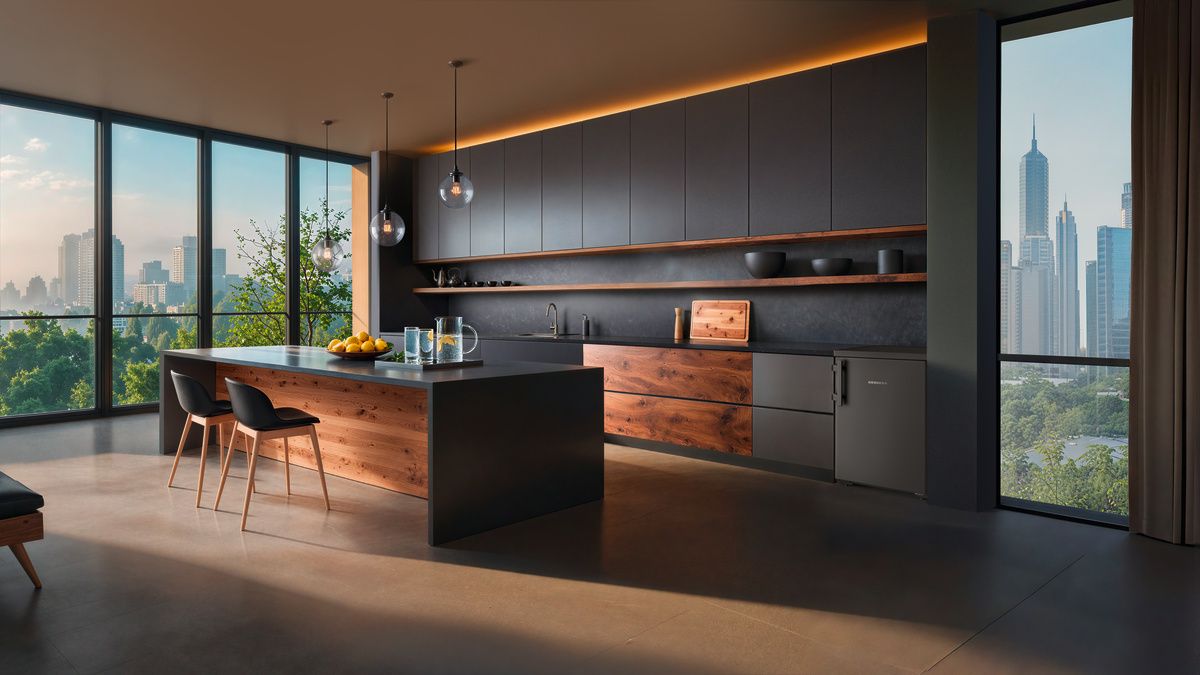
Freestanding or Integrated Undercounter Fridge?
One of the biggest decisions is whether to choose a freestanding or integrated model. Both are designed to fit beneath a worktop, but they offer different installation options and appearances.
Freestanding undercounter Fridges
A freestanding undercounter fridge is a standalone appliance with its own finished exterior. It can be positioned underneath a worktop without needing a matching kitchen cupboard door.
Benefits include:
- Generally straightforward to install.
- No need for a matching cabinet door.
- Often a wider choice of finishes and styles.
- Easier to move or replace if your requirements change.
- A practical option for kitchens, utility rooms and additional storage areas.
Freestanding models are particularly suitable if you’re updating an existing kitchen without changing the cabinetry or simply need an additional fridge.
Integrated undercounter Fridges
An integrated undercounter fridge is designed to sit inside a kitchen cabinet, concealed behind a matching cupboard door. This creates a seamless appearance, allowing the fridge to blend in with the rest of your kitchen.
Benefits include:
- A streamlined, built-in appearance.
- Matches existing kitchen cabinetry.
- Keeps appliances discreetly hidden.
- Ideal for modern fitted kitchens and minimalist designs.
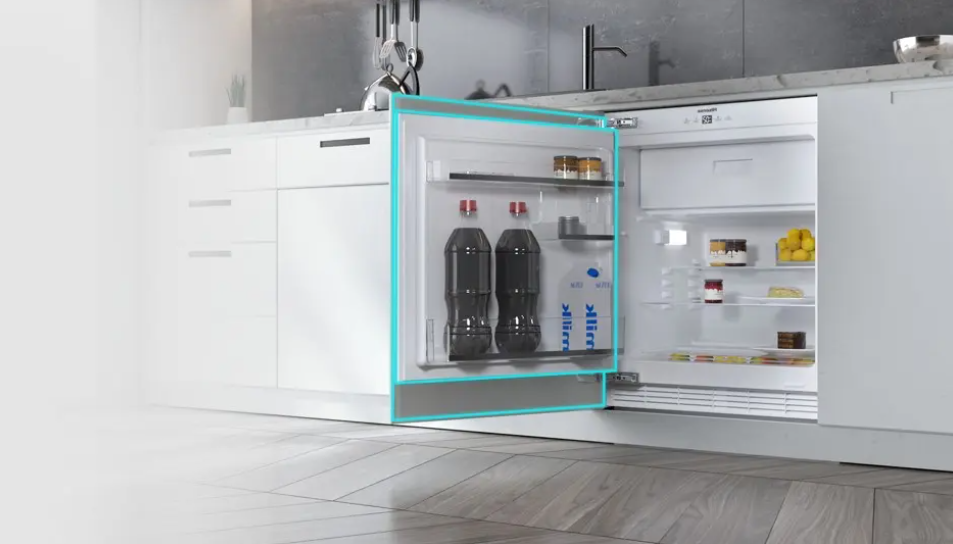
When buying an integrated model, check the appliance dimensions, cabinet requirements and door fixing system. There are two common hinge arrangements:
- Fixed hinge (door-on-door): The kitchen cabinet door attaches directly to the fridge door.
- Sliding hinge: The cabinet door connects to the fridge door using a sliding rail mechanism.
If you’re replacing an existing integrated fridge, it’s worth checking which hinge system your current appliance uses to help ensure compatibility. Integrated models can also require more planning and installation work than freestanding alternatives, so factor this into your budget.
Is an undercounter Fridge Suitable for a Utility Room?
An undercounter fridge isn’t just for the kitchen. It can be an excellent addition to a utility room, particularly if you need extra chilled storage without taking up too much floor space.
Here are some common uses:
A quick word about room temperature
If your utility room is unheated or particularly cold, check the fridge’s climate class and permitted ambient operating temperature before buying. Not every domestic fridge is designed to operate reliably in very cold rooms, garages or outbuildings. Equally, avoid positioning an appliance somewhere excessively warm.
Also ensure the fridge has a suitable electrical socket and that its ventilation requirements can be met.
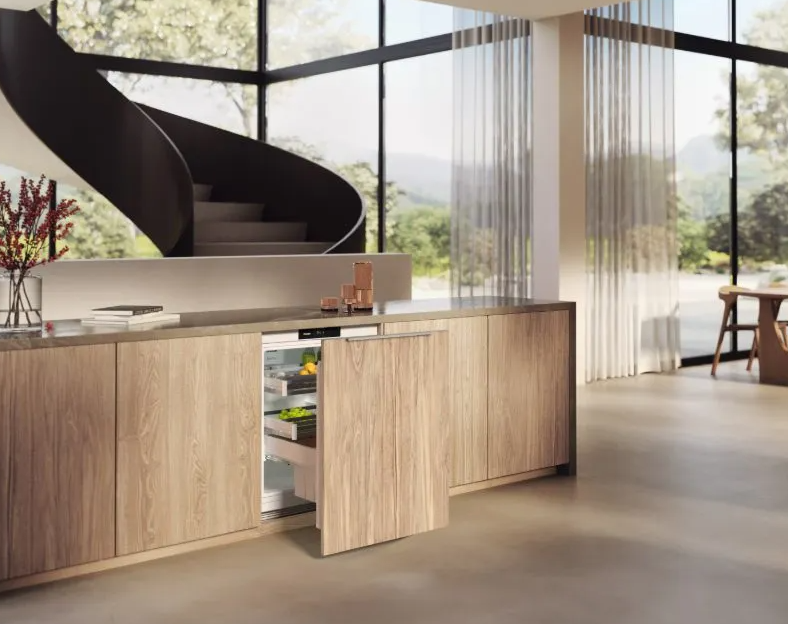
Consider Capacity and Internal Storage
Undercounter fridges are compact, but their usable storage capacity can vary considerably. Many models offer approximately 90 – 120 litres of usable space, although smaller and larger options are available.
Think about what you’ll be storing before choosing a model. Look for useful features such as:
- Adjustable shelves to accommodate taller bottles and containers.
- Salad crispers for fruit and vegetables.
- Door balconies for bottles, jars and condiments.
- Interior lighting for better visibility.
- Reversible doors for flexible installation.
- Adjustable feet to help level the appliance.
If you’re choosing a fridge with a freezer box, remember that this takes up some of the available fridge storage space. It’s worth comparing the usable fridge capacity rather than looking at the total capacity alone.
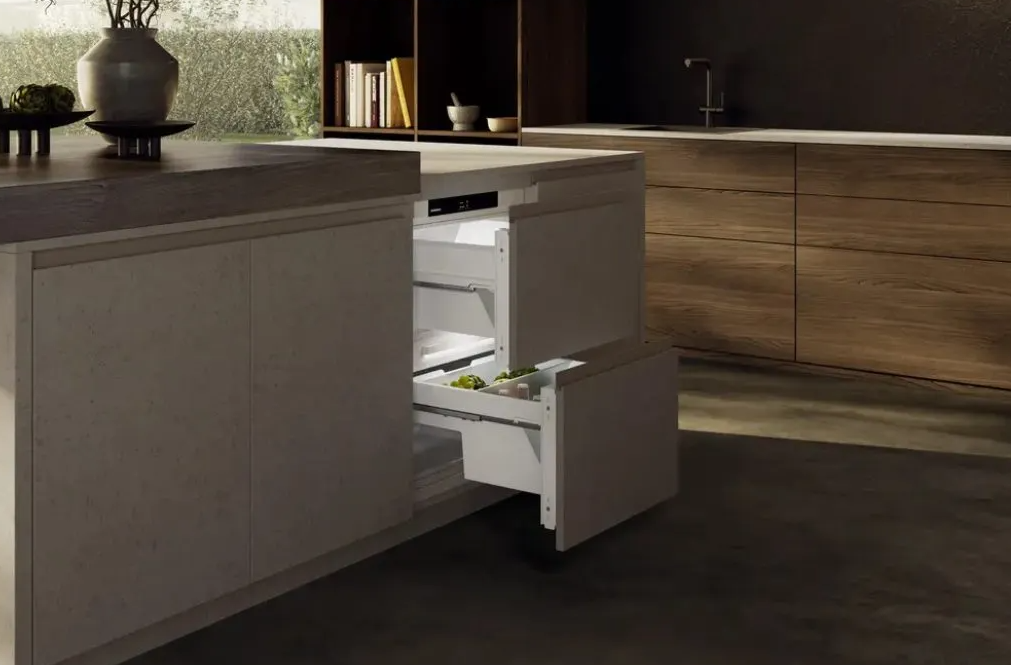
Don't Forget Energy Efficiency and Noise Levels
An undercounter fridge runs throughout the day and night, so energy efficiency is another important consideration. Check the energy label to compare models and look at the annual energy consumption in kWh. This can help you estimate running costs and understand how much electricity the appliance is likely to use.
Noise levels are also worth considering, especially if your kitchen and living area are open plan. If the fridge is going into a utility room, noise may be less noticeable, but a quieter model can still be beneficial.
Which undercounter Fridge Is Right for You?
The best undercounter fridge depends on your available space, household needs and preferred kitchen layout.
A freestanding undercounter fridge is a great choice if you want flexibility, straightforward installation and an appliance that can be easily replaced or relocated.
An integrated undercounter fridge is ideal if you’re creating a fitted kitchen or want your appliances hidden behind matching cabinet doors.
A model with a freezer box is worth considering if you need occasional frozen storage, while a fridge without one will give you more room for fresh food and drinks.
Whether you’re upgrading your kitchen, making better use of your utility room or simply looking for additional food storage, taking the time to compare dimensions, ventilation and features will help you find an undercounter fridge that works for your home.