

August 26, 2026
Cylinder vs Stick Vacuum Cleaners: Which Is Right for Your Home?
The best vacuum cleaner isn't necessarily the one with the biggest suction figure or the longest battery life. It's the one that suits your home, your floors and the way you like to clean. If you're dealing with children, pets and everyday spills, being able to grab a vacuum quickly can make all the difference. If you have a larger home, you may care more about battery life, capacity and how long you can clean without stopping. And if your home is mostly carpet, the cleaning performance of the floorhead may matter more than anything else. Then there's the budget. There are plenty of cordless cleaners at accessible prices, with premium models adding features, technology, filtration and battery flexibility. Traditional cylinder vacuums offer another route, particularly if you want mains powered cleaning without having to think about runtime. So, which is right for you?
12 min read
Which type of vacuum suits your home?
| If you're thinking... | You might be happiest with a... | Why? | Look at... |
|---|---|---|---|
| “I want to clean the whole house without stopping.” | Cylinder Vacuum | Mains power means there's no battery to run down, and the larger capacity is useful for longer cleaning sessions. | Miele S1, CX1 or M1 |
| “I want to grab it whenever there's a mess.” | Cordless Stick Vacuum Cleaner | It's quick to pick up, easy to move around and doesn't have a cable to deal with. | Miele HX1 |
| “Most of my house is carpet.” | Upright or Cylinder Vacuum | Both are well suited to thorough carpet cleaning and give you continuous mains power. | Miele cylinder, upright or Miele HX3. |
| “I've got stairs and don't want a struggle.” | Cordless Stick Vacuum Cleaner | They're easier to carry, often lightweight and many can convert into a handheld cleaner. | Miele HX1 |
| “I've got pets.” | Cordless, Cylinder or Upright Vacuum Cleaner | Look for a good powered floorhead and pet specific tools rather than focusing on suction alone. | Miele Cat & Dog models |
| “I've got a big house.” | Cylinder or Cordless Vacuum | You can either avoid batteries altogether with a cylinder vacuum or choose a cordless system that lets you swap batteries. | Miele HX3 Plus, Bosch Unlimited, or a Miele cylinder. |
| “I want something premium.” | Miele or Samsung Vacuum Cleaners | Both brands offer premium models with additional cleaning, filtration and convenience features. | Miele HX1 and HX3 |
| “I want the most for my money.” | Dreame or MOVA Vacuums | Both brands offer strong specifications at competitive prices. | Dreame R20 and MOVA S2 |
| “I already own Bosch cordless tools.” | Bosch Vacuum Cleaners | Compatible batteries can be shared across the Power For All system. | Bosch Unlimited 7 |
Cordless stick vacuum cleaners
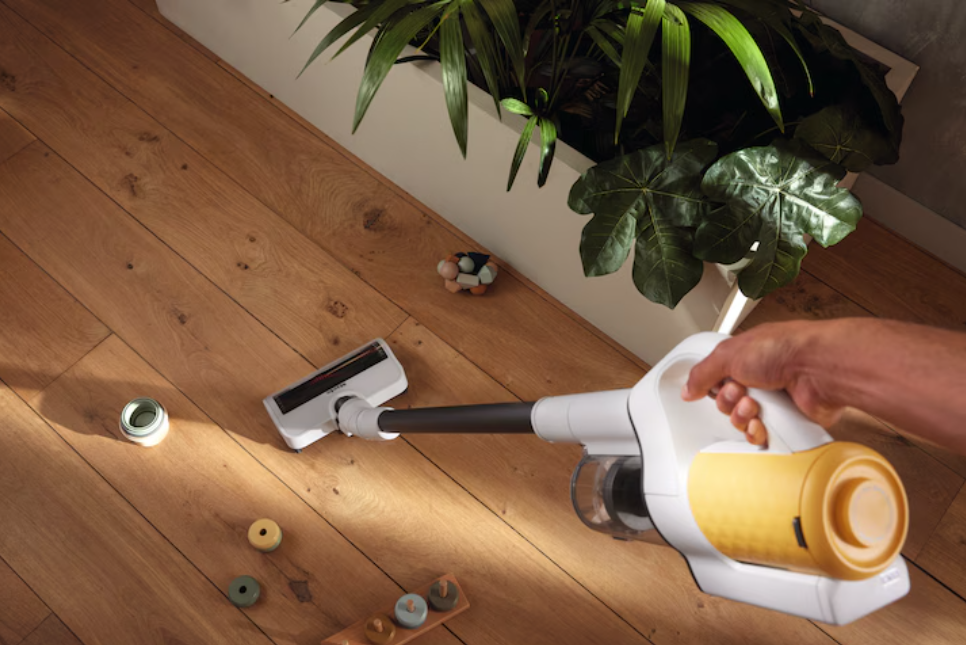
For many households, a cordless stick is the easiest vacuum to live with. There’s no cable to unwind and no socket to find. You can pick it up when you need it, clean the kitchen after breakfast, deal with pet hair on the sofa or quickly go over the hallway without getting a larger vacuum out. That convenience is particularly useful if you prefer to clean little and often.
The trade off is that you’re working from a battery, so runtime and charging become part of the decision. And the maximum runtime quoted by manufacturers isn’t necessarily the time you’ll get while cleaning with a powered floorhead. That’s why it’s worth looking beyond the biggest number on the box.
Also Consider...
Battery life is one of the biggest differences between cordless models, but it’s also one of the easiest specifications to misunderstand. A quoted runtime is usually measured under specific conditions, often using the lowest power setting and a non-motorised tool. Using a powered floorhead or higher suction will reduce the available time.
Miele’s HX1, for example, offers up to 55 minutes on a single charge, while the HX3 offers up to 70 minutes. With the HX3 Plus, two batteries provide up to 140 minutes of quoted runtime. The HX3’s figures also show why it’s important to look at the detail: Miele quotes up to 70 minutes without the electrical floorhead attached, falling to 38 minutes with electrical accessories at low power and 15 minutes at high power.
Bosch takes a different approach with its Unlimited range. The Unlimited 7, for example, has an interchangeable battery, while the wider range can be paired with additional batteries and a fast charger for extended cleaning.
What does that mean for you?
If you live in a flat or smaller home, a single battery is likely to be perfectly adequate.
If you have several bedrooms, stairs and multiple floors to clean, an interchangeable battery can be much more useful than simply choosing the vacuum with the biggest headline runtime.
Suction is important, particularly if you have carpets, rugs or pets. But it isn’t the only thing determining how well a vacuum cleans. The floorhead, brush design, airflow and filtration all contribute to cleaning performance.
For example, Samsung’s Bespoke Jet AI offers up to 280W of suction, while Miele describes the HX3 as delivering performance comparable with a conventional Miele cylinder vacuum. Dreame’s R20 is positioned around high suction and flexible cordless cleaning, while Bosch focuses on strong cleaning performance alongside its interchangeable battery system.
So rather than asking “Which has the biggest number?”, ask: “Which one is designed for the floors I have?”
If you have thick carpet and pets, a strong powered floorhead and effective hair pickup are particularly important. If your home is mostly hard flooring, manoeuvrability and a suitable hard floor head may matter more.
Dust capacity isn’t particularly exciting, but you’ll notice it every time you empty the vacuum. The Miele HX1 has a 0.3 litre dust container, while the HX3 increases this to 0.5 litres. Bosch’s Unlimited range includes models with around 0.4 litre capacity, while Samsung’s Bespoke Jet AI has a 0.5 litre dustbin.
A larger capacity is particularly useful if you have pets, children or a larger home. If you want the convenience of a cordless vacuum but don’t want to empty it as frequently, the difference between 0.3 and 0.6 litres is worth considering.
This is where a specification sheet can only tell you so much. A vacuum might be perfectly comfortable to use across a floor but feel different when you’re carrying it upstairs or cleaning above shoulder height.
The Miele HX1 weighs 3.1kg, while the HX3 is 3.6kg. Bosch’s Unlimited 7 is listed at 2.9kg ready for use. Samsung’s Bespoke Jet AI has a 1.68kg handheld body weight, although the complete vacuum is naturally heavier once the tube and floorhead are attached.
If you have stairs or use your vacuum for furniture and higher areas, handling becomes particularly important. This is one area where it’s worth thinking about how you’ll use the vacuum, rather than simply choosing the lightest one.
Comparing the cordless ranges
| Miele HX1 | Miele HX3 | Bosch Unlimited 7 |
Dreame R20 | MOVA S2 | |
|---|---|---|---|---|---|
| Best suited to | Everyday cleaning | Larger homes & demanding cleaning |
Battery flexibility | Performance and value | Keeping costs down |
| Quoted max runtime | Up to 55 mins | Up to 70 mins |
Up to 40 mins on selected model | Up to 90 mins* | Up to 90 mins* |
| Battery | Rechargeable | Exchangeable |
Exchangeable | Replaceable | Removable |
| Dust capacity | 0.3L |
0.5L |
0.4L | 0.6L |
0.5L |
| Pet options | Yes |
HX3 Cat & Dog | ProAnimal models | Selected models |
Selected models |
| Price position | Premium | Premium |
Mid range | Mid range |
Accessible |
| Standout feature | Compact premium design | 3-in-1 design & HEPA | Power For All battery | Strong specification for price | Value |
*Maximum quoted runtime varies according to power setting, tool and test conditions. Always check the individual model’s specifications before purchase.
Cylinder vacuum cleaners
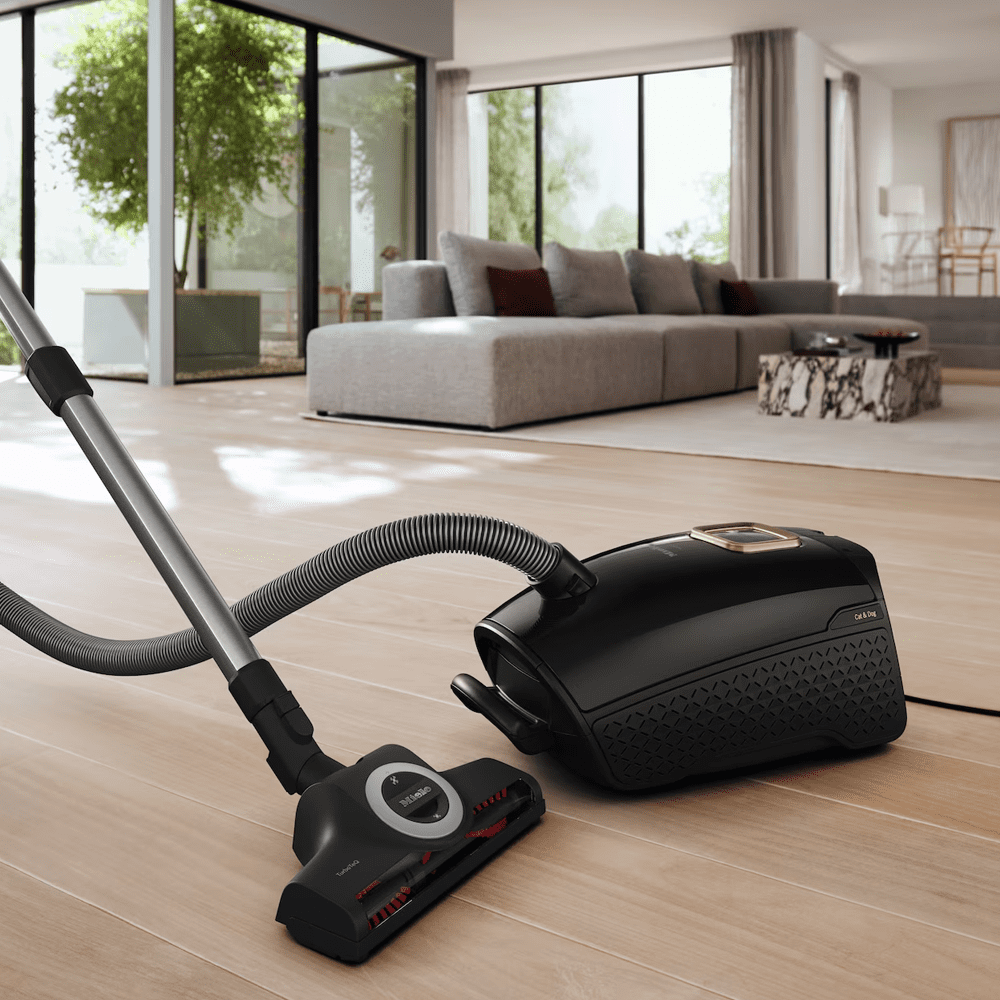
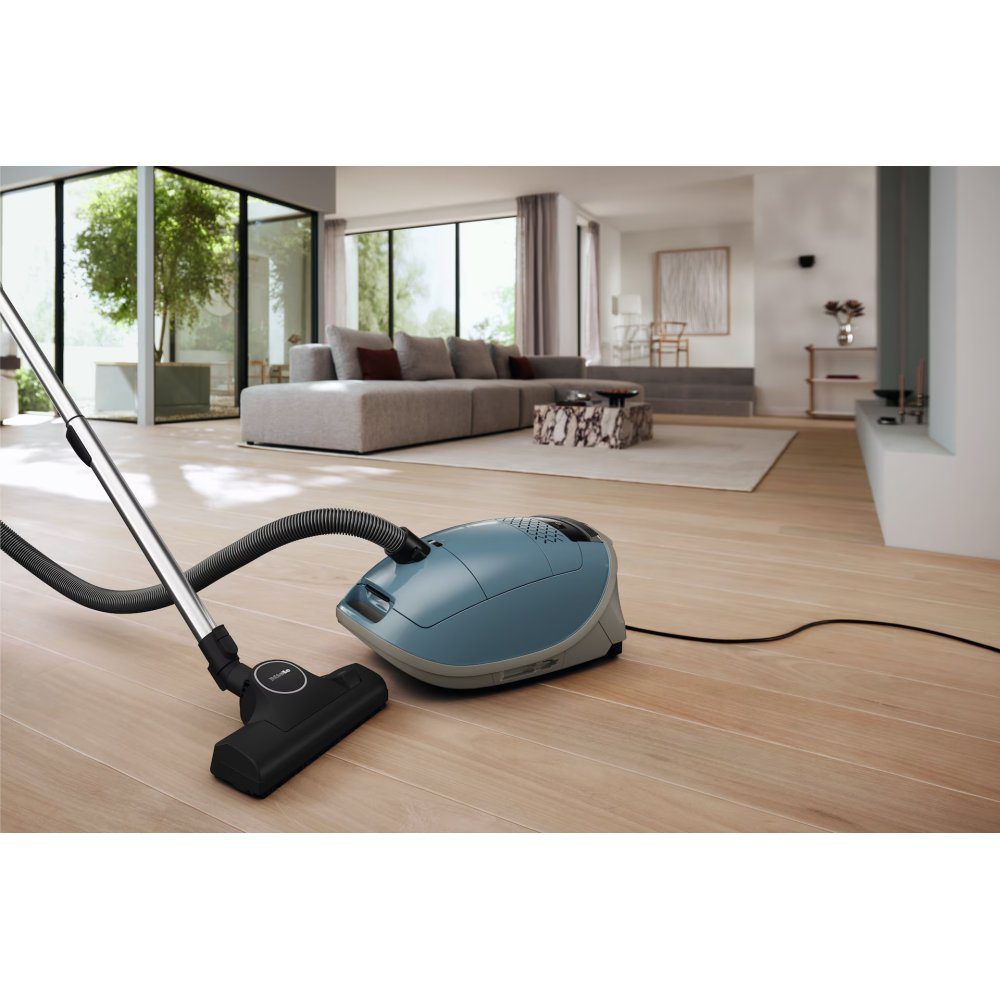
Cordless isn’t automatically better. If you’re cleaning a larger house, a cylinder vacuum can still be a very practical choice. The biggest advantage is simple: you don’t have to think about battery life. You can plug the vacuum in and work through the house until you’re finished, without having to stop and recharge halfway through.
Cylinder vacuums also tend to offer larger dust capacities than cordless stick models. That means fewer trips to the bin and fewer interruptions during a full house clean, which can make a noticeable difference if you have a family, pets or simply a lot of floor space to cover. Many cylinder models are also designed around powerful, sustained mains operation, so there’s no gradual reduction in performance as a battery runs down.
Another advantage is flexibility. A cylinder vacuum separates the motor and dust container from the floorhead, allowing manufacturers to offer a range of tools for different surfaces and jobs. You can switch between carpet and hard floors, use a crevice tool around skirting boards and furniture, or attach a smaller brush for shelves and other surfaces. The long hose and cleaning wand can also make it easier to reach underneath furniture without having to manoeuvre the whole machine into position.
The trade off is convenience. You have to plug the vacuum in, and the cylinder itself needs to be pulled around behind you as you clean. That’s less convenient for quick jobs than picking up a cordless stick vacuum and getting started immediately. However, if your priority is cleaning a larger area thoroughly rather than grabbing the vacuum for five minutes at a time, those compromises can be relatively minor.
Miele cylinder cleaners
For cylinder vacuum cleaners, we’d focus on Miele. The Guard M1, for example, offers a 4.5 litre dustbag and an operating radius of up to 11 metres. That is a completely different proposition from a cordless stick with a 0.3 or 0.5 litre dust container, particularly when you’re tackling several rooms in one session. The larger capacity means you can get through considerably more cleaning before needing to replace the bag, while the long operating radius reduces how often you’ll need to move between plug sockets. For larger homes, that can make a cylinder much less frustrating to use than you might expect.
The Miele Guard S1 is worth considering if you like the idea of a traditional cylinder but don’t need quite as much capacity. It’s a more compact option, making it easier to store and manoeuvre around the home. That can make the S1 particularly appealing if storage space is limited or you want the benefits of a mains-powered cylinder without committing to a larger machine.
Then there’s the Miele Boost CX1, which takes a slightly different approach by using a bagless design. Instead of replacing dustbags, you empty the integrated dust container when it becomes full. For some people, that’s a significant convenience, particularly if they don’t want to keep replacement bags in the cupboard. The CX1 also has a compact cylinder design, so it can be a good middle ground if you want the capacity and sustained power of a mains-powered vacuum but prefer a bagless system.
The choice between them therefore comes down largely to how you clean. The Guard M1 makes the most sense if capacity and long cleaning sessions are priorities. The Guard S1 is more attractive if you want something smaller and easier to store, while the Boost CX1 is the obvious choice if you’d rather avoid dustbags altogether.
All three highlight why cylinder vacuums shouldn’t be dismissed simply because cordless models are now so popular. If you have a large home, lots of carpet or simply prefer doing one thorough clean rather than several quick ones, a Miele cylinder is worth serious consideration. You don’t have to worry about battery life, and the larger capacity can make a noticeable difference when you’re tackling the whole house in one go.
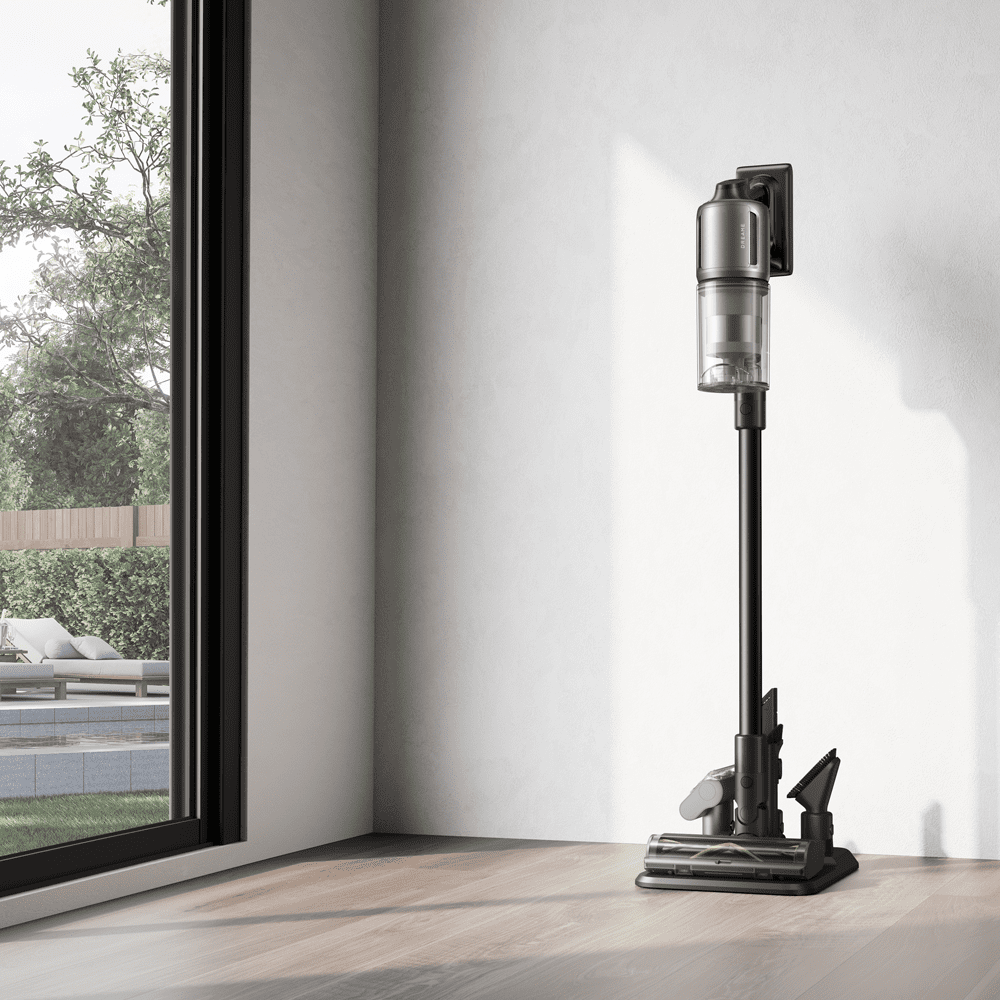
Choosing between an upright, cylinder and cordless stick comes down to how you actually clean.
A cordless stick is ideal when you want something quick and convenient. A cylinder makes sense when you want capacity and uninterrupted mains-powered cleaning. An upright remains a strong choice for homes where carpet cleaning is the priority.
And within cordless, there’s a good reason to compare the ranges rather than simply looking for the highest specification. The Miele HX1 is compact and convenient. The HX3 adds more capacity, longer cleaning time and stronger filtration, while the HX3 Plus adds a second battery for extended cleaning. Dreame offers an attractive balance of performance and price. Samsung brings premium technology and automated dust emptying. Bosch gives you battery flexibility, while MOVA offers an accessible route into cordless cleaning. And if you’d rather not think about batteries at all, a Miele cylinder remains a compelling choice for whole home cleaning.
The right vacuum isn’t necessarily the one with the longest list of features. It’s the one that makes cleaning your home easier.
Explore our vacuum cleaner range and find the right one for your home.
Cylinder and cordless stick vacuum cleaner FAQs
Neither is automatically better, it depends on how you clean. A cordless stick is usually the more convenient option for quick everyday cleaning, particularly if you have stairs, hard floors or want something you can grab without plugging in.
A cylinder vacuum makes more sense if you have a larger home or spend a lot of time doing thorough whole house cleans. Mains power means there’s no battery limit, while the larger dust capacity means you can clean for longer without stopping to empty the machine.
You don’t necessarily need to spend hundreds of pounds on a good cylinder vacuum. For example, the Miele Guard S1 is currently available for around £150 – £200 while the Guard M1 is around £289-£299. The bagless Miele Boost CX1 sits at roughly £293.
As a general rule, spending more can get you a better floorhead, filtration, build quality and additional features, but it’s worth choosing the model that suits your floors rather than simply buying the most expensive vacuum you can afford.
Our prices change frequently, and are correct at time of writing. Please check our product pages for up to date pricing.
If you want a well built, traditional vacuum for regular whole-house cleaning, Miele’s cylinder range is worth considering. The Guard S1 is aimed more at smaller homes and limited storage, while the Guard M1 offers a larger capacity, more substantial option. The Boost CX1 is the alternative if you prefer a bagless design.
Customer ratings are also generally strong. The Miele Guard M1, Guard S1 and Boost CX1 all rank in the mid to high 4 star range.
They can be. The biggest advantage is that a cylinder vacuum doesn’t have a finite battery runtime, so you can continue cleaning for as long as you need. Larger dust capacities are another benefit, particularly if you’re vacuuming several rooms in one session. That doesn’t mean a cordless stick can’t clean a large house. Some premium cordless models have enough battery capacity for a substantial clean, and removable batteries can extend runtime further. However, if you regularly want to vacuum the entire house in one go, a cylinder remains a very practical choice.
They can be, particularly if you want strong cleaning performance combined with convenience. More expensive models often offer better floorheads, stronger suction, longer runtimes, improved filtration and features such as automatic power adjustment or sensors.
However, price isn’t a guarantee of better results for every home. If you mainly have hard floors and use the vacuum for quick daily cleaning, a mid-range cordless may give you everything you need. If you have lots of carpet, pets or want the strongest possible pickup, paying more can make more sense with the right model.
Both can work well, but the floorhead matters at least as much as the type of vacuum. If you have pets, look for a powered brush roll designed to pick up hair and prevent it from becoming tangled.
A cordless stick can be particularly convenient for dealing with pet hair every day because it’s easy to grab for sofas, stairs and small areas. A cylinder can be preferable when you’re doing a more thorough clean of carpets and larger floor areas.
A cylinder can be cheaper to operate in some respects because you aren’t dealing with a battery that will eventually need replacing. Bagless cylinders also avoid the ongoing cost of replacement dustbags, although you’ll need to empty and clean the dust container.
Cordless vacuums have fewer consumables in some cases, but batteries are a long term consideration. If you buy a model with a replaceable battery, replacing the battery can be considerably more straightforward than replacing the entire vacuum.
For many homes, yes. Cordless sticks can provide very strong pickup on both hard floors and carpets, and independent testing continues to find premium cordless models capable of excellent cleaning performance.
The bigger question is whether you need the convenience of cordless or the unlimited runtime and larger capacity of a cylinder. For a smaller or medium-sized home, a good cordless may be all the vacuum you need. For a large house with lots of carpet, a cylinder can still have significant practical advantages.
Choose a cordless stick if you prioritise convenience, quick daily cleaning, stairs, furniture and easy storage.
Choose a cylinder if you have a larger home, lots of carpet, want unlimited runtime or prefer doing one comprehensive clean rather than several shorter sessions.
If you’re still undecided, the simplest rule is this: cordless is about convenience; cylinder is about capacity and sustained cleaning. Neither format has made the other obsolete. The right model is the one that works for you and your household.