

August 17, 2026
Integrated Dishwasher Buying Guide
Buying an integrated dishwasher should be fairly simple: find the right size, choose the features you want and make sure it fits your kitchen. But there's a little more to it than that. An integrated dishwasher needs to work with the space beneath your worktop, your kitchen furniture door and the surrounding cabinetry. Get the measurements wrong and even a dishwasher that looks like the perfect replacement may not fit quite as expected. Then there are the everyday decisions. Do you need a standard 60cm dishwasher or a slimline model? Is a fully integrated design better than a semi-integrated one? How much capacity do you really need? And if your kitchen is open plan, how important is a quiet dishwasher? This integrated dishwasher buying guide takes you through the key things to consider before buying, from sizes and capacity to controls, energy ratings, noise levels and the fitting checks that can save you headaches later.
9 min read
Integrated dishwasher sizes at a glance
The first thing to establish is how much space you have. For most fitted kitchens, there are two main widths to consider: 60cm is the usual standard dishwasher and 45cm is typical for a slimline model. Taller models are also available for kitchens with additional height. These are typical sizes, not guaranteed fitting dimensions. Always check the manufacturer’s measurements and installation drawing for the specific dishwasher you’re considering.
| Dishwasher type | Typical width | Who it's suited to |
|---|---|---|
| Standard integrated | Around 60cm | Families, couples and busy households |
| Slimline integrated | Around 45cm | Smaller kitchens and households |
| Taller integrated | Varies | Kitchens with extra height available |
| Semi integrated | Usually around 60cm | Anyone wanting visible controls |
What is an integrated dishwasher?
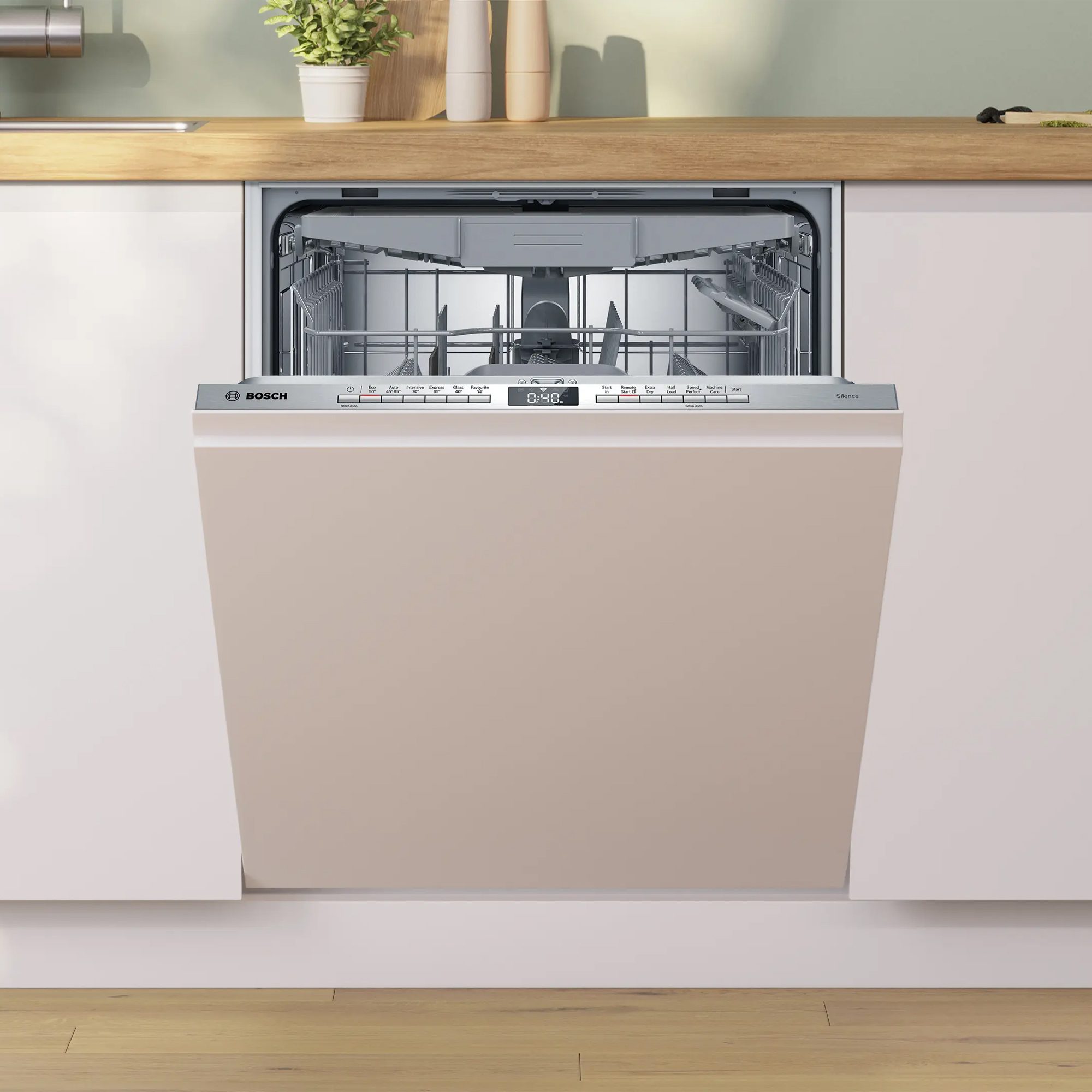
An integrated dishwasher is designed to sit beneath the worktop and behind a kitchen furniture door, allowing it to blend into the surrounding cabinetry. That’s the main attraction. Rather than having a visible appliance front, the dishwasher becomes part of the kitchen furniture.
There are two main types: fully integrated and semi integrated.
Fully integrated dishwashers
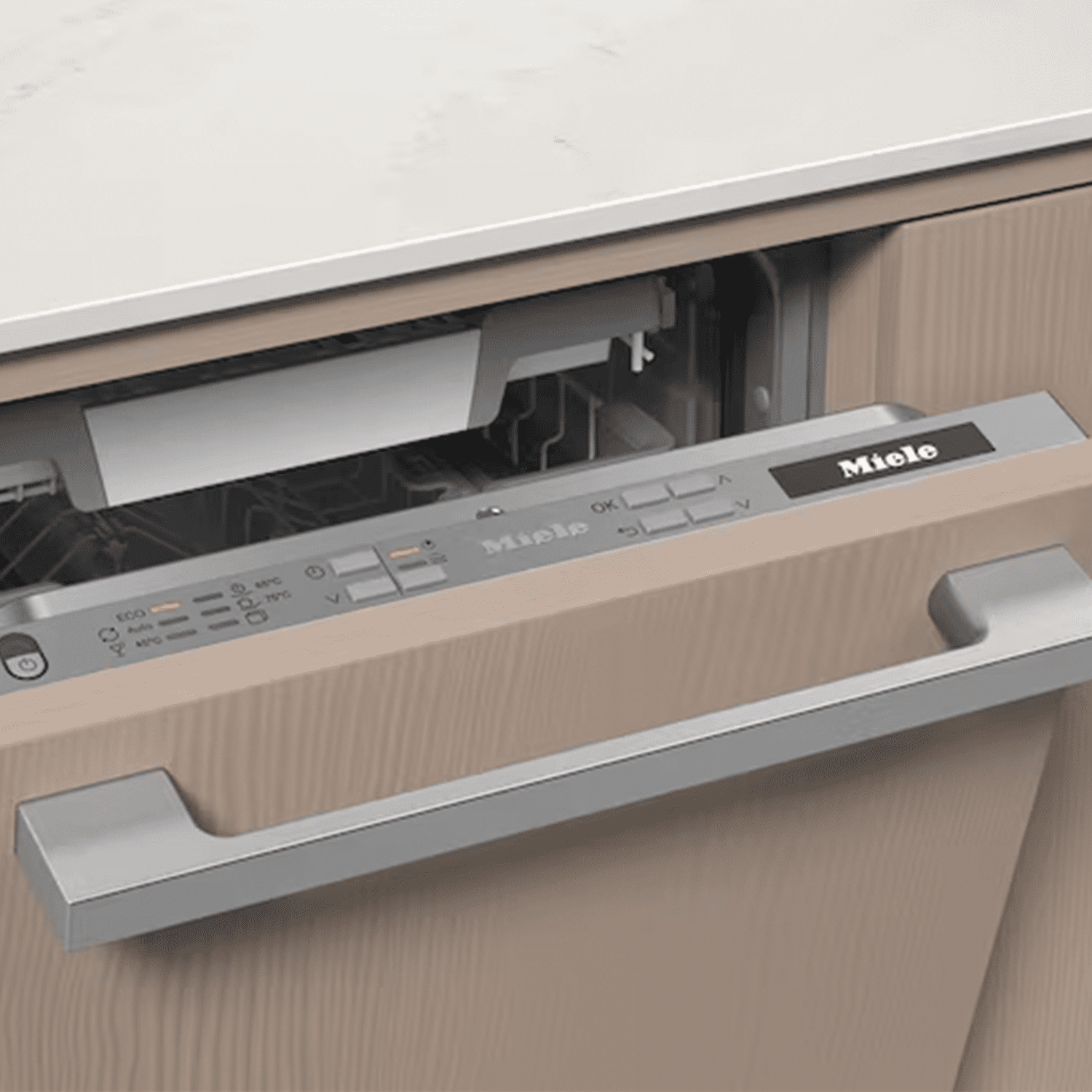
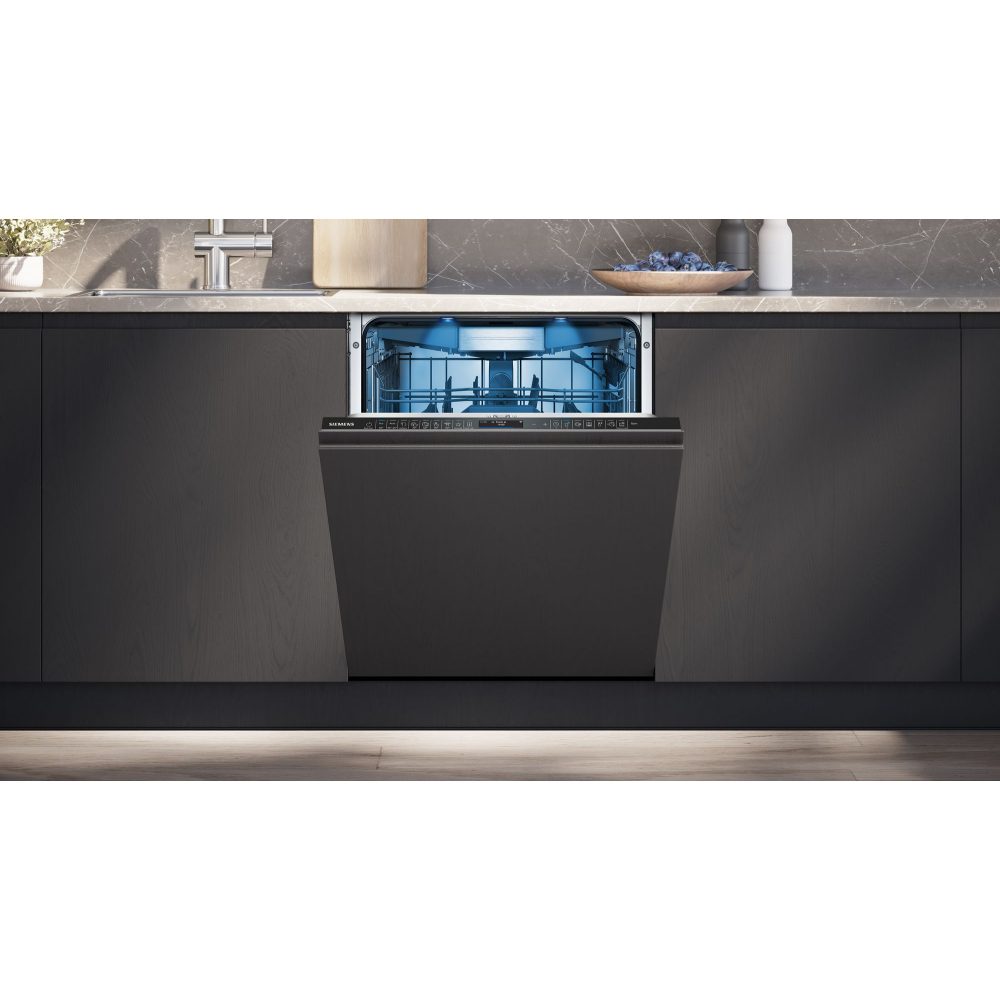
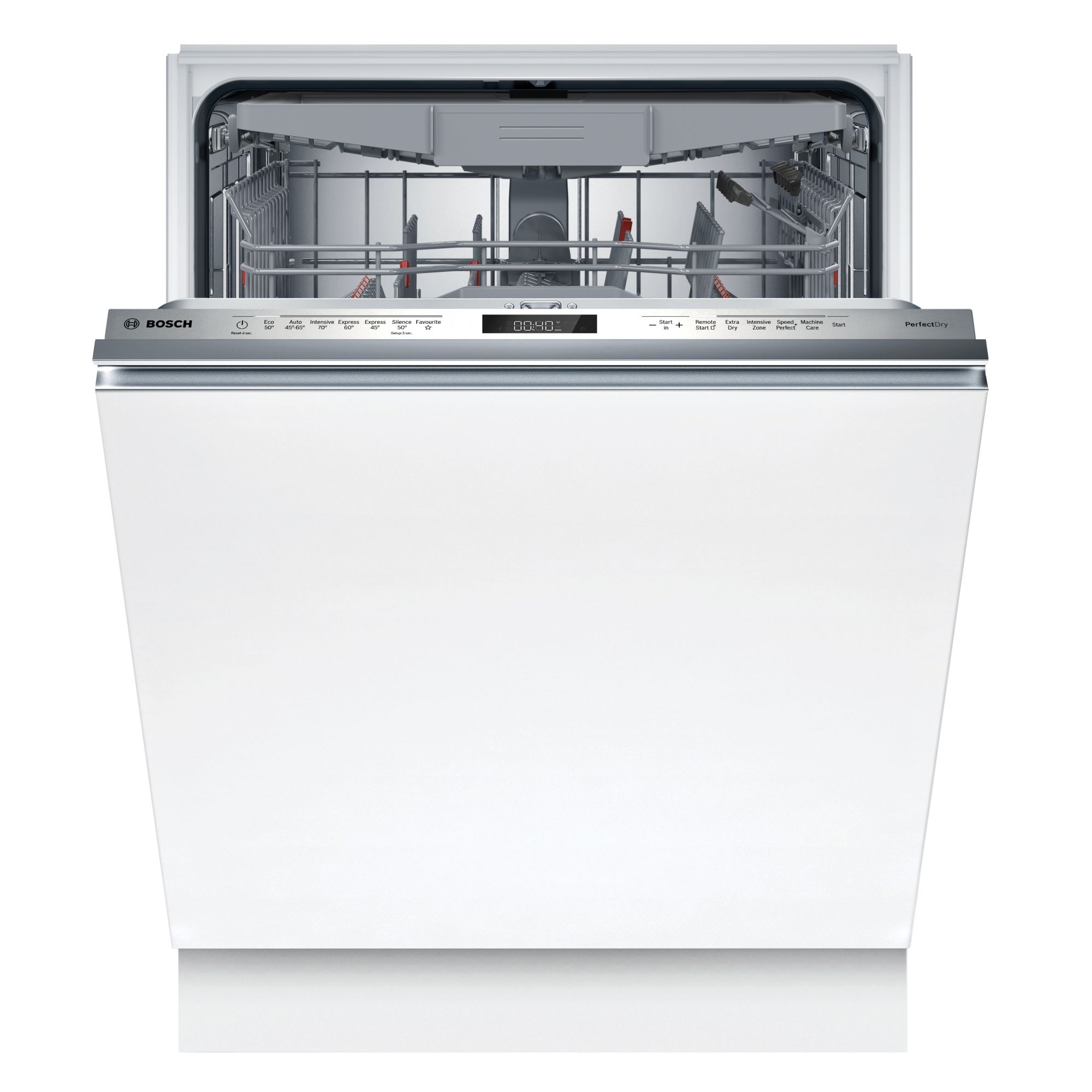
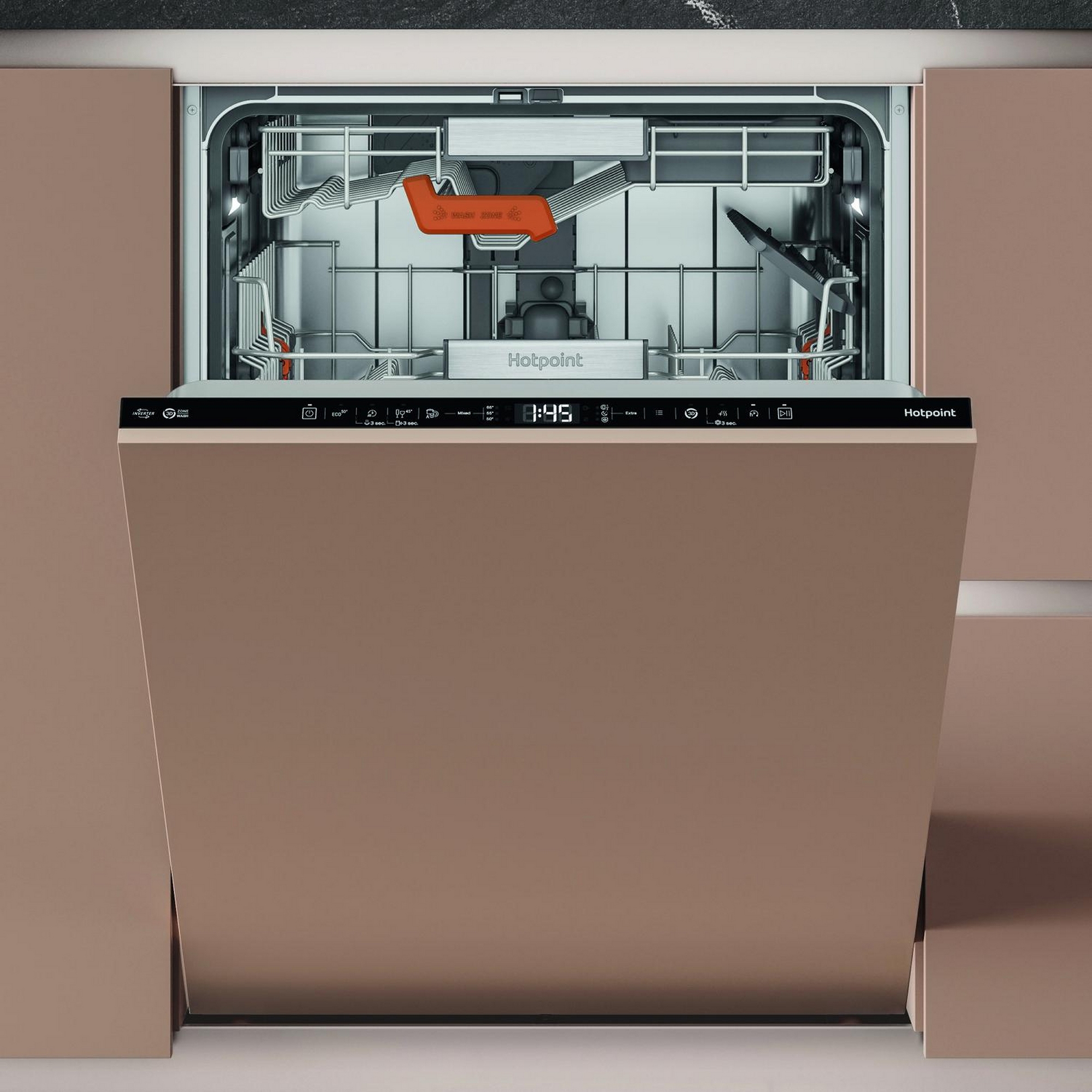
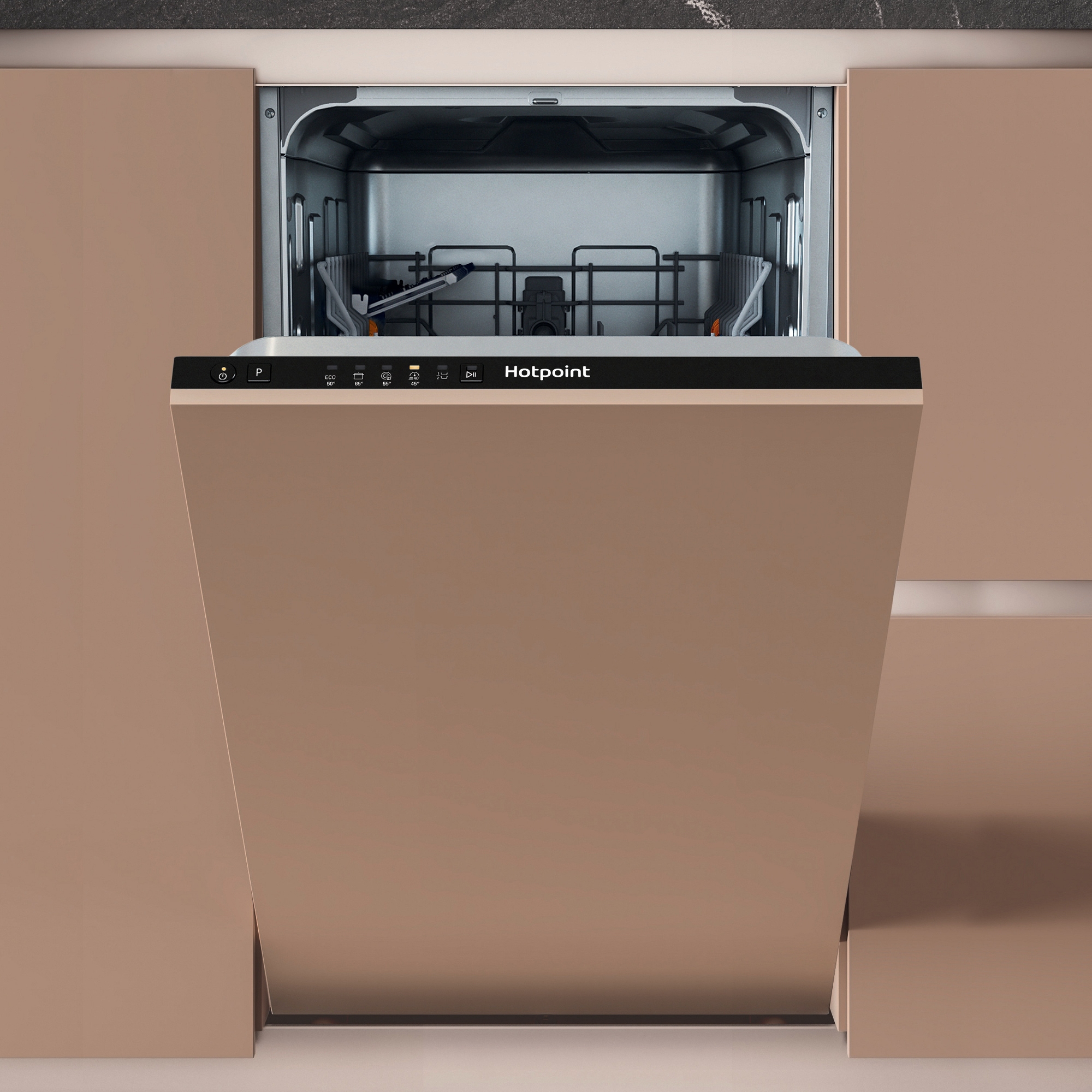
A fully integrated dishwasher is hidden completely behind the furniture door. The controls are normally positioned along the top edge of the dishwasher door, so you can access them when the door is open. For a minimalist kitchen, this is usually the cleanest looking option.
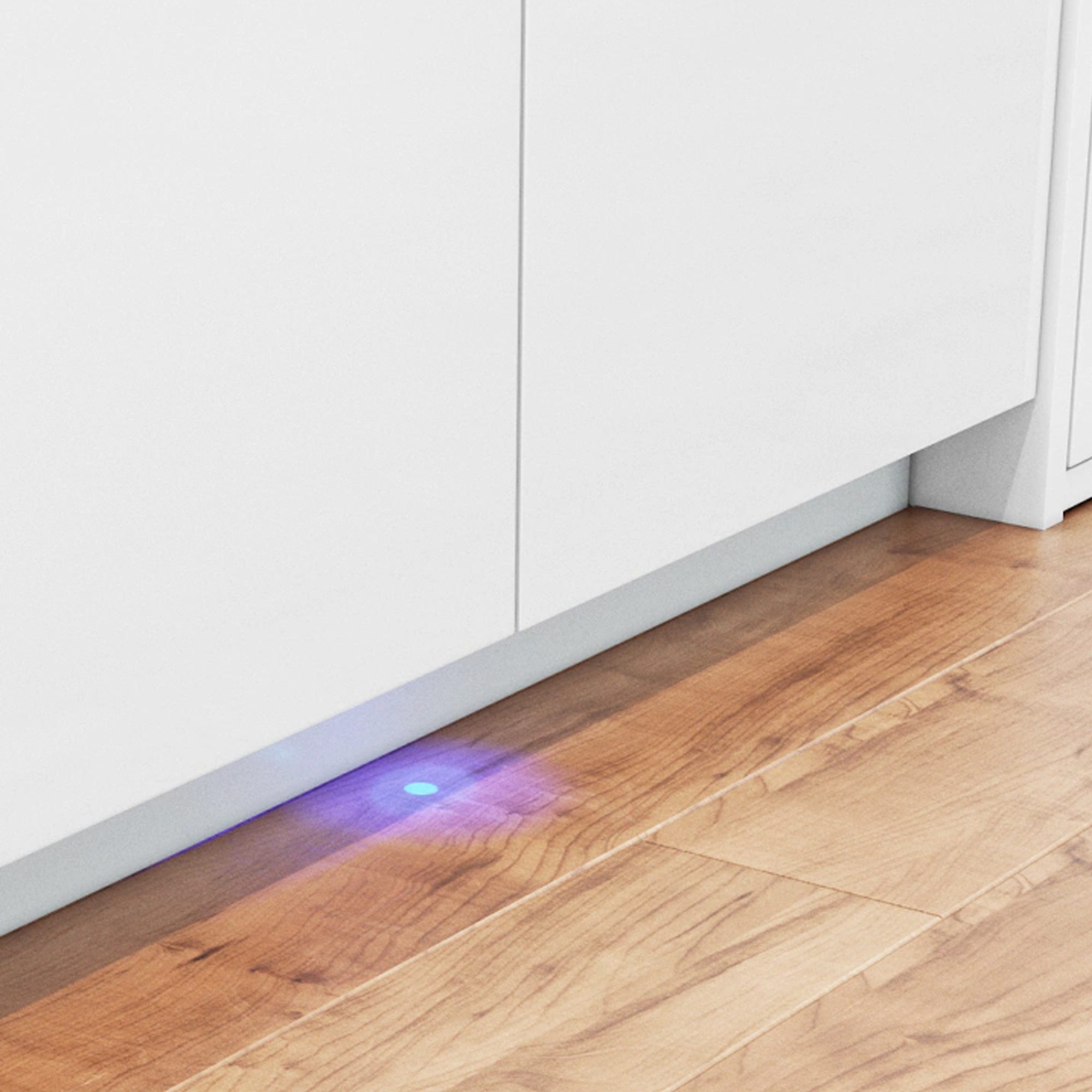
The trade off is that you can’t see the controls or display when the door is closed. Some models get around this by projecting a light or remaining time indicator onto the floor. Which? also highlights this as a useful feature on fully integrated models.
Semi integrated dishwashers
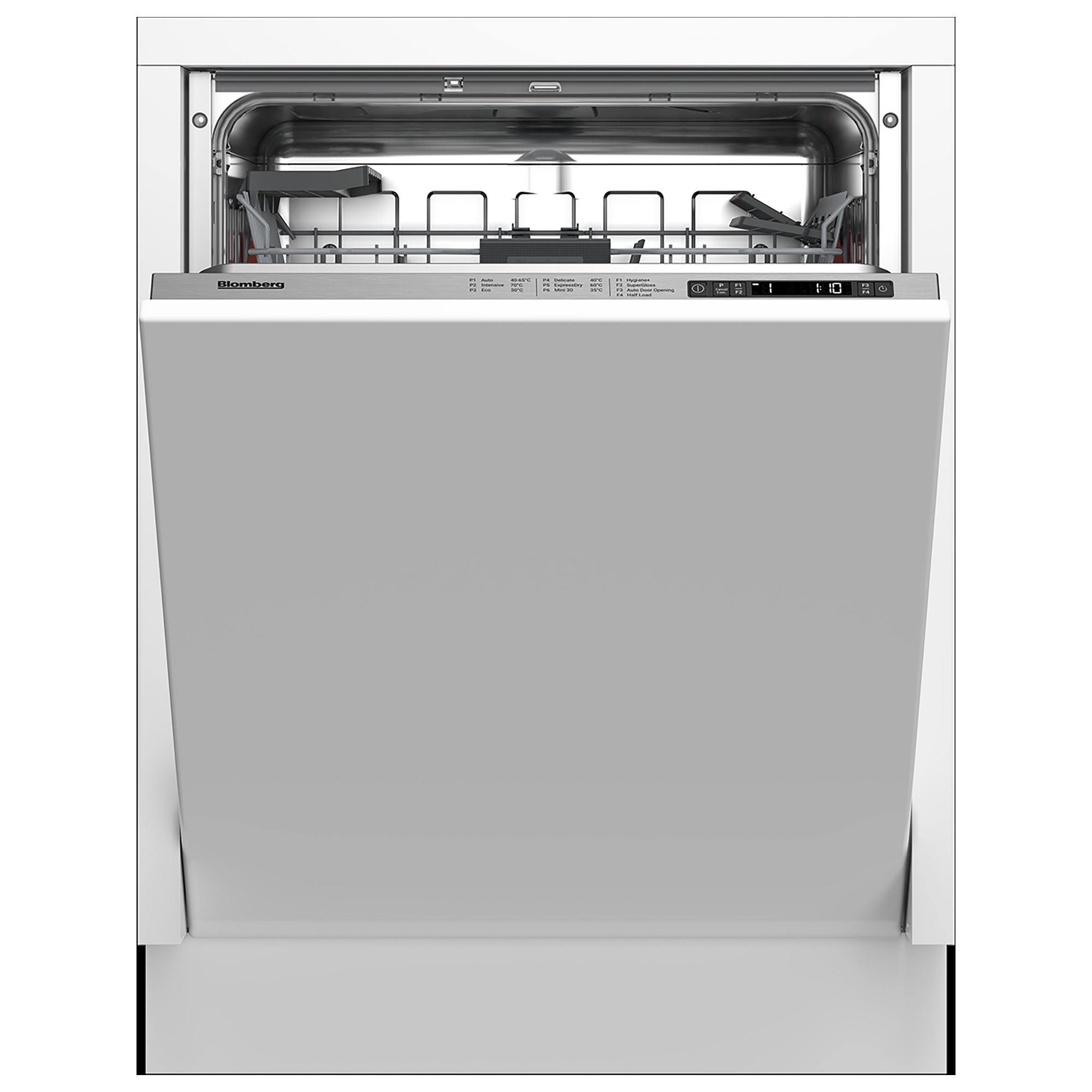
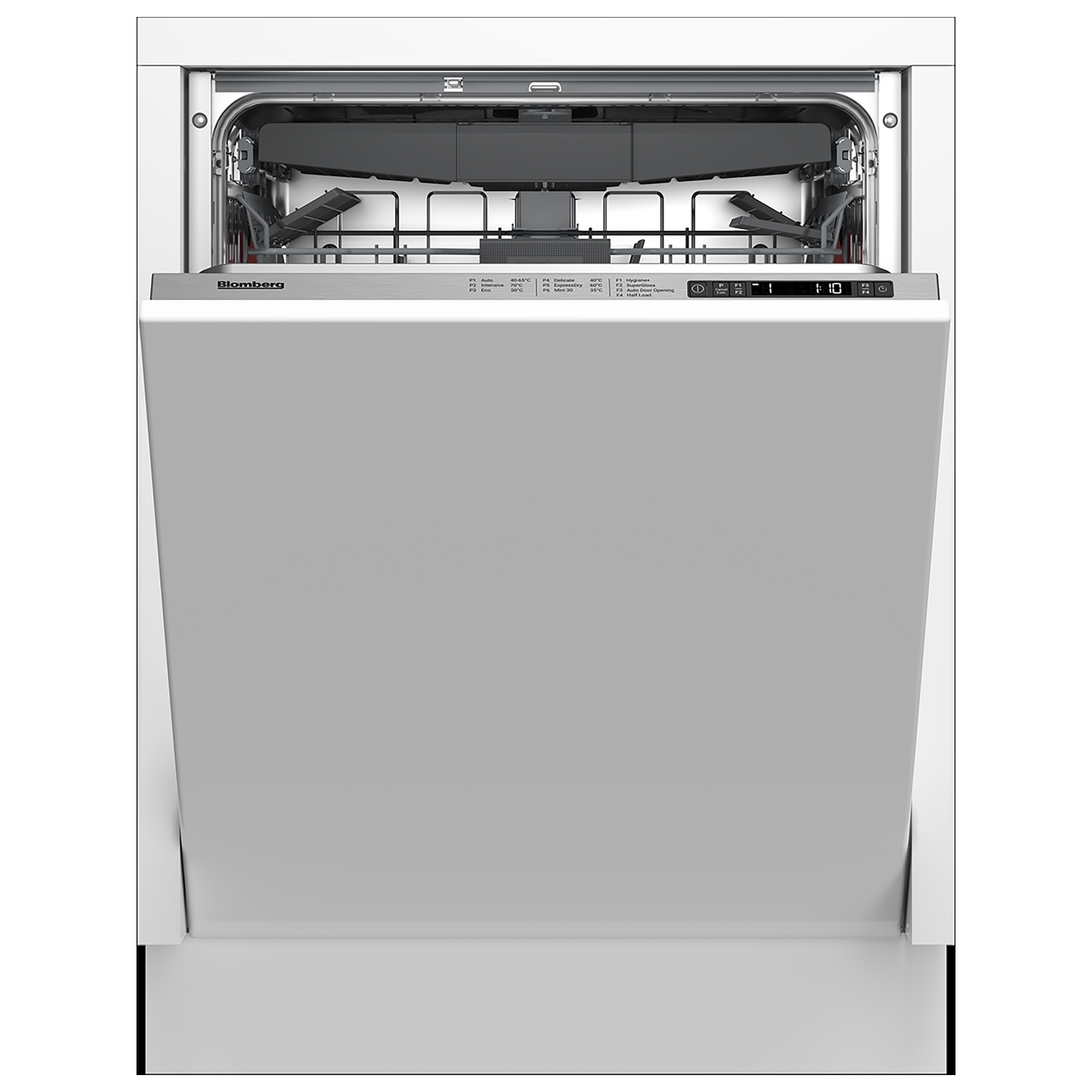
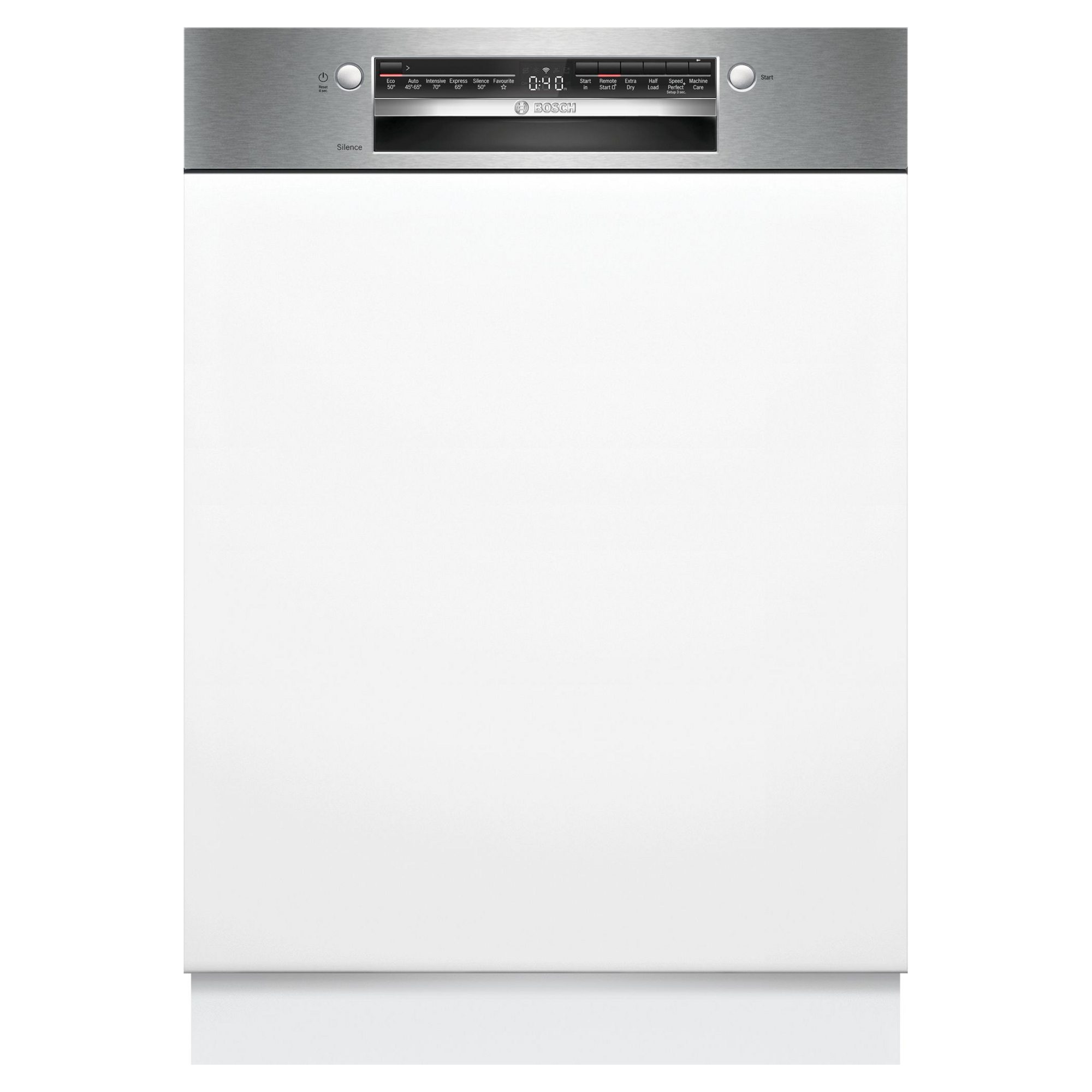
A semi integrated dishwasher is still built into the kitchen, but its control panel remains visible. This gives you a little more information at a glance and means you can see the controls while the door is closed. From a design perspective, it isn’t quite as seamless as a fully integrated appliance. From a practical point of view, though, some people prefer being able to see what’s happening without opening the dishwasher.
So which should you choose?
Choose fully integrated if appearance is your priority. Choose semi integrated if easy access to the controls matters more. And if you’re replacing an existing dishwasher, don’t assume the two types are interchangeable. The furniture door arrangement and appliance dimensions need to be checked before you buy.
What size is a standard integrated dishwasher?
A standard integrated dishwasher is usually around 60cm wide and roughly 81 to 82cm high, although individual models vary. If you already have a standard dishwasher space, a full size model will usually give you the most flexibility. But here’s the important bit: 60cm doesn’t mean every 60cm dishwasher will fit identically.
You also need to consider:
- The actual width of the cabinet opening
- Available height
- Appliance depth
- Pipe and cable positions
- Plinth height
- Furniture door dimensions
- Door fixing system
- Door clearance
- The manufacturer’s installation requirements
That’s why we’d always recommend measuring the opening rather than simply buying another dishwasher labelled “60cm”.
Standard 60cm integrated dishwashers
If you have the room, a full size dishwasher is generally the best option for larger households or anyone who regularly gets through plenty of washing up. A wider interior gives you more flexibility for plates, pans, glasses and larger cookware. That extra space can also mean fewer loads.
And there’s an important point about efficiency here: a smaller dishwasher isn’t automatically more economical. Which?’s current testing has found that slimline machines can use similar amounts of energy and water to full-size models, despite washing fewer items.
So if you have room for a full size integrated dishwasher and enough washing to fill it, don’t choose slimline simply because it sounds more efficient.
Are slimline integrated dishwashers worth it?
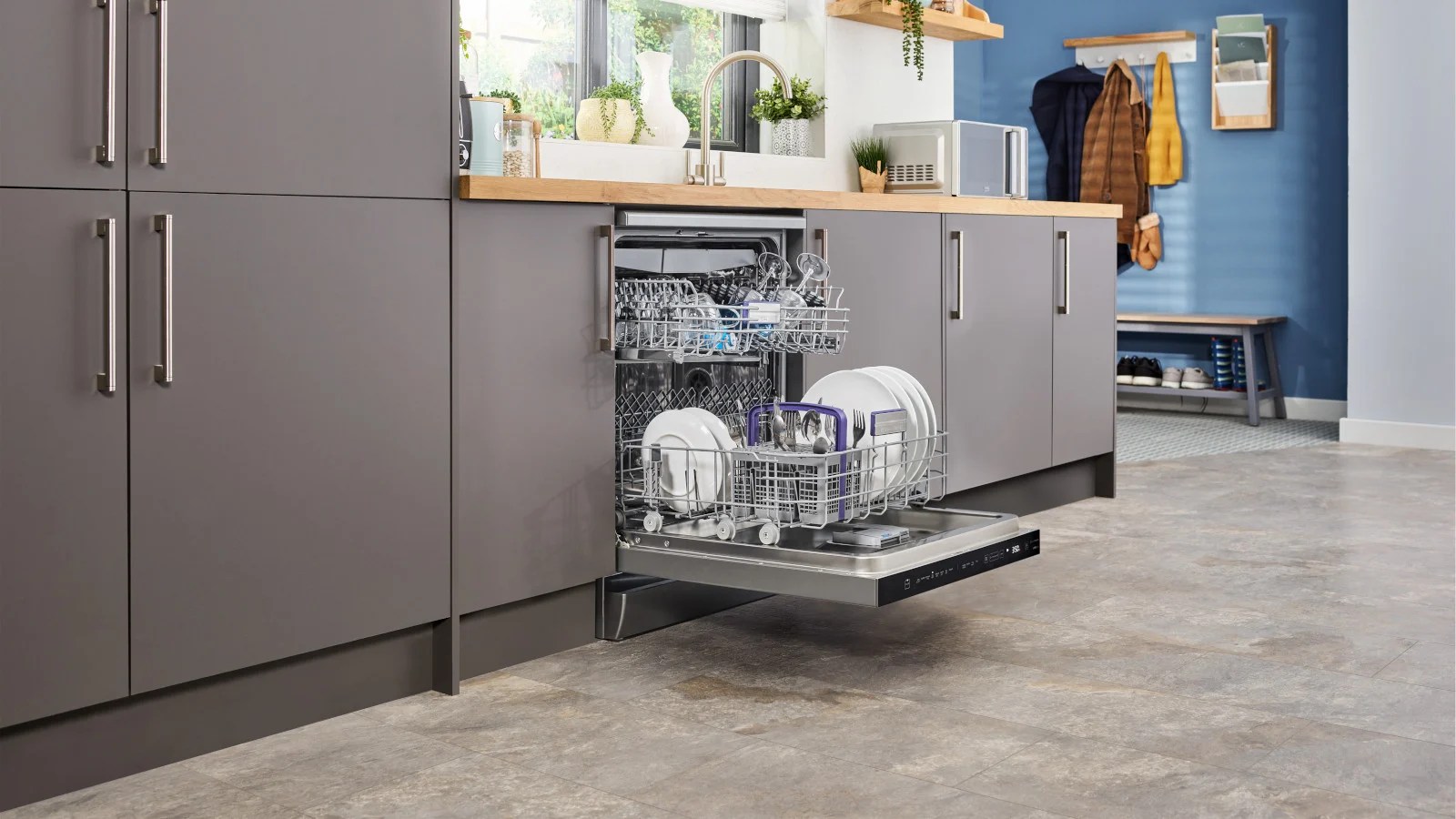
Absolutely, particularly when space is at a premium. A slimline integrated dishwasher is generally around 45cm wide, making it roughly 15cm narrower than a standard model. That can be a valuable amount of space in a small kitchen.
Slimline models can work particularly well in:
- Smaller kitchens
- Apartments
- Galley kitchens
- Utility rooms
- Smaller households
- Kitchens where cupboard space is more important than maximum dishwasher capacity
The obvious compromise is capacity. You won’t fit as much into a slimline dishwasher as you would into a full size model, so think about how much washing you generate before choosing one. For one or two people, a slimline machine may be more than enough. If you have a busy family kitchen, however, the extra capacity of a full size model may save you from running the dishwasher several times a day.
How much dishwasher capacity do you need?
Dishwasher capacity is normally expressed in place settings. That gives you a useful way to compare models, but it doesn’t necessarily tell you how practical the dishwasher will be.
Think about what you actually put in it. If your evening washing up includes dinner plates, glasses and cutlery, most machines will cope perfectly well. But if you’re regularly trying to fit in saucepans, roasting trays and large serving dishes, the internal layout becomes much more important.
Look out for:
- Adjustable upper baskets
- Fold down plate supports
- Height adjustable racks
- Flexible lower baskets
- Cutlery drawers or baskets
- Dedicated areas for glasses
- Space for larger pans and trays
A dishwasher with a slightly lower headline capacity can sometimes be much easier to live with if its baskets are better designed.
In other words: Don’t just ask how many place settings it holds. Ask whether your biggest pan will fit. That’s the kind of question that matters when you’re loading it on a Tuesday night.
What controls should an integrated dishwasher have?
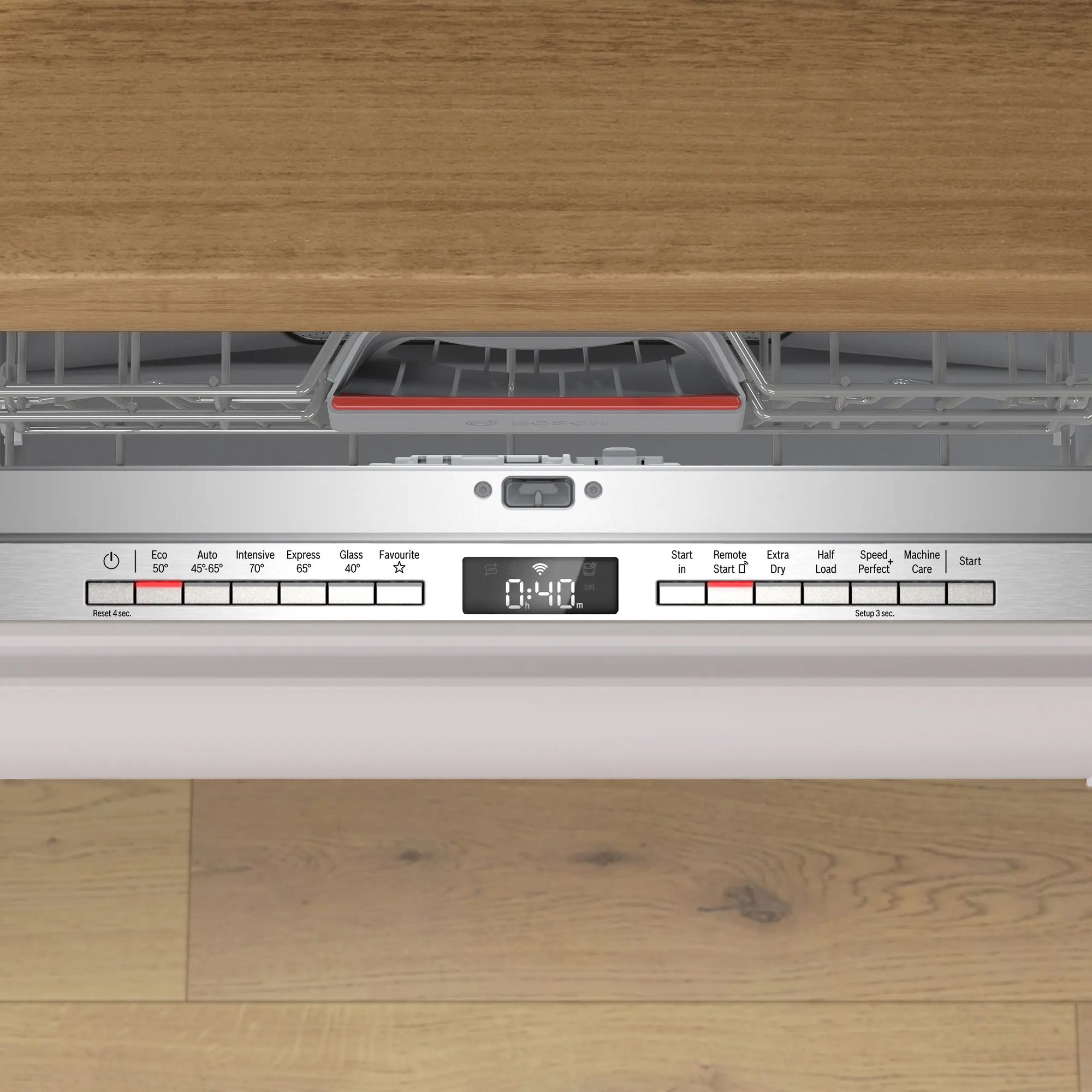
Controls are another area where design and practicality meet. A fully integrated dishwasher keeps the controls hidden, which creates a beautifully clean kitchen. The downside is that you need to open the door to access them. Whereas, a semi integrated dishwasher leaves them visible, which some people find easier.
Beyond that, you’ll find everything from simple push buttons to touch controls, digital displays, automatic programmes and smart connectivity.
There’s no need to overcomplicate it. If you tend to use the same couple of programmes every time, straightforward controls may actually be preferable. If you regularly wash delicate glasses, heavily soiled pans and mixed loads, a wider choice of programmes could be useful. Think about your routine rather than buying features for the sake of having them.
What energy rating should an integrated dishwasher have?
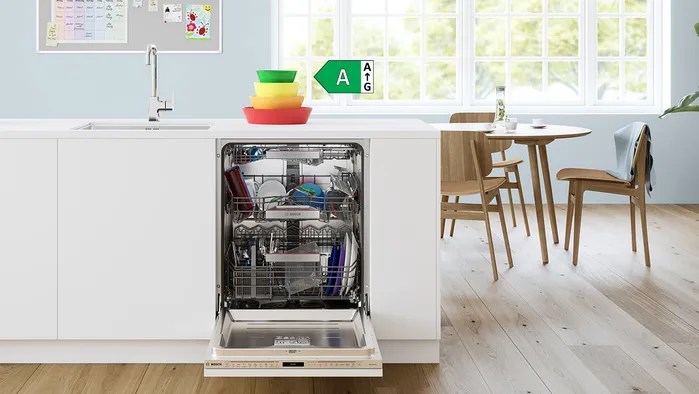
Dishwashers now use the A to G energy rating scale, with A being the most efficient.
But don’t make your decision based solely on the letter. Check the appliance’s actual energy consumption and water consumption too. These figures give you a more useful comparison between models.
It’s also worth considering how frequently you’ll use the dishwasher. A household that runs a machine every day will naturally get more benefit from choosing an efficient model than someone who only runs theirs a couple of times a week.
And don’t assume a long eco cycle is inefficient. Eco programmes can take longer because they are designed to use energy and water carefully. The programme duration alone doesn’t tell you how economical the cycle is.
For more help understanding the numbers, see our dishwasher energy efficiency guide.
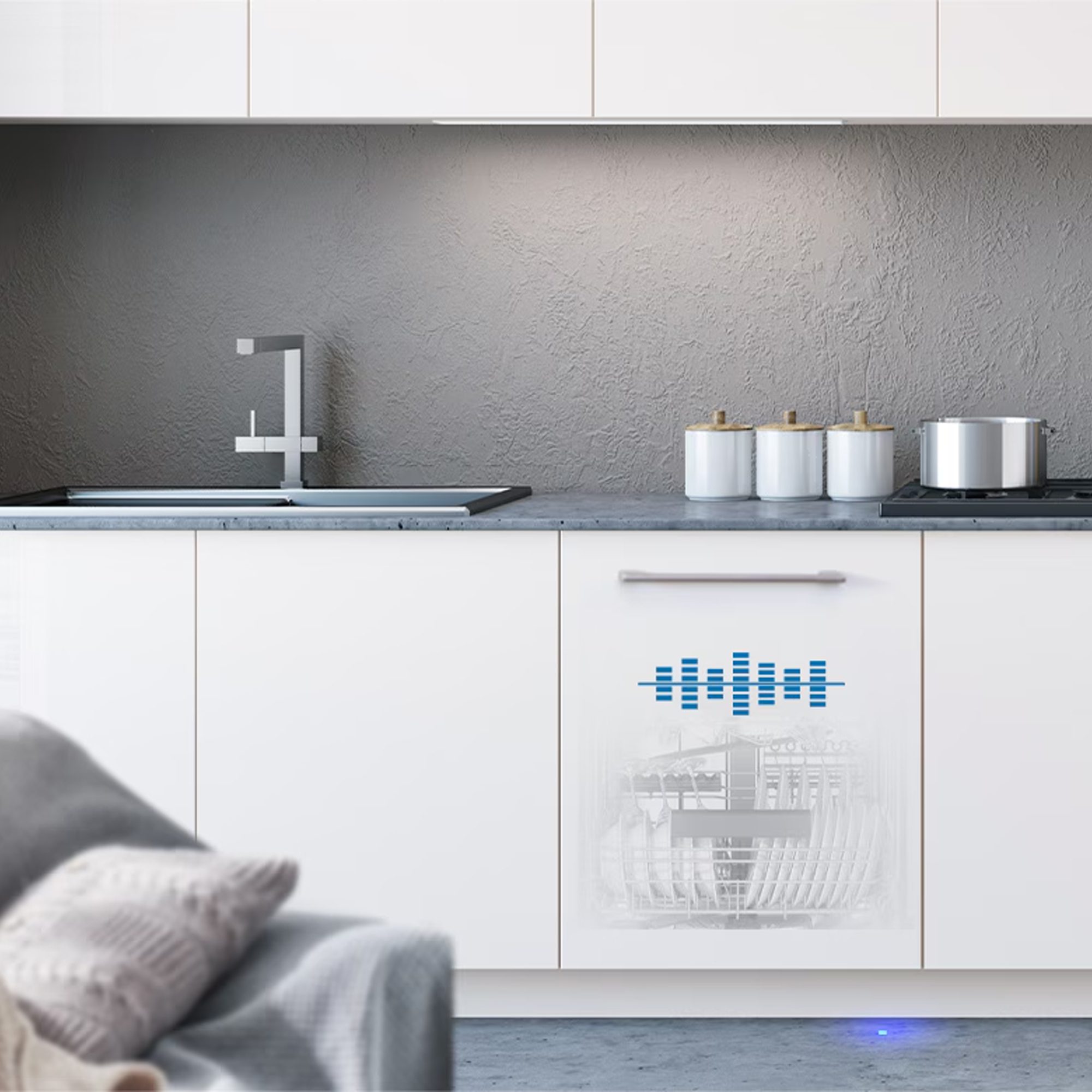
How quiet should a dishwasher be in an open plan kitchen?
If your dishwasher is tucked away in a separate utility room, noise may not matter very much. If it’s beside the sofa, dining table or kitchen island, it’s a different story.
Noise is one of those dishwasher features you notice most after you’ve bought the appliance. For an open plan kitchen, look closely at the dishwasher’s quoted noise level in decibels. A quieter dishwasher can make a noticeable difference if you regularly run it while watching television, working from home or entertaining.
A delayed start functionality can help too. You can load the dishwasher after dinner and set it to run later, when the kitchen is quiet.
If noise is a priority, our quiet dishwasher guide can help you compare what different decibel ratings mean.
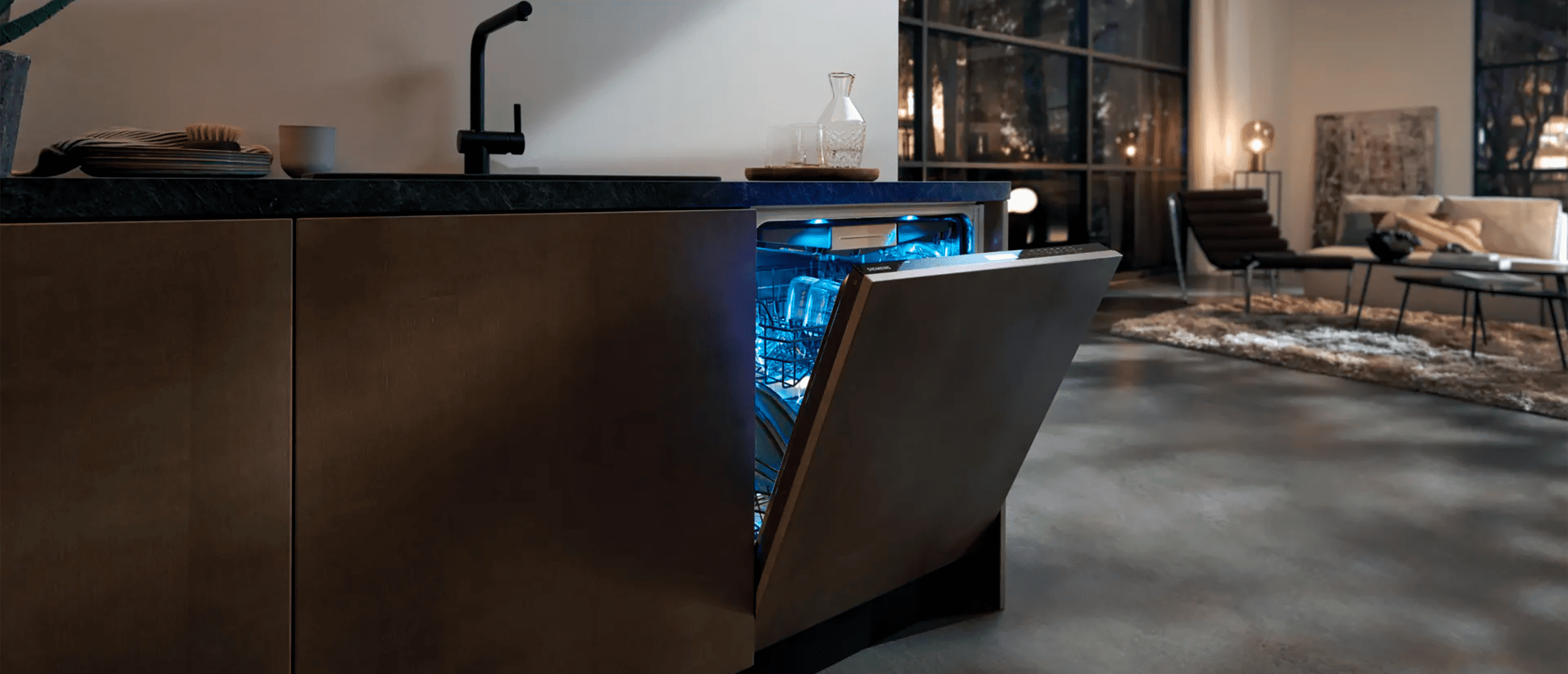
Will my existing kitchen door fit a new integrated dishwasher?
This is where buying a replacement gets a little more interesting. It’s easy to measure the dishwasher opening, find another 60cm model and assume the existing furniture door will simply transfer across. Don’t assume it. Your existing furniture door may well be reusable, but you need to check the new dishwasher’s requirements first.
The furniture panel may have specific requirements for:
- Height
- Width
- Thickness
- Weight
- Fixing position
- Hinge arrangement
- Moisture resistance
- Plinth clearance
The fixing system matters too. Some dishwashers use a fixed door on door arrangement, while others use a sliding hinge system. These can affect how the furniture door moves as the dishwasher opens. Our integrated dishwasher installation guide goes into these differences in more detail.
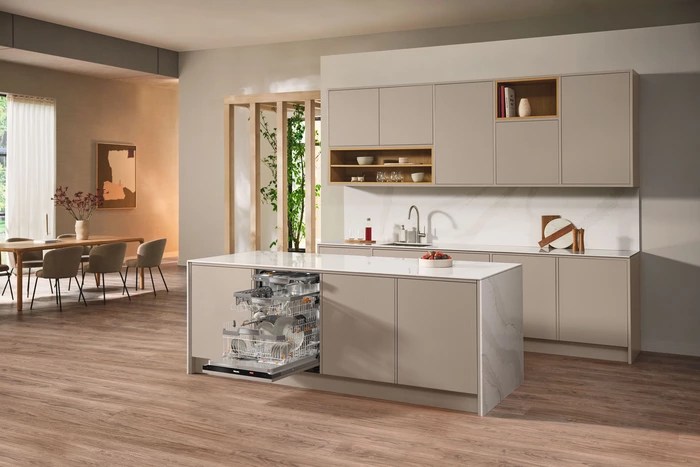
What should I check before the dishwasher is fitted?
Once you’ve chosen the appliance, there are a few practical things worth checking before it arrives. The water supply, waste connection and electrical supply need to be suitable and positioned so the dishwasher can be installed without putting unnecessary strain on the connections.
The dishwasher also needs to be level and securely fixed. That might sound obvious, but getting the appliance properly aligned matters when you’re fitting the furniture door. The surrounding cabinet doors provide a useful visual reference, so you want the dishwasher sitting squarely before the final door adjustments are made.
If you have a timber worktop, check the manufacturer’s advice about protecting the underside from steam and moisture. And if the installation involves changing plumbing, electrical connections or kitchen cabinetry, use an appropriately qualified installer where necessary.
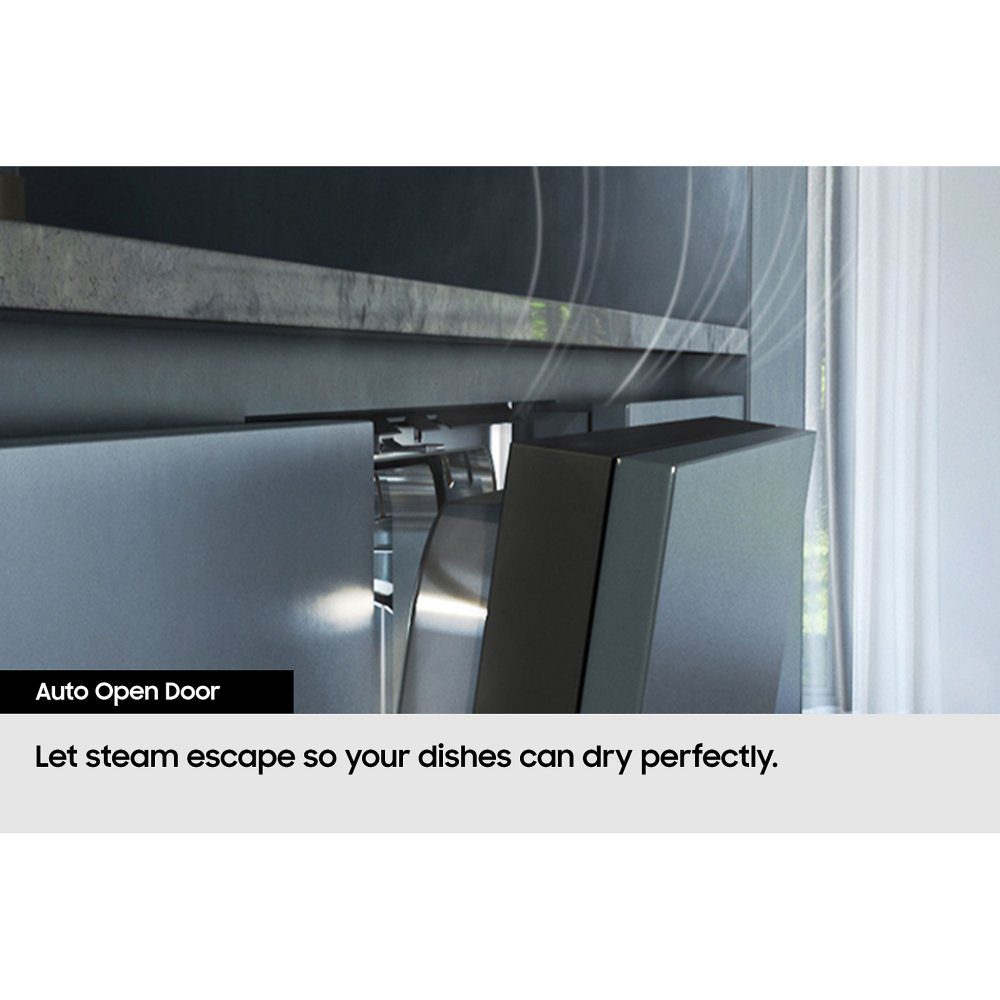
How much should you spend on an integrated dishwasher?
There’s a surprisingly wide range of prices, so it’s worth deciding what matters to you before you start comparing models. You don’t necessarily need the most expensive dishwasher to get good cleaning results.
Instead, think about where your budget will make the biggest difference. For example, if your kitchen is open plan, spending more on a quieter model may be worthwhile. If you have a large family, additional capacity and flexible baskets could be more useful. If you’re replacing an appliance in a high-spec kitchen, you may place more value on design and smart features.
The best value is the dishwasher that gets the things you care about right.
Does the design of an integrated dishwasher matter?
Yes, particularly because the dishwasher becomes part of the kitchen rather than sitting separately from it. A fully integrated model can create a completely uninterrupted run of furniture, which works beautifully in minimalist and contemporary kitchens. Whereas, a semi integrated model gives you a little more visual information by leaving the controls exposed. Slimline models can be useful where you want to preserve as much cupboard storage as possible, while taller models can make better use of vertical space.
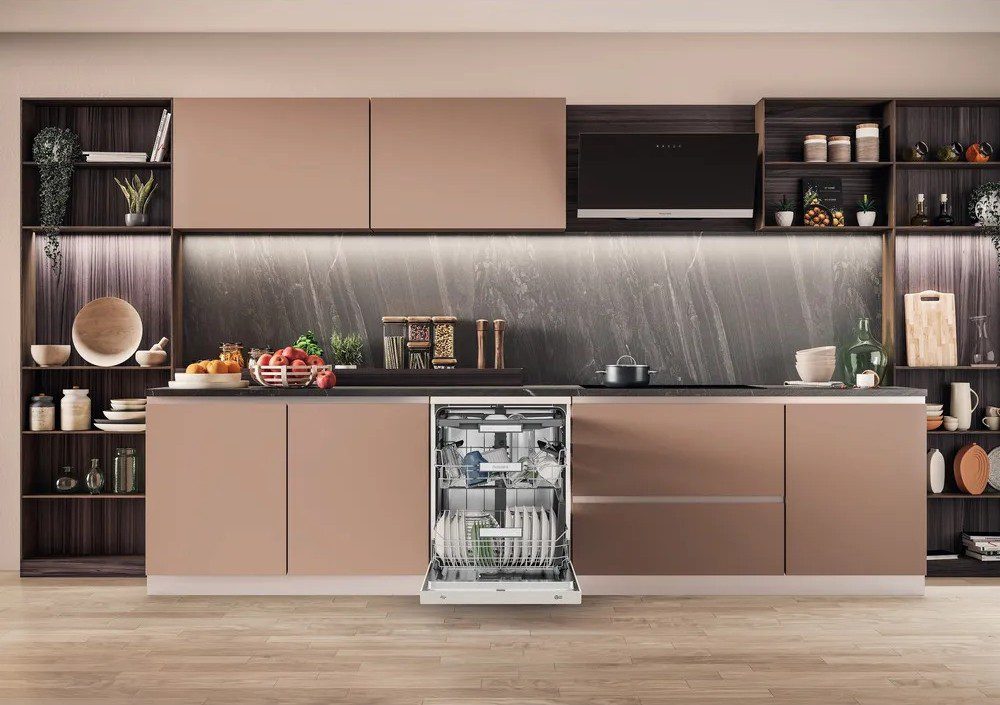
And placement matters too. A dishwasher positioned close to the sink is generally convenient for scraping and loading plates, while positioning it in a tight corner or directly opposite an island can make the door awkward to use.
Good kitchen design isn’t just about making appliances disappear. It’s about making the whole room work well.
Which integrated dishwasher is right for me?
If you’re still undecided, start with the space you have:
- Choose a standard 60cm model if you have a conventional dishwasher opening and want maximum capacity and flexibility.
- Choose a slimline 45cm model if space is limited or you’re happy with a smaller capacity.
- Consider a taller model if your kitchen has additional vertical space and you want more capacity without increasing the width.
- Choose fully integrated if a seamless kitchen is your priority.
- Choose semi-integrated if you’d rather keep the controls and display visible.
- Prioritise a quiet model if your kitchen is open plan.
Then look at the features that affect everyday use: basket layout, capacity, programmes, drying, energy consumption and controls. And if you’re replacing an existing dishwasher, put one final thing at the top of the list: Will the furniture door actually fit?
Integrated dishwasher buying checklist
Before you order, check:
- Standard 60cm, slimline 45cm or taller model?
- Width of the cabinet opening
- Height of the opening
- Available depth
- Position of pipes and electrical connections
- Furniture door width and height
- Furniture door thickness
- Furniture door weight
- Door fixing or hinge system
- Plinth height and clearance
- Door swing and clearance
- Fully integrated or semi-integrated controls
- Suitable capacity
- Flexible basket layout
- Energy rating and energy consumption
- Water consumption
- Noise level
- Useful programmes and controls
- Manufacturer’s installation requirements
- Suitable water, waste and electrical connections
Summary
Choosing an integrated dishwasher doesn’t need to be difficult. Start with the kitchen rather than the feature list. Measure the space carefully. Decide whether you need a standard, slimline or taller model. Think about how much washing you actually generate and whether flexible baskets will make loading easier. Then consider the things you’ll notice every day: controls, programmes, energy use and noise.
If your kitchen is open plan, a quiet dishwasher could be worth prioritising. If you’re creating a minimalist kitchen, a fully integrated model will give you the cleanest look. And if you’re replacing an existing appliance, don’t forget that the furniture door is just as important as the dishwasher itself.
Measure first, choose second. It sounds simple, but it’s the best way to avoid buying a dishwasher that looks perfect on paper and then discovering that the door, plinth or cabinet opening doesn’t quite agree. Get those practical details right, choose features that genuinely suit the way you live, and your integrated dishwasher should do exactly what you want it to do: quietly get on with the washing up while looking as though it was always meant to be part of your kitchen.
Shop Integrated Dishwashers


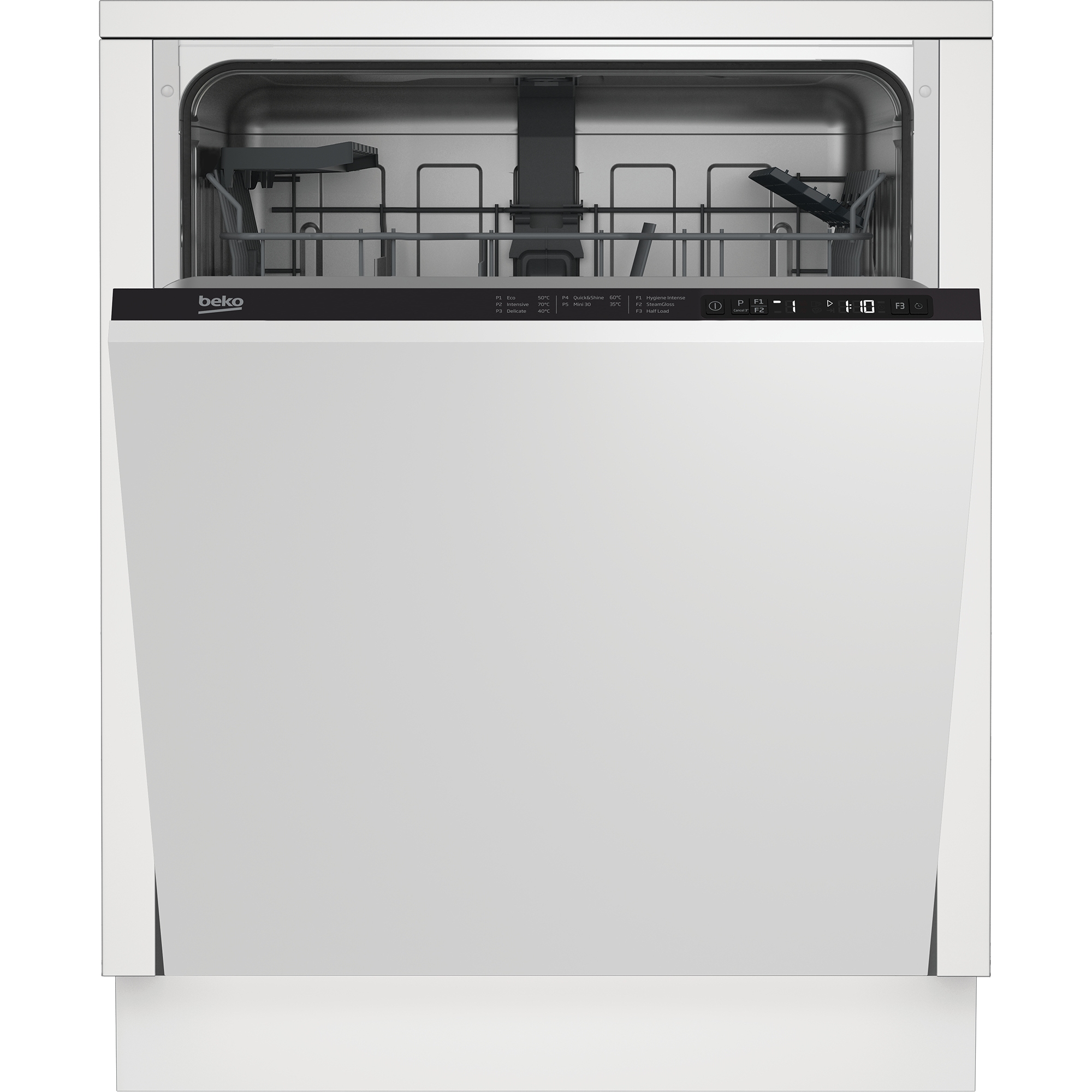

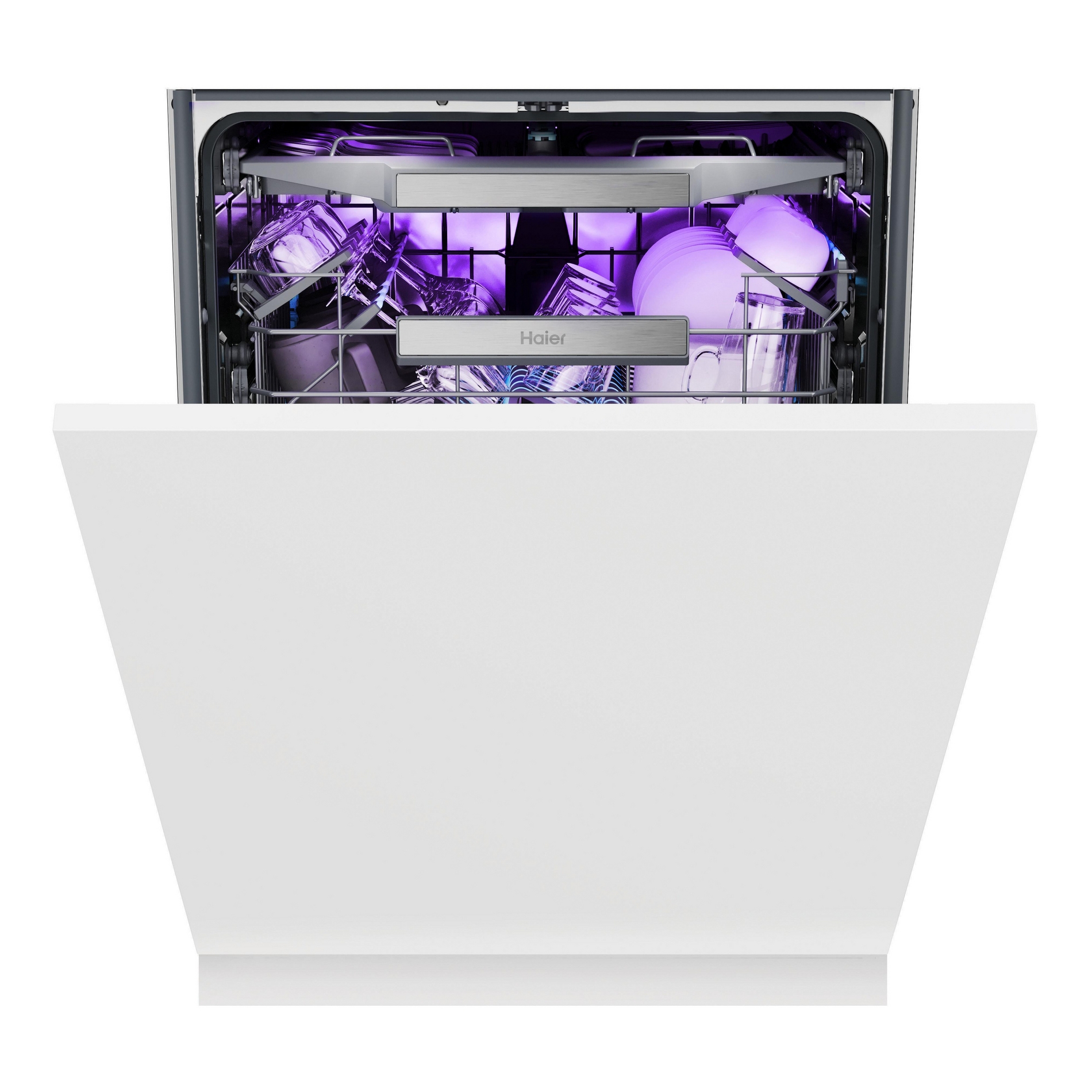

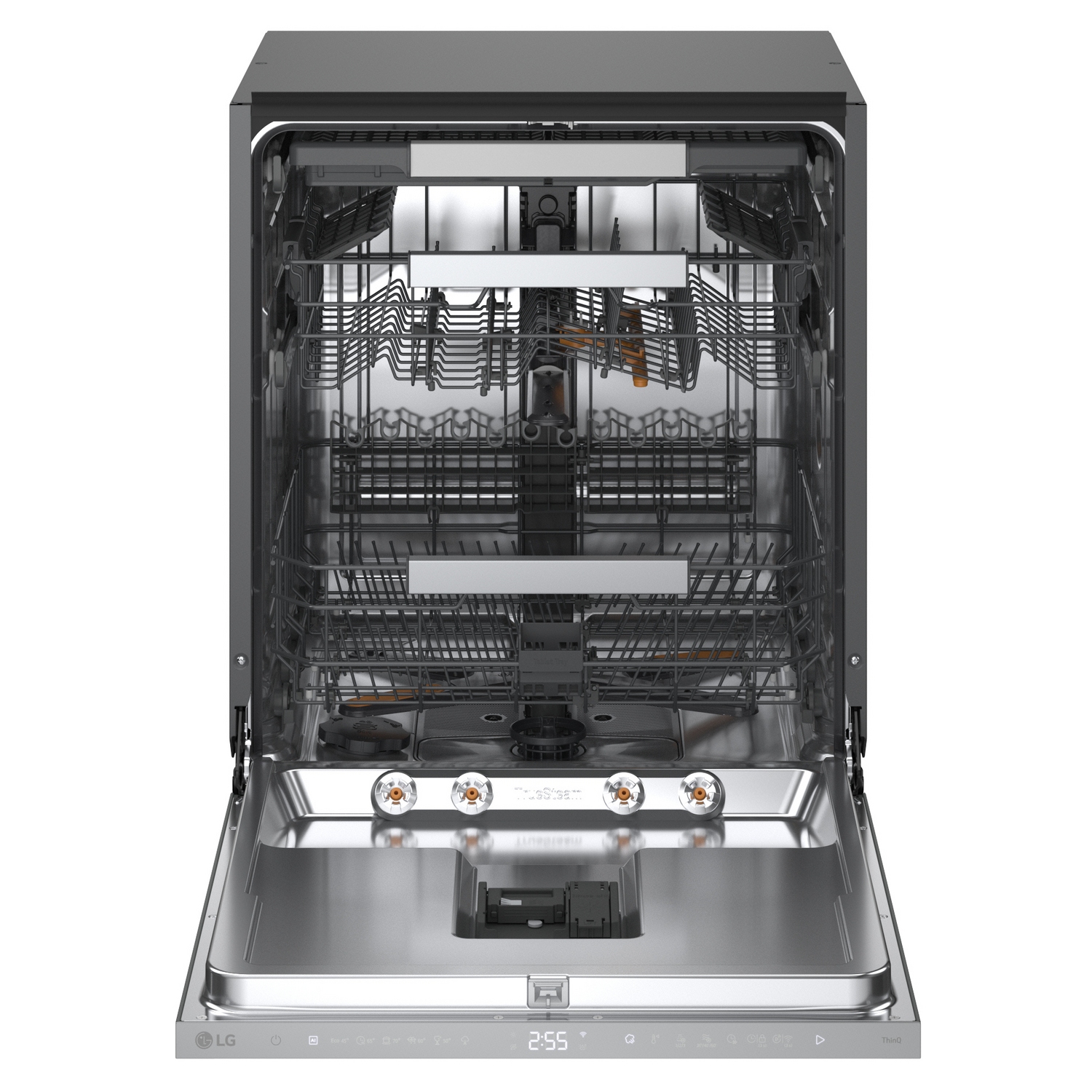

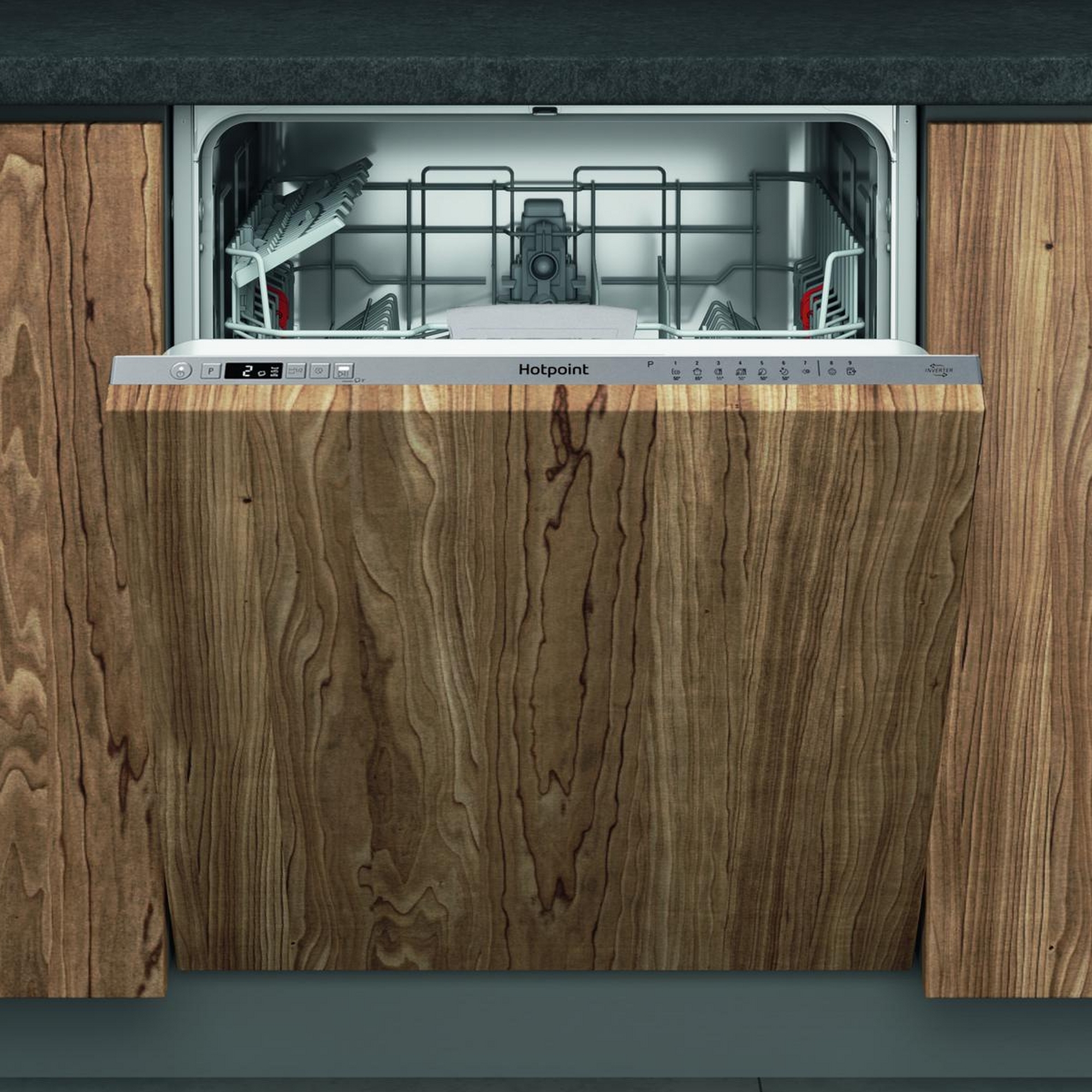


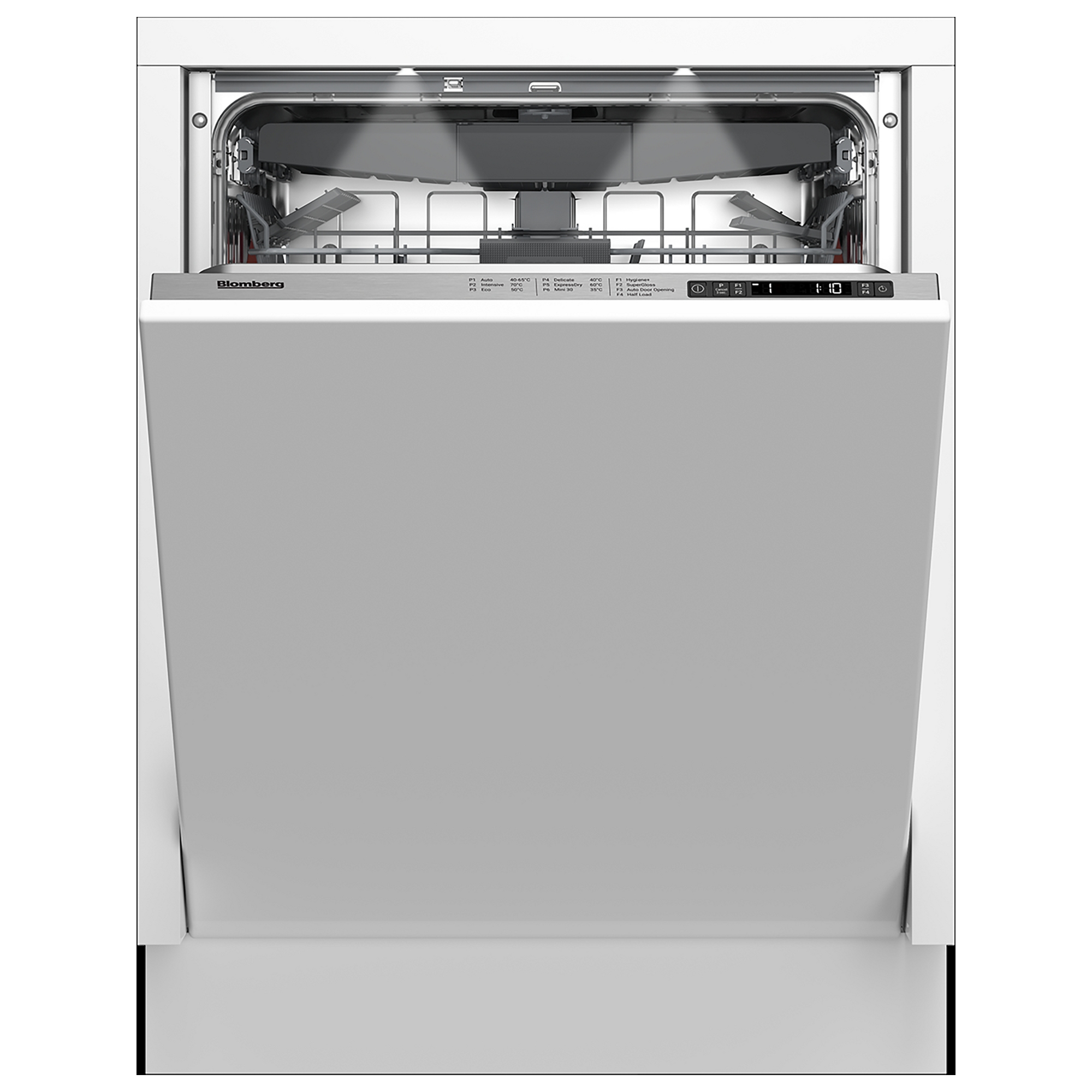
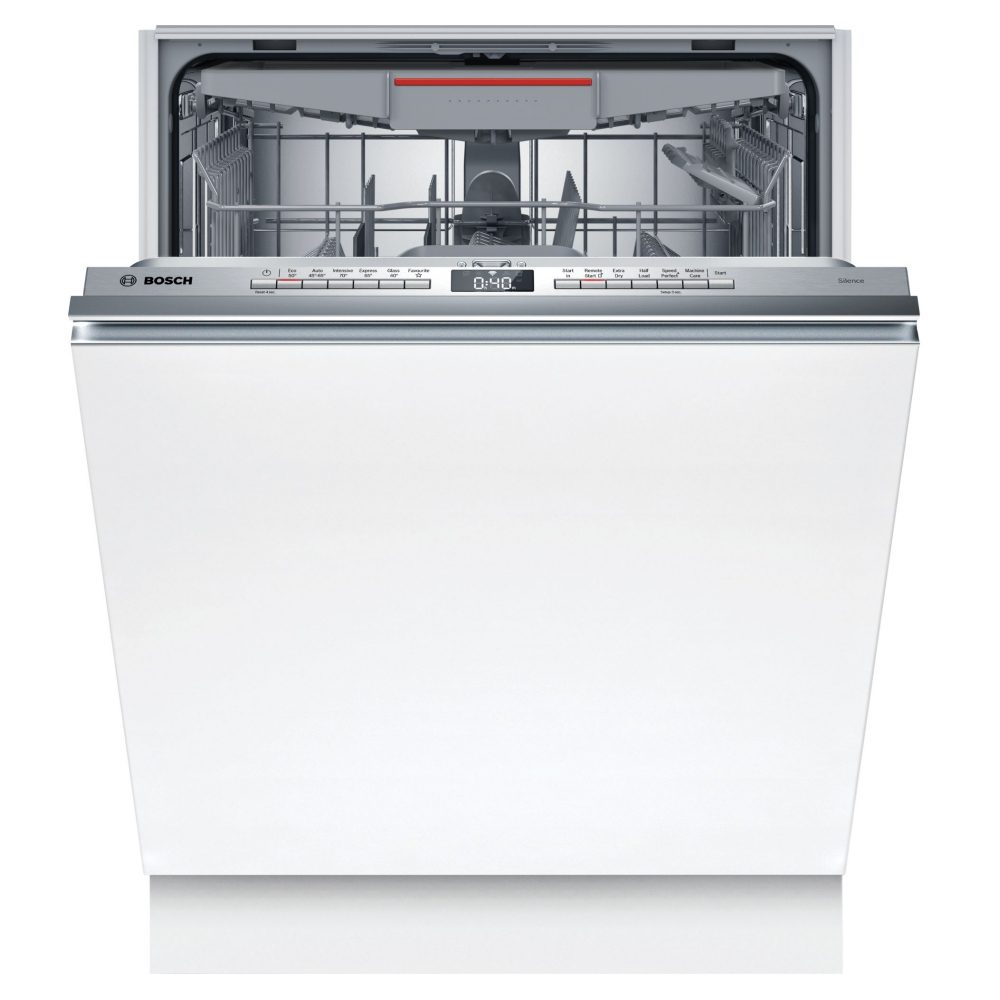
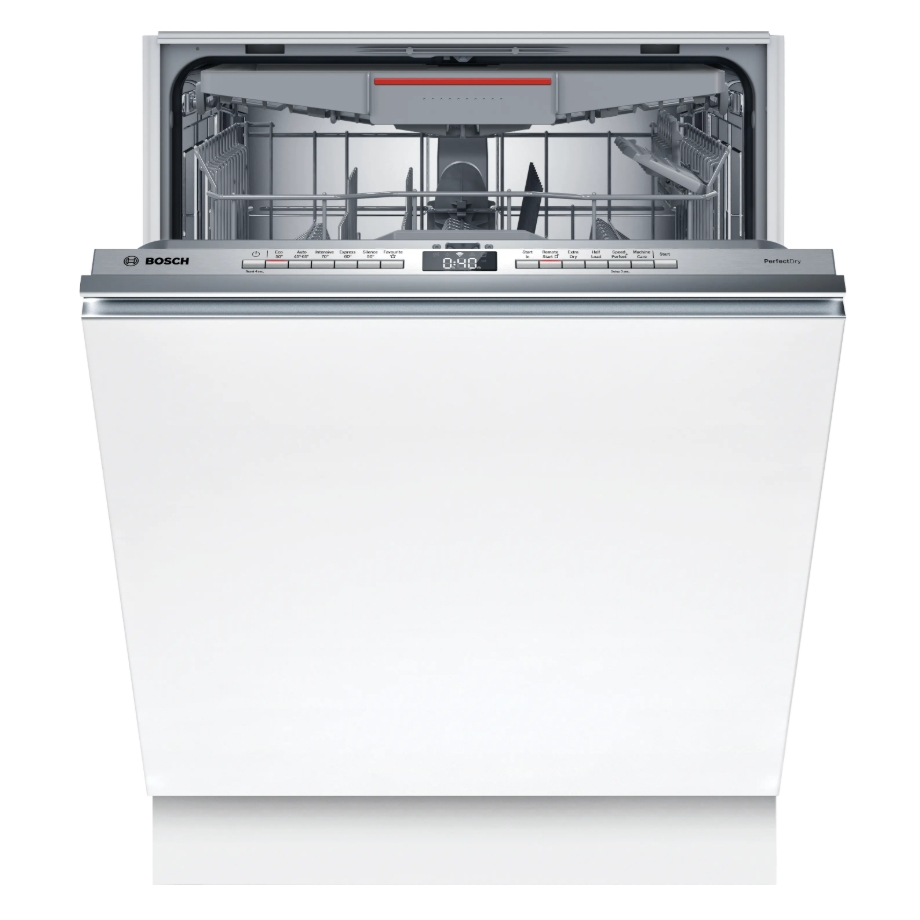
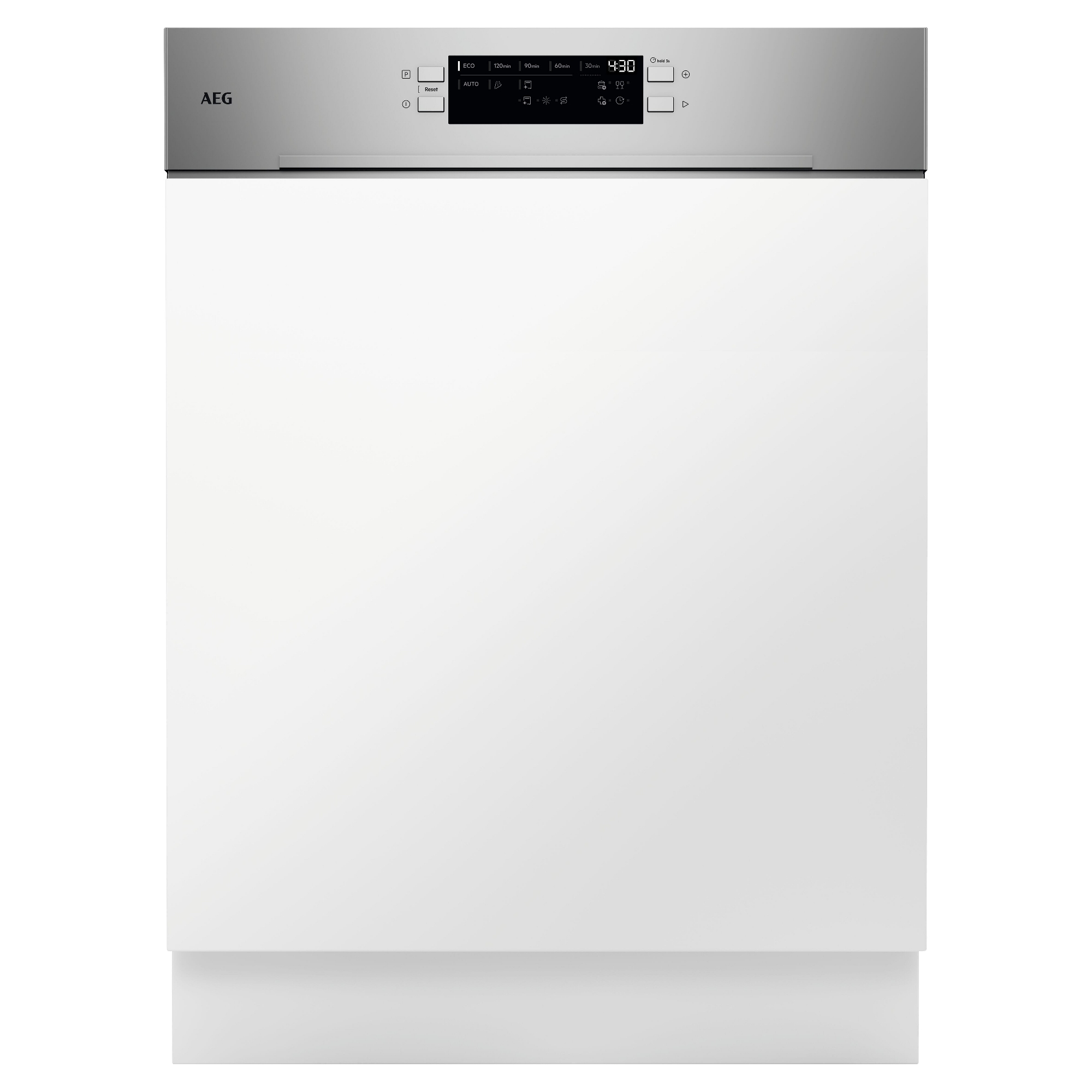

AEG Series 6000 60cm Semi Integrated Dishwasher GT6200B2SNM - Stainless Steel
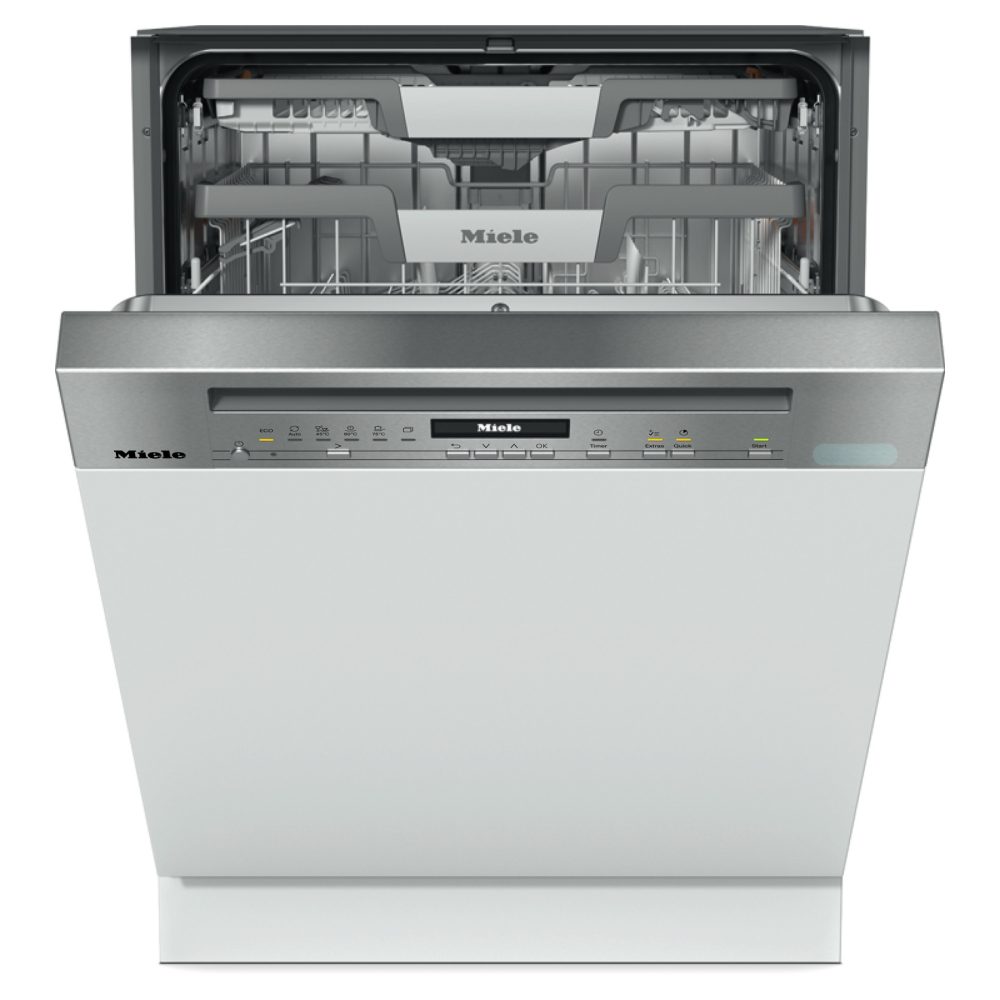

Miele 60cm Semi Integrated Dishwasher G7210SCICLST - Stainless Steel
AEG Series 6000 60cm Semi Integrated Dishwasher GT6200B2SNM - Stainless Steel
Miele 60cm Semi Integrated Dishwasher G7210SCICLST - Stainless Steel
FAQs: Integrated Dishwashers
A standard integrated dishwasher is usually around 60cm wide, while slimline models are generally around 45cm wide. Exact appliance and installation dimensions vary, so always check the manufacturer’s specifications before ordering.
Not necessarily. Two 60cm dishwashers can have different height, depth, furniture door, hinge and installation requirements. Check the cabinet opening and the manufacturer’s installation information before choosing a replacement.
It may, but don’t assume it will. Check the furniture door’s dimensions, thickness, weight and fixing arrangement against the requirements of the new dishwasher. Plinth clearance and hinge movement can also affect compatibility.
A slimline dishwasher is better when you need to save space. If you have room for a full size model and regularly generate large loads, the additional capacity of a 60cm dishwasher may be more useful.
A fully integrated dishwasher hides the controls behind the kitchen furniture door. A semi integrated dishwasher keeps the control panel visible while the rest of the appliance is concealed.
Look at the manufacturer’s quoted noise level in decibels. For open-plan kitchens, a quieter model can make a noticeable difference, particularly if you run the dishwasher while people are using the living space. Read our quiet dishwasher guide here for more.
We recommend measuring the cabinet opening as well as the old dishwasher. Check width, height, depth, furniture door dimensions, plinth clearance and the position of water, waste and electrical connections.