

October 15, 2026
Built In Oven Buying Guide: Single, Double and Under Counter Options
The best built in oven isn't necessarily the biggest, most expensive or most advanced one. It's the one that fits your kitchen and makes sense for the way you cook. If you're replacing an existing oven, the first question is usually quite simple: what type of oven do I have now, and what will fit the space? If you're designing a new kitchen, you've got more freedom, but you still need to decide whether a single oven gives you enough cooking space, whether having two cavities would genuinely make life easier, or whether a compact oven could give you more useful cooking flexibility without taking up too much room. From there, it's about the things that actually matter when you're using the oven day after day. How much space do you need for the food you normally cook? Do you regularly use the grill? Are you a keen baker, a Sunday roast enthusiast or someone who mostly wants to get dinner on the table without fuss? Would features such as steam cooking, air fry or pyrolytic cleaning genuinely make your life easier, or are they simply nice to have?
13 min read
In other words, don't start by asking which oven is best. Start by asking which oven is best for you.
That’s particularly important with built in ovens because there are several different formats to choose from, and they aren’t interchangeable. A standard single oven, a full height built in double, a built under double and a compact oven can all offer excellent cooking performance, but they’re designed for very different kitchen layouts and cooking requirements.
So before you start comparing Miele, NEFF, Smeg, Bosch, AEG, Siemens and other major manufacturers, let’s work out what type of oven actually makes sense for your kitchen.
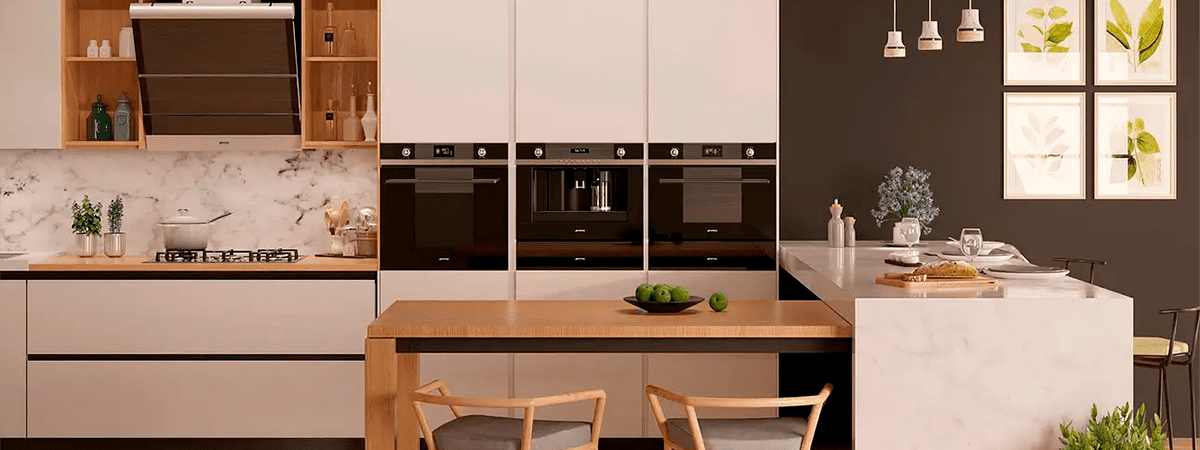
At a glance: which type of built in oven do you need?
These formats are not simply different versions of the same oven. The installation position, available cavity space and way you’ll use the appliance can all be quite different, so getting the format right is the first decision to make.
| Oven Type | Typical Position | Best Suited To | Main Advantage |
|---|---|---|---|
| Single oven | Built into a tall housing unit or under the worktop | Most households | Good all round cooking space without taking up excessive room |
| Built in double oven | Full height housing unit | Families, keen cooks and entertainers | Two separate cavities at a convenient height |
| Built under double oven | Beneath the worktop | Kitchens without full height housing | Two cavities without needing a tall oven housing unit |
| Compact oven | Usually installed in a wall or tall housing unit | Smaller kitchens or as a second cooking appliance | Saves space and can combine several cooking functions |
1. Start with what you're replacing
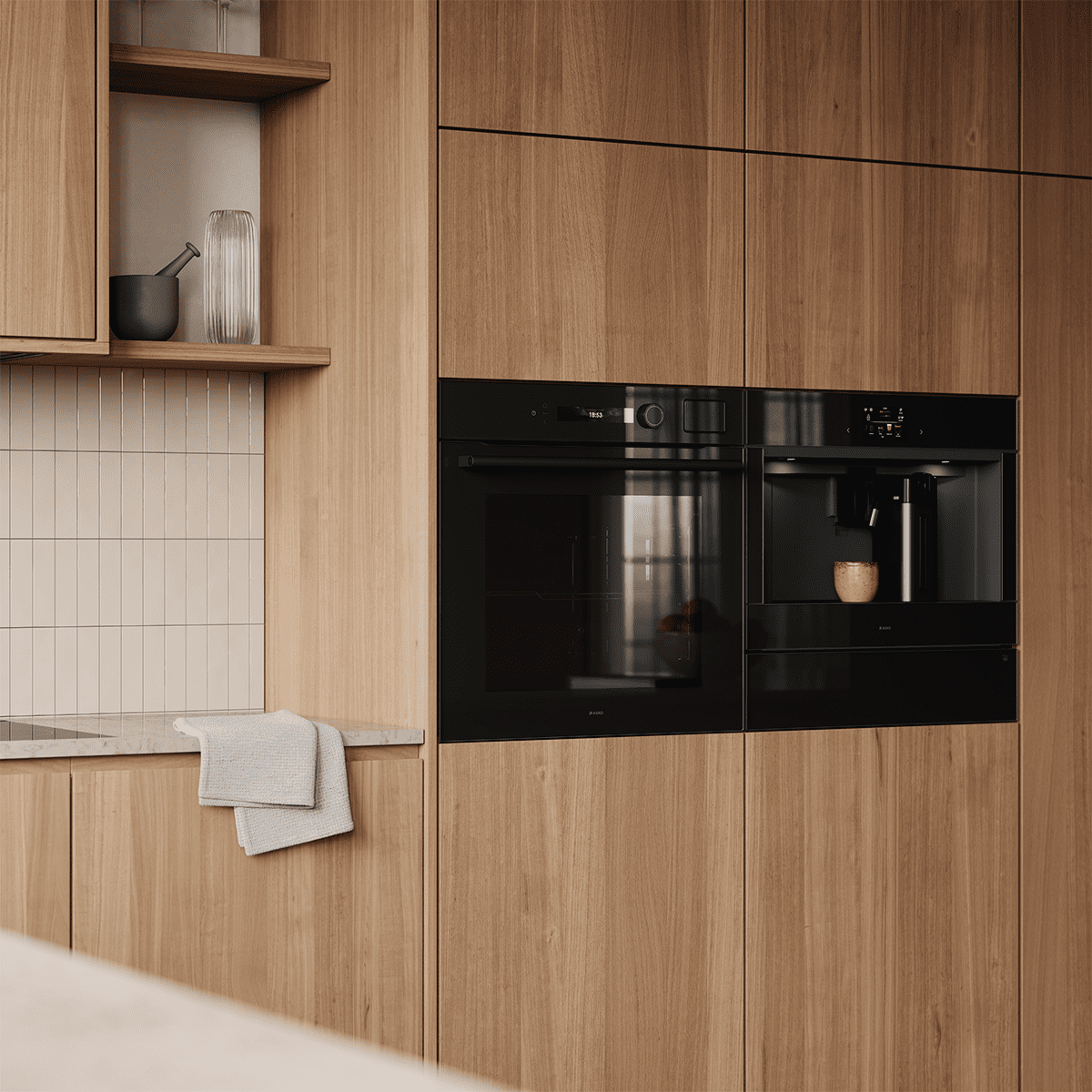
Before you start comparing brands, screens, cooking programmes or cleaning systems, look at the oven you already have. Is it a single oven? A tall built in double? A built under double? Or perhaps an older compact oven?
If you’re replacing an oven and want the simplest installation, choosing the same basic format is usually the easiest route. That doesn’t mean you have to buy the same type of oven forever, but changing from one format to another can involve changes to the housing unit, aperture and sometimes the electrical installation. For example, replacing a standard single oven with another single oven is usually much more straightforward than trying to replace it with a built in double, because a full height double oven requires a substantially taller housing space. Likewise, a built under double is designed around a lower opening beneath the worktop and isn’t interchangeable with a full-height built in double.
This is why measuring your kitchen should come before falling in love with a particular model.
A useful starting point is:
- What type of oven do I have now?
- Where is it installed?
- How much space is available?
- Do I want to keep the same layout?
- Would I actually benefit from a second cavity?
- Is the existing electrical supply suitable for the new oven?
Once you know those answers, the rest of the buying decision becomes much easier.
2. Single ovens: the versatile all rounder
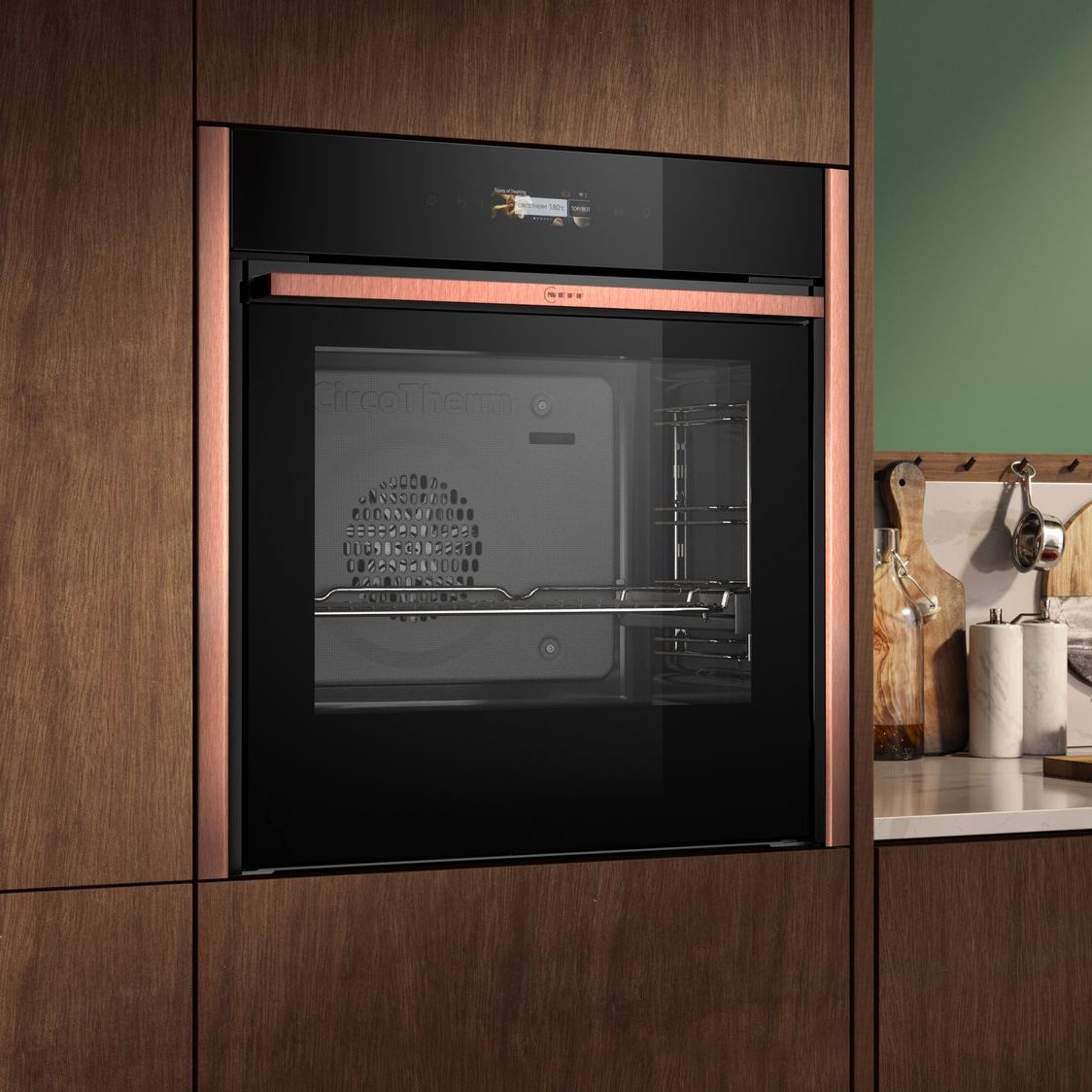
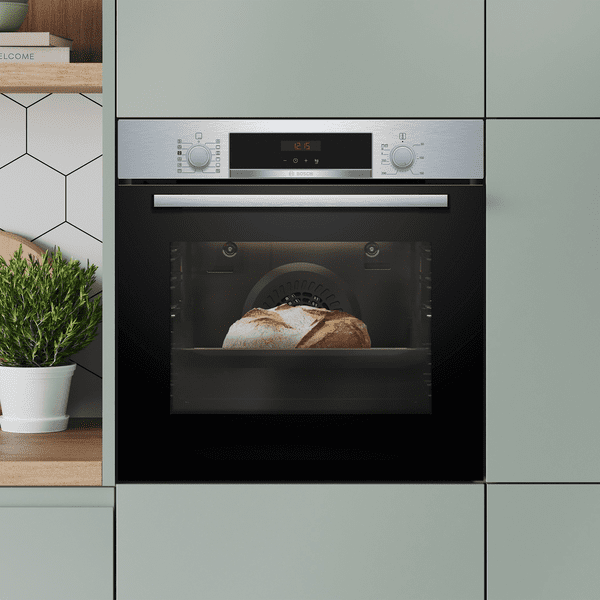
For most kitchens, a single oven is still the most sensible choice. A standard built in single oven is generally designed around a 60cm wide housing space and gives you one full size cooking cavity for roasting, baking, grilling and everyday meals. Current models commonly sit around the 70 litre mark, although capacities can vary between manufacturers and models. That’s plenty of space for most everyday cooking.
A single oven makes particular sense if you’re cooking for one or two people, a small family, or simply don’t tend to cook several dishes at different temperatures. You can still roast a chicken, bake a tray of vegetables, cook a lasagne or prepare a Sunday roast; you just have one cooking temperature and one cavity to work with.
And modern single ovens can be far more capable than the straightforward ovens many of us grew up with. Depending on the model, you can find multifunction cooking, fan assistance, steam, air fry programmes, pizza settings, automatic programmes and sophisticated cleaning systems.
NEFF is a good example of how much choice there is within the single oven category, with models ranging from relatively straightforward ovens to N70 and N90 models with features such as Slide & Hide, steam cooking and pyrolytic cleaning. Bosch similarly offers single ovens from simple everyday models through to more advanced appliances, while Miele tends to sit further towards the premium end with additional cooking and cleaning technology.
Smeg also offers a broad selection of 60cm single ovens, from more traditional multifunction models through to appliances with additional cooking functions and combination technology.
The important point is that a single oven doesn’t necessarily mean a basic oven. It simply means you have one main cavity.
3. Built in double ovens: two ovens in a full height housing unit
If you regularly find yourself wishing you had another oven, a built in double could be the answer.
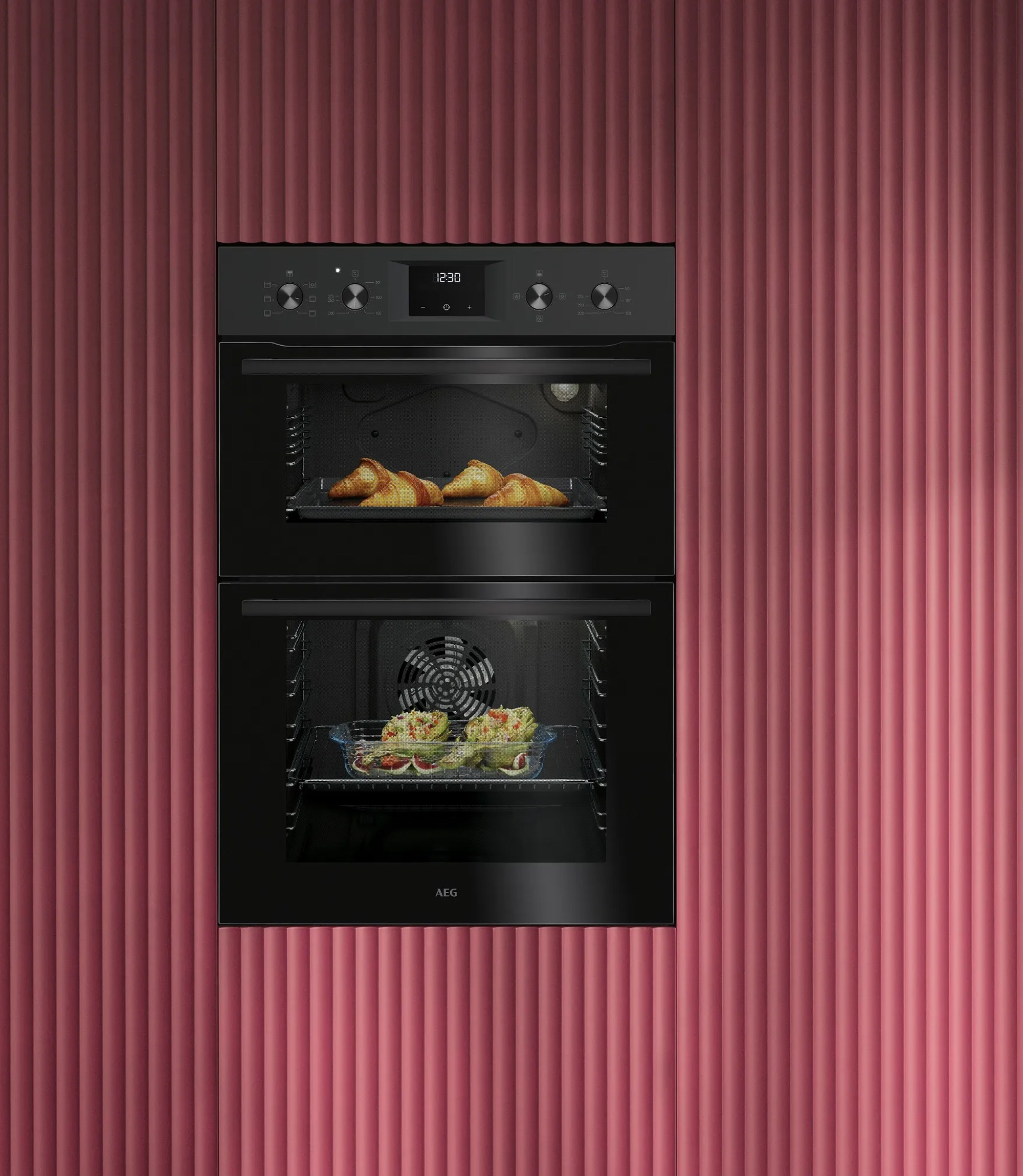
A built in double oven is designed to sit in a tall kitchen housing unit, usually at a comfortable working height rather than underneath the worktop, and sit around 90cm high although the exact dimensions vary by model.
The attraction is obvious: you have two separate cavities, so you can cook different dishes at different temperatures at the same time. Imagine preparing a roast dinner with the meat cooking in one oven while potatoes, vegetables or a dessert are being prepared in the other. Or you’re entertaining and need one oven for a main course while another handles side dishes. That’s where the second cavity stops being a luxury and starts becoming genuinely useful.
However, don’t assume that both cavities will be the same size. Most built in double ovens have one larger main oven and a smaller secondary oven, often with a grill function. The smaller cavity can be ideal for toast, grilling, reheating or cooking smaller dishes, but it won’t necessarily accommodate the same roasting tin or large casserole as the main oven.
That is worth checking carefully before you buy, particularly if you’re upgrading from a single oven because you expect both cavities to provide full size cooking space.
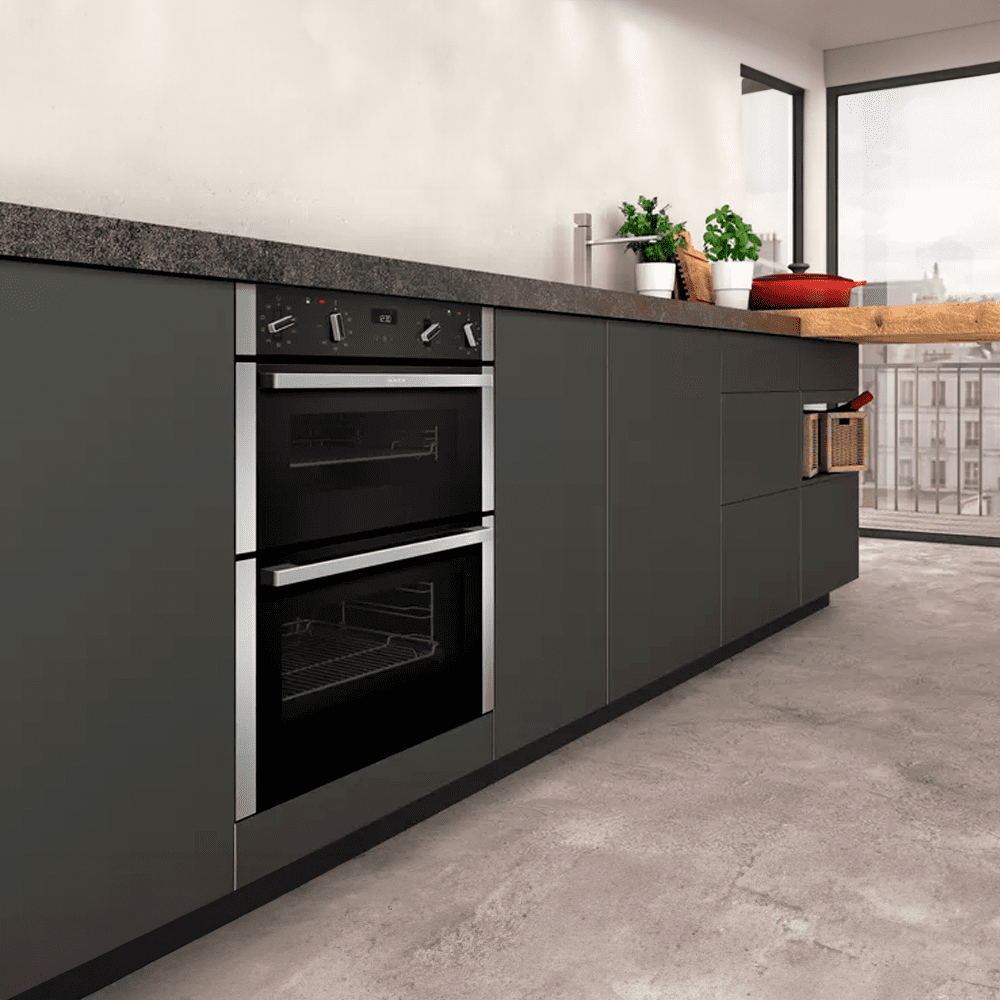
4. built under double ovens: similar idea, different installation
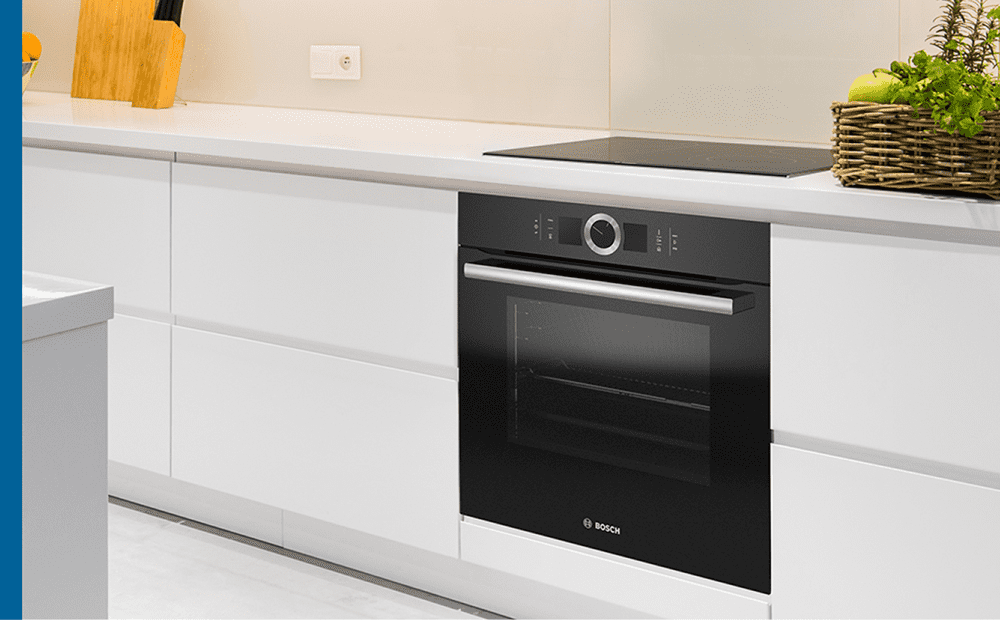
A built under double oven also gives you two cavities, but the way it fits into the kitchen is completely different. Rather than being installed in a full height housing unit, a built under double is designed to sit beneath the worktop.
These models are generally around 70–72cm high, compared with roughly 90cm for a full-height built in double. That makes a built under double particularly useful if your kitchen doesn’t have a tall oven housing unit, or if you want to keep the oven in the same under-worktop position as an existing appliance.
The trade off is that the two formats aren’t identical internally. Because the built under double has to fit into a shorter space, the individual cavities can be smaller than those found in a full-height built in double.
So if you’re deciding between the two, don’t just ask, “Do I want two ovens?”
Ask: “Where do I want those two ovens to sit, and how much capacity do I need in each cavity?”
That’s the real difference.
built in double vs built under double ovens
NEFF, Smeg, Bosch, AEG and other major manufacturers all have different combinations of built in and built under ovens, so it is worth filtering by installation type rather than simply searching for double ovens.
| Built In Double | Built Under Double | |
|---|---|---|
| Position | Tall housing unit | Beneath worktop |
| Approx. height | Around 90cm | Around 70–72cm |
| Access | Higher, often around eye level | Lower down |
| Cooking capacity | Generally larger | Generally smaller |
| Best for | Families and keen cooks | Kitchens without tall housing |
| Main consideration | Needs a full height housing unit | Must fit the available under worktop opening |
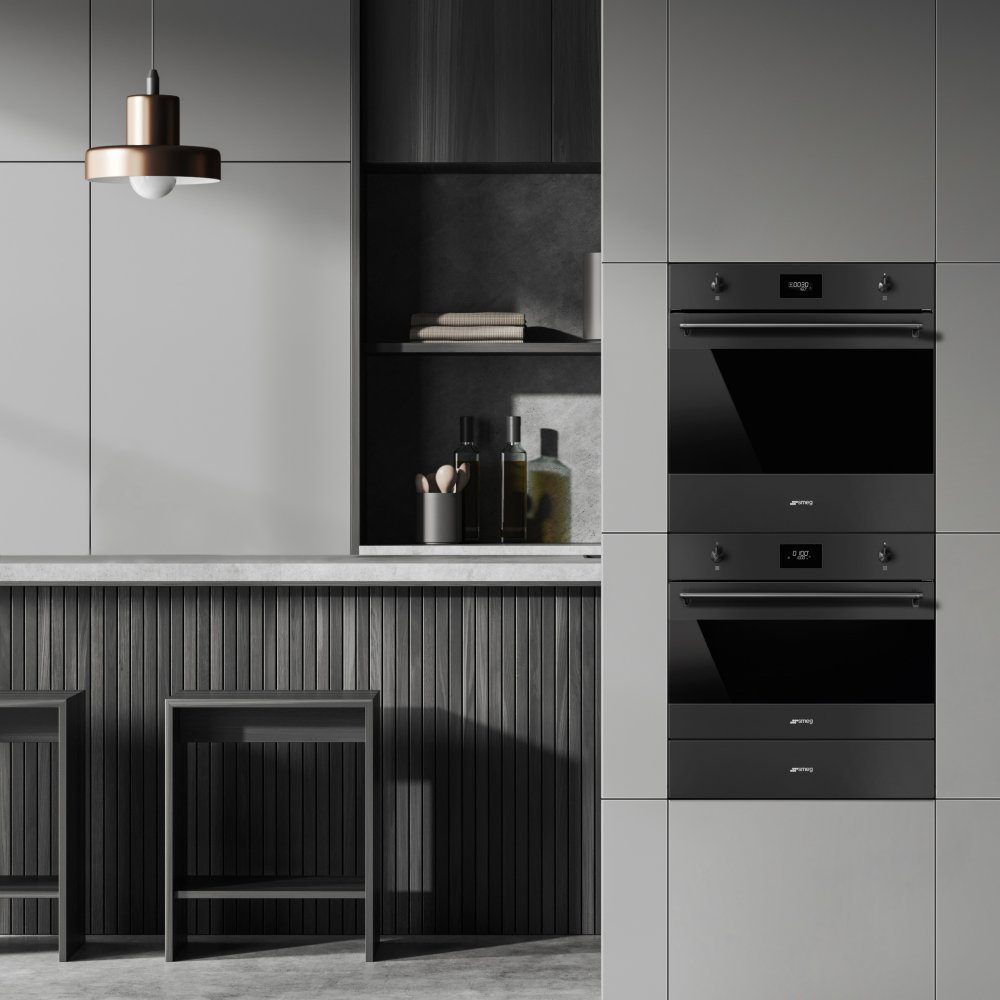
5. Compact ovens: smaller outside, often more versatile than you expect
Compact ovens are usually around 45cm high rather than the roughly 60cm height associated with a standard single oven. That makes them particularly useful when kitchen space is limited or when you want to combine an oven with another cooking appliance.
A compact oven can also be a clever choice when you already have a good main oven but want additional functionality. For example, some compact models combine oven and microwave functions, while others add steam cooking or other specialist programmes. NEFF’s compact range includes models with steam functionality and generous for the format cavities, while Miele, Bosch and Smeg also offer combination appliances.
A compact oven can be particularly useful for:
- Smaller kitchens
- Couples or smaller households
- A second oven alongside a larger appliance
- Kitchens where microwave and oven functions need to share one appliance
- Steam cooking
- Reheating and smaller meals
The question to ask is whether you need more oven space or more cooking flexibility. A compact combination oven can be excellent for the latter.
6. How much oven capacity do you actually need?
Capacity is usually measured in litres, but the number doesn’t tell the whole story. Two ovens with similar quoted capacities can feel quite different to use because the internal dimensions, shelf positions and shape of the cavity can vary. What really matters is whether you can fit the dishes you regularly cook.
Think about your actual cooking rather than an abstract litre figure. If you regularly roast a large joint of meat, cook a big family lasagne or bake several trays of food at once, look for a generous full size cavity with useful shelf positions. If you’re mainly cooking meals for two people, reheating leftovers and occasionally baking, you may find that a standard single oven gives you all the space you need.
Rather than asking: “How many litres should my oven be?”
it’s often more useful to ask: “What do I actually need to fit inside it?”
Can it take your largest roasting tin? Can you fit the casserole dish you use every Sunday? Are there enough shelf positions to cook on more than one level? Those questions tell you much more about whether an oven will work for you.
7. Think about how you cook, not just how many people you feed
If you mostly cook everyday meals
A single multifunction oven will probably give you everything you need. Look for a good fan oven, useful shelf positions and a grill that is easy to use.
If you bake regularly
Pay more attention to temperature control, even heat distribution, shelf positions and the shape of the cavity. Features such as steam assistance can also be useful for bread and certain types of baking.
If you entertain frequently
A double oven becomes much more attractive because you can cook dishes at different temperatures without having to juggle everything around one oven.
If you cook large Sunday roasts
Look at the physical size of the main cavity rather than simply the headline capacity. You need enough room for the roasting tin, meat and vegetables, with sensible clearance around them.
If you mainly grill
Don't overlook the grill just because the oven itself gets all the attention. A good, easily adjustable grill can make a bigger difference to everyday use than a long list of specialist automatic programmes.
8. Do you actually need a double oven?
This is one of the biggest questions to ask before spending more on a larger appliance.
A double oven is useful if you genuinely cook at different temperatures at the same time. If you’re regularly preparing a roast at 180°C while trying to bake something at 200°C, having two cavities can save a lot of juggling. But if you generally cook one main dish at a time, a good single oven can be more than enough.
There is also another option worth considering: a large single oven combined with a compact oven or microwave combination oven. That can give you a large main cavity for serious cooking, while the second appliance handles reheating, smaller dishes, steam cooking or microwave duties.
This is one reason the best kitchen isn’t necessarily the one with the most ovens. It’s the one where the appliances work together in a way that suits how you actually cook.
9. How important is the grill?
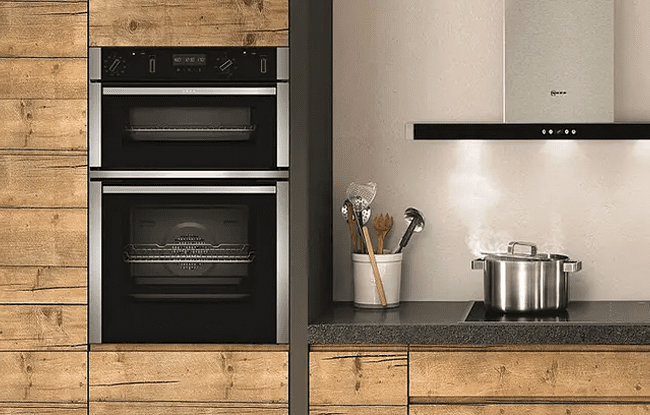
For some people, the grill is an essential part of the oven. For others, it’s something they use occasionally. If you regularly grill bacon, cheese on toast, sausages, vegetables or smaller portions of food, look for an oven with a good, adjustable grill and sensible access to the grill area.
Many single ovens from manufacturers such as NEFF, Miele and Bosch include adjustable grill functions, but the way the grill works can vary between models. With a double oven, the smaller top cavity often incorporates the grill, which can be very convenient because you don’t have to heat the main oven just to grill something.
If you rarely grill, however, it probably shouldn’t be the feature that determines your entire purchase.
10. Fan, conventional or multifunction?
Fan cooking
A fan circulates hot air around the cavity, helping to distribute heat more evenly and making it useful when cooking on more than one shelf. It’s particularly handy for everyday roasting, baking and batch cooking.
Conventional cooking
Conventional cooking uses heat from the upper and lower elements without relying on a circulating fan. It can be useful for certain recipes where a more traditional style of heat is preferred.
Multifunctional cooking
A multifunction oven gives you several cooking methods, allowing you to select the most appropriate one for the dish you’re preparing. This is where many modern ovens from NEFF, Miele, Bosch, Smeg, AEG and Siemens start to differentiate themselves, with higher specification models adding specialist programmes and more precise control. The trick is not to count the number of programmes and assume more is automatically better. A handful of cooking functions you use regularly are worth much more than 20 programmes you never touch.
11. Steam, air fry and other specialist features
Ovens have become much more than simple boxes that heat up. Steam cooking is increasingly available on higher specification ovens and can be useful for bread, vegetables, fish and dishes where retaining moisture matters. Some ovens combine steam with conventional or fan cooking, giving you more control over the cooking environment. Air fry functions are also becoming increasingly common. Bosch, for example, offers built in ovens with Air Fry functionality.
Whether these features are worth paying extra for depends entirely on how you’ll use them.
If you regularly cook homemade bread, steam may be genuinely useful. If you often make chips, wedges and crispy vegetables, an air fry function could earn its place. If you already own a good air fryer and rarely bake, it may be something you can comfortably live without.
The best approach is to start with your cooking habits and work backwards from there.
12. Cleaning: how much work do you want to do?
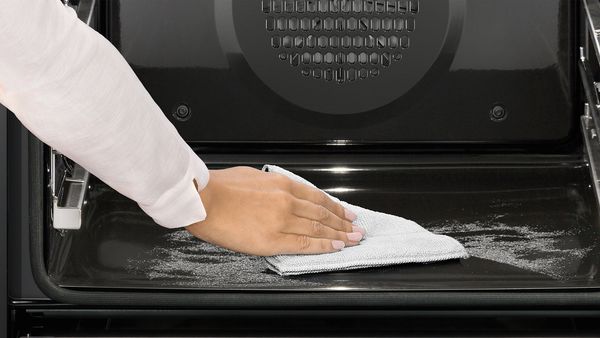
Cleaning an oven isn’t exciting, but it’s one of those features you’ll appreciate every time you use it. At the simplest level, you have an enamel lined oven that you clean manually. Many modern ovens also offer assisted cleaning systems that use heat, steam or other methods to loosen grease and food residue. At the premium end, pyrolytic cleaning heats the oven to a very high temperature, turning baked-on food and grease into ash that can then be wiped away.
Miele, NEFF, Bosch, AEG and other manufacturers offer models with different approaches to oven cleaning, so it’s worth deciding how much maintenance you’re prepared to do before comparing models.
If you cook frequently and hate cleaning the oven, paying more for an effective cleaning system can make much more sense than paying for a collection of cooking programmes you may never touch.
13. Think about where the oven will sit
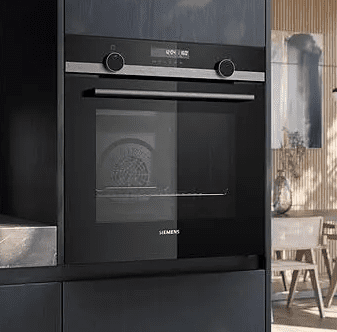
Where the oven is positioned changes how convenient it is to use. A built in oven installed in a tall housing unit can put the cooking cavity at a comfortable height, meaning you don’t have to bend down every time you check a roast or remove a hot tray. A built under oven, by comparison, sits below the worktop. That can be perfectly practical and may be the only option in some kitchens, but you will naturally be bending down more often.
This is another reason not to assume that a built in double and built under double are simply two versions of the same product. They are designed around different kitchen layouts and different installation positions. if you’re designing a new kitchen, this is worth thinking about before the cabinets are ordered.
14. What about oven doors and access?
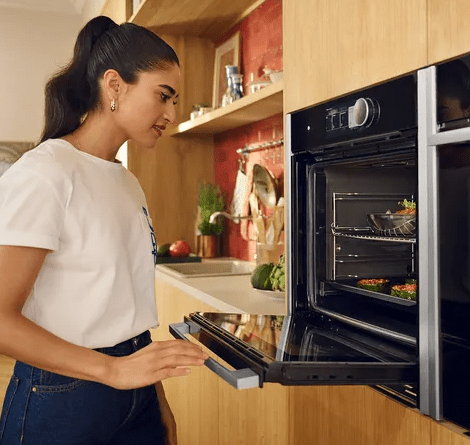
The door is something you’ll interact with every time you use the oven, so it deserves more attention than it often gets. Some ovens have conventional drop down doors, while others have more unusual designs intended to make access easier.
NEFF’s Slide & Hide ovens are a good example. On selected models, the door slides underneath the oven when opened, giving you more room to access the food. That can be particularly useful when you’re working with large roasting tins or simply don’t want a hot oven door projecting into the kitchen.
It’s not an essential feature for everyone, but if you’ve ever struggled to reach into the back of an oven while trying not to lean over a hot door, you’ll understand why some people are prepared to pay for it.
15. Which brand should you choose?
Miele
Miele is worth considering if you want premium construction, precise cooking control and sophisticated cleaning and cooking technology. Its built in ovens tend to offer generous cavities, with current examples around 76 litres, and pyrolytic cleaning is available on selected models.
NEFF
NEFF is particularly interesting if cooking flexibility and usability are high on your list. Its range covers straightforward everyday ovens through to models with Slide & Hide, steam cooking, pyrolytic cleaning and more advanced programmes.
Smeg
Smeg offers a broad selection of built in ovens, including traditional multifunction models, larger capacity ovens and models with more advanced cooking and cleaning technology. It's also a popular choice when the visual design of the kitchen matters as much as the appliance specification.
Bosch
Bosch has a particularly broad range, making it useful if you want to compare straightforward, mid-range and more advanced ovens without moving between completely different manufacturers. Current Bosch single ovens include models around 71 litres, with features ranging from assisted cleaning to pyrolytic cleaning and Air Fry.
AEG and Siemens
AEG and Siemens are also worth considering if you're looking for more advanced cooking functions, precise control or higher specification cleaning and cooking systems. As with the other manufacturers, the key is to compare the individual model rather than assuming that every oven within a brand's range offers the same experience.
16. Don't forget the kitchen unit
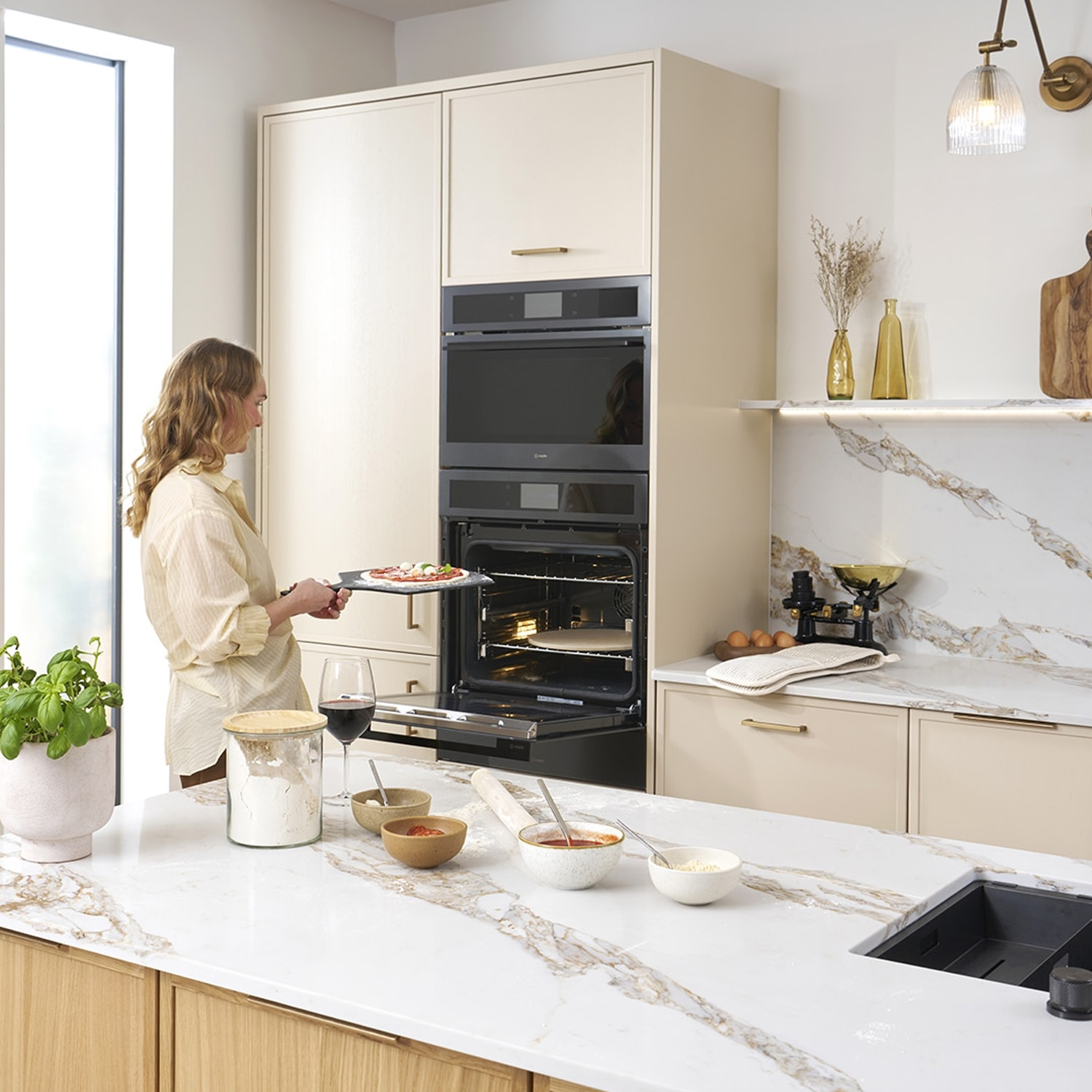
This is where an otherwise perfect oven can become a very expensive mistake. A built in oven needs to fit the hidden aspect of the kitchen unit, not simply the space you can see from the front. Check:
- The height of the opening
- The width of the opening
- The available depth
- Ventilation requirements
- The position of the power connection
- Whether the unit is designed for a single, double or compact oven
- The manufacturer’s installation requirements
Two ovens may both be described as 60cm models but still have different overall dimensions or installation requirements, so always check the technical drawing for the exact model before ordering. This is especially important if you’re replacing an older oven. Don’t assume that because the old appliance fitted, every modern oven will fit the same opening without checking.
17. What if you're replacing a single oven with a double?
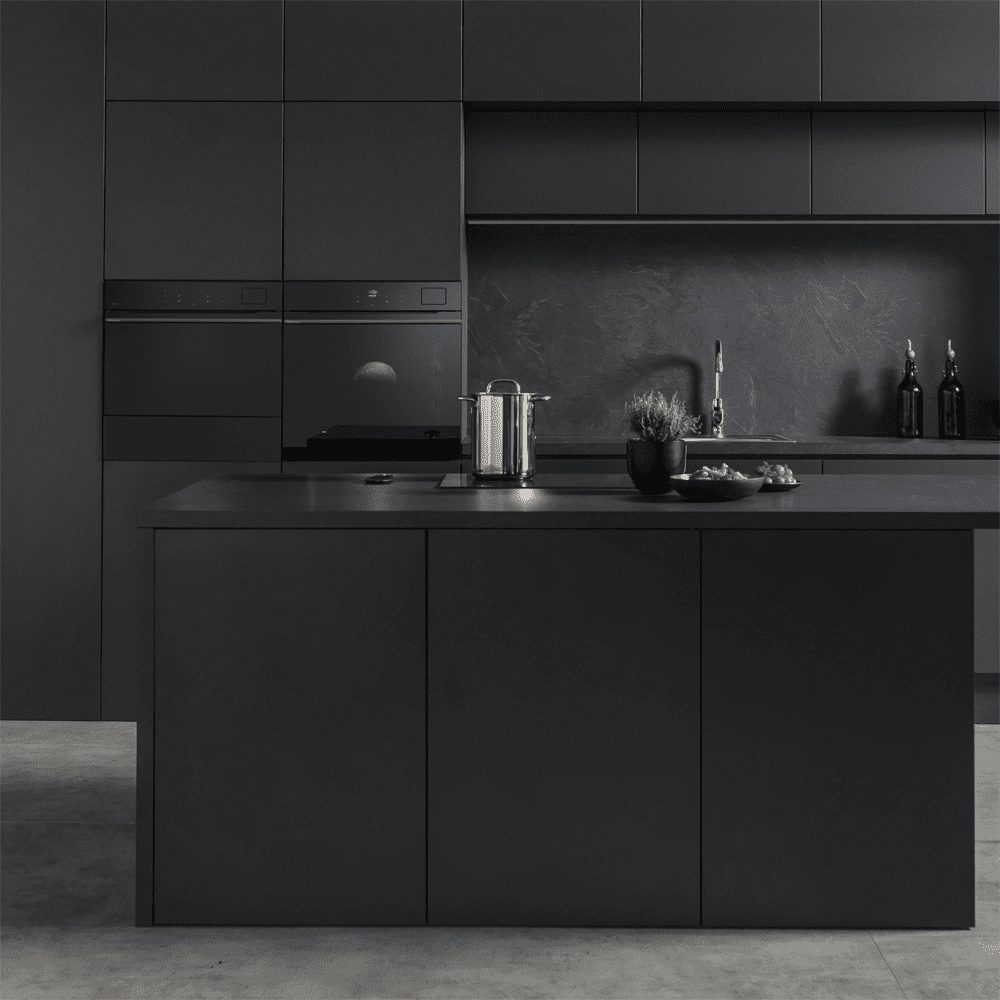
This is possible in some kitchen layouts, but it isn’t normally a simple like for like swap. A standard single oven takes up a smaller vertical space than a full-height built in double, so you need to establish whether the surrounding housing can accommodate the taller appliance.
If you don’t have the necessary tall housing unit, a built under double may be another option, but that brings you back to the question of where the oven will sit and how much usable cooking space you need.
If you’re renovating the kitchen anyway, this is much easier to plan because the housing can be designed around the appliance. If you’re simply replacing an oven, sticking with the existing format is usually the least complicated route.
18. What if you're replacing a built in double with a built under double?
This is where measuring becomes particularly important. Although both appliances have two cavities, they are designed for different installation heights. A built in double generally needs a tall housing unit, whereas a built under double is designed to fit beneath a worktop. You therefore can’t assume that one will simply slide into the space left by the other.
If you’re considering the change because you want to alter the kitchen layout, measure the available opening and check the appliance’s installation diagram before making the decision.
20. A simple way to narrow down your search
Before you start comparing individual models, write down these five things:
- Oven type – Single, built in double, built under double or compact?
- Location – Tall housing unit, eye level or beneath the worktop?
- Capacity – What are the biggest dishes you regularly cook?
- Cooking style – Everyday meals, baking, roasting, grilling, entertaining, steam cooking or a mixture?
- Must-have features – For example, pyrolytic cleaning, steam, air fry, a good grill or a particular door design.
You can then compare ovens on the things that actually matter to you rather than getting distracted by a long specification sheet.
For example, you might end up with something as straightforward as: “I need a 60cm single oven, around 70 litres, to replace my existing built in oven. I bake regularly, use the grill quite a lot and don’t want to spend time scrubbing it, so I’d like good fan cooking, an adjustable grill and pyrolytic cleaning.”
That’s a much better starting point for choosing an appliance than simply saying, “I need a good oven.”
The bottom line
The best built in oven isn’t necessarily the biggest, most expensive or most technologically advanced model. It’s the one that fits your kitchen and makes sense for the way you cook. For some households, that will be a straightforward 60cm single oven with a good fan function and grill. For others, the convenience of two cavities will make a built in or built under double worthwhile. If you’re short on space, a compact combination oven could give you more versatility without taking over the kitchen.
Once you’ve worked out what you’re replacing, where the oven needs to go, how much cooking space you need and which features you’ll actually use, choosing between manufacturers such as Miele, NEFF, Smeg, Bosch, AEG and Siemens becomes much easier.
And most importantly, you’ll be comparing ovens that are right for your kitchen and your cooking habits, rather than simply looking for the appliance with the longest list of features.
Built in Oven Buying Guide FAQs
Most standard built in single ovens are designed around a 60cm-wide kitchen housing space and are approximately 60cm high, although exact appliance and installation dimensions vary. Always check the manufacturer’s measurements before ordering.
A built in oven is normally installed within a taller housing unit and can be positioned higher up, while a built under oven sits beneath the worktop. The terms describe the installation position rather than simply the oven’s cooking functions.
A built in double is designed for a full-height housing unit and is generally around 90cm high. A built under double is designed to sit beneath the worktop and is generally around 70–72cm high. Because of the difference in height, the two types aren’t interchangeable.
For many families, yes. Modern single ovens commonly offer around 70 litres of capacity, which is enough for most everyday family meals and many larger dishes. If you regularly cook several dishes at different temperatures, however, a double oven may be more useful.
Not necessarily. If you normally cook one meal at a time, a good single oven may be all you need. A double becomes particularly useful when you regularly need two different cooking temperatures at the same time.
Generally, yes. Because a built under double has to fit into a shorter space beneath the worktop, its individual cavities can be smaller than those of a full height built in double.
Definitely, particularly if you’re short on space or want to combine several cooking functions. A compact oven can be a useful second appliance or a practical alternative in a smaller kitchen.
For most everyday cooking, fan-assisted cooking is a very useful option because it circulates heat around the cavity and is well suited to cooking on more than one shelf. That doesn’t mean conventional cooking is obsolete; different cooking methods suit different recipes.
If you cook frequently and dislike cleaning the oven, it can be one of the most worthwhile upgrades. If you only use the oven occasionally, you may prefer to spend the money on a feature you’ll use more often.
No. Most built in double ovens have a larger main oven and a smaller secondary cavity, often incorporating the grill. Always check the dimensions and capacity of each cavity rather than assuming they’re identical.
Potentially, but it depends on the kitchen housing and available space. A full height built in double needs considerably more vertical space than a standard single oven, so you’ll need to check the housing before choosing the appliance.
Potentially, but the kitchen layout may need to change because the two oven types are designed for different installation heights. A built under double is intended to sit beneath the worktop, whereas a full height built in double needs a taller housing unit.
It’s useful, but it shouldn’t be the only thing you look at. Internal dimensions, shelf positions and the size of your usual roasting tins and baking trays are often more meaningful when deciding whether an oven is genuinely spacious enough for you.
There isn’t one answer unfortunately. Miele, NEFF, Smeg, Bosch, AEG and Siemens all offer strong options, but they tend to differ in design, features, price and the way their ovens are intended to be used. Start with the type of oven and features you need, then compare manufacturers within that shortlist.
Check the exact dimensions of the existing aperture and compare them with the manufacturer’s installation dimensions for the oven you’re considering. Don’t rely solely on the oven being described as “60cm” or “built in”. Depth, ventilation and electrical requirements also need to be checked.